Technical Case Study: 150kW/522kWh PV-ESS Hybrid System for Tropical C&I Scenarios in Davao, Philippines
Commercial and industrial zones in Davao, Philippines, have long suffered from grid instability and frequent power fluctuations, restricting stable production and operational efficiency for local enterprises. Meanwhile, the region's abundant solar radiation resources create superior natural conditions for the deployment of photovoltaic and energy storage hybrid systems. Tailored to the local 480V/60Hz grid standards and the city's humid and hot tropical climate, this paper presents a fully customized 150kW photovoltaic + 522kWh energy storage turnkey solution. It comprehensively elaborates on equipment matching logic, system operating mechanisms, and climate-adaptive design strategies, providing a complete and replicable technical reference for similar overseas tropical C&I solar-storage projects.
1. Project Overview
This project is deployed in a commercial and industrial zone in Davao, Philippines, targeting local enterprise power supply optimization and grid stability improvement. The overall system consists of a 150kWp photovoltaic array, one 150kW-480V hybrid solar-storage inverter, and two MECC261 outdoor integrated energy storage cabinets, forming a total energy storage capacity of 522kWh.
The entire system adopts a native 480V AC architecture, requiring no additional step-up transformers and fully compliant with the local three-phase 480V/60Hz grid access specifications. It supports multi-scenario operation including photovoltaic power generation and charging, bidirectional grid power regulation, and off-grid emergency backup power. By storing solar power generated during daytime hours, the system realizes independent on-site power dispatching, effectively mitigating grid fluctuation risks on Mindanao Island and improving power supply reliability for industrial parks. Davao enjoys an average peak sunshine duration of 5 hours per day. The 150kW PV array delivers a theoretical daily power generation of 750kWh, while the energy storage system can absorb up to 522kWh of surplus solar power daily, maximizing local clean energy consumption and utilization efficiency.
2. Core Equipment Selection and Parameter Verification
2.1 150kW-480V Hybrid Solar-Storage Inverter
Serving as the core energy conversion unit of the entire system, the 150kW-480V hybrid inverter features a native 480V AC output and a wide frequency adaptation range of 45–65Hz, perfectly matching the local 60Hz grid standard. Adopting a three-phase four-wire 3W/N/PE topology, the equipment achieves a total harmonic distortion (THD) of less than 3% with an adjustable power factor, ensuring high-quality grid-connected power output.
The PV side supports a maximum access power of 240kW, reserving sufficient margin for the 150kW on-site PV array, with an MPPT operating voltage range of 250V–850V. The battery side operates within a 420V–850V voltage range and is equipped with dual CAN and RS485 communication interfaces for seamless data interconnection with the BMS of energy storage cabinets. With air-cooling heat dissipation and an IP20 protection rating, the inverter supports free and seamless switching between grid-tied and off-grid operating modes.
2.2 MECC261 Outdoor Integrated Energy Storage Cabinet
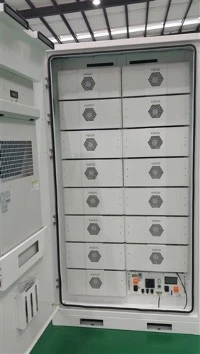
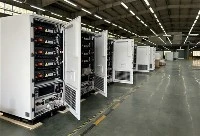
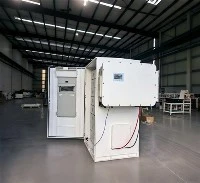
The project deploys two MECC261 outdoor energy storage cabinets, each with a rated capacity of 261kWh. The two cabinets adopt DC parallel connection to the inverter battery port, forming a total system capacity of 522kWh. Series connection is strictly prohibited to avoid over-limit voltage damage to equipment.
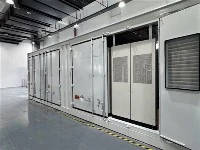
Each cabinet is built with lithium iron phosphate battery units, with an operating voltage range of 732V–850V and a rated charge-discharge power of 125kW. The embedded BMS balance program automatically limits the maximum floating charge voltage, adapting to the inverter's 850V upper voltage threshold. As an all-in-one outdoor cabinet solution, it integrates intelligent temperature control air conditioning, fire suppression devices, and an independent BMS system. With an IP54 high protection level, the equipment delivers excellent environmental adaptability for long-term operation in Davao's high-temperature and high-humidity tropical conditions.
2.3 PV Array Voltage Calibration (Core Design)
The PV array adopts 620W–650W monocrystalline silicon modules. At a standard temperature of 25℃, the open-circuit voltage of a single module is 41.5V, while high summer temperatures in Davao will slightly reduce module open-circuit voltage. The design adopts a series configuration of 18 modules per string, with a standard-temperature string open-circuit voltage of 747V and a low-temperature extreme maximum open-circuit voltage of approximately 785V. All voltage values fall within the inverter's 250V–850V MPPT operating range, effectively avoiding over-voltage protection triggers and ensuring long-term stable system operation.
The entire 150kW PV system is divided into 14 module strings with a single string power of about 11.16kW, accessing multiple MPPT channels of the inverter for accurate real-time power tracking and efficient energy capture.
3. System Topology and Operating Modes
The system adopts a classic grid-tied PV-ESS hybrid topology. The PV array connects to the inverter PV port, two parallel energy storage cabinets connect to the inverter battery port, and the inverter AC terminal links to the on-site 480V/60Hz bus, covering both factory loads and public grid connections. The system supports four highly coordinated operating modes to adapt to diversified power demand scenarios:
Daytime PV Surplus Charging Mode: Under sufficient sunlight, photovoltaic power prioritizes on-site load consumption. Surplus clean power is stored in energy storage cabinets, with a maximum daily energy storage capacity of 522kWh. Excess power beyond storage capacity can be fed into the external grid to maximize energy utilization.
Night Discharging Power Supply Mode: During nighttime or low-irradiation periods, the energy storage system releases stored power, which is converted into 480V AC power via the inverter to supply on-site loads. Intelligent background scheduling realizes autonomous power supply for the factory and reduces grid electricity purchase.
Grid Emergency Backup Mode: The system maintains bidirectional grid-tied regulation during normal grid operation. In the event of grid power failure, it rapidly switches to off-grid mode, with PV and energy storage systems supplying power jointly to ensure uninterrupted operation of core factory loads.
Parallel Balance Control Logic: The two energy storage cabinets adopt CAN bus hand-in-hand communication and master-slave control strategy. The inverter energy management system uniformly collects operating data of both units, automatically distributes charge and discharge power evenly, restrains circulating current in parallel loops, and ensures consistent and balanced operating status of all energy storage units.
4. Tropical Environmental Adaptive Optimization (Davao Customized Design)
Davao features a typical tropical humid climate with year-round high temperatures, frequent rainfall and high air humidity. All equipment in this project has undergone targeted environmental adaptation optimization to cope with harsh tropical operating conditions:
The MECC261 outdoor energy storage cabinet is equipped with a dual-cooling air conditioning system, supporting a wide operating temperature range of -20℃ to 50℃. The built-in independent dehumidification module effectively eliminates condensation and component corrosion risks in high-humidity environments. The PV array adopts weather-resistant photovoltaic modules with anti-corrosion mounting brackets and high-temperature resistant special photovoltaic cables adapted to tropical climates. The project site altitude is below 1000 meters, requiring no power derating for inverters and energy storage cabinets, enabling full-power continuous stable operation throughout the year.
5. Comprehensive System Safety Protection Design
5.1 DC Loop Protection
Each PV string is independently equipped with a DC fuse, and each energy storage cabinet is fitted with a dedicated DC circuit breaker. Single-point equipment faults can be isolated independently without affecting the operation of other units. All DC loops integrate over-current, short-circuit and reverse connection identification protection functions to eliminate DC side safety hazards.
5.2 Battery System Safety Protection
The energy storage cabinet is equipped with a complete fire suppression system. The BMS monitors cell voltage, temperature and SOC status in real time, building multi-layer protection mechanisms including over-charge, over-discharge, over-temperature and insulation monitoring. Adopting A-grade lithium iron phosphate cells, the system achieves a cycle life of up to 6000 times, ensuring long-term safe and stable operation.
5.3 AC Side Protection
The inverter integrates AC disconnection switches, anti-islanding protection, and over-limit voltage and frequency protection logic, fully matching the local 480V/60Hz grid operation specifications to ensure standardized and safe grid-connected operation.
5.4 Remote Communication and Monitoring
All operating data is transmitted stably via CAN bus. Operators can remotely view real-time parameters including total photovoltaic power generation, remaining energy storage capacity, equipment fault alarms and dynamic operating power, realizing full-cycle intelligent monitoring and unmanned operation management.
6. System Operation Data and Performance Evaluation
Based on Davao's 5-hour equivalent peak sunshine duration, the 150kWp PV array achieves a theoretical daily power generation of 750kWh. After deducting actual losses including module dust attenuation, high-temperature power reduction and line transmission consumption, the system maintains a stable effective daily power generation of 630–680kWh. The total available energy storage capacity is 522kWh, which can fully absorb daily surplus photovoltaic power, with the overall system round-trip efficiency reaching no less than 90%.
In terms of power matching, the inverter rated output power is 150kW, while the maximum charge-discharge power of two parallel energy storage cabinets reaches 250kW. The energy storage side has sufficient power margin, eliminating system output bottlenecks during full-load charge and discharge operation and ensuring flexible and efficient system scheduling.
7. Project Summary
This customized PV-ESS hybrid system adopts a native 480V/60Hz electrical architecture, requiring no step-up transformer equipment. All core equipment parameters are highly matched, and the PV string voltage is reasonably calibrated to fully fit the inverter MPPT operating range. The DC parallel connection scheme of energy storage cabinets fundamentally avoids over-voltage equipment damage risks, achieving optimal matching of system power and capacity.
The integrated outdoor energy storage cabinet integrates battery energy storage, intelligent temperature control, fire protection and BMS management functions, greatly simplifying on-site construction, wiring and commissioning work. Targetedly optimized for Davao's high-temperature and high-humidity tropical climate, the system supports dual grid-tied and off-grid operating modes, significantly improving the stability and resilience of industrial power supply. Equipped with long-life lithium iron phosphate cells, the solution delivers excellent operational stability and durability.
Supported by complete technical documents including system single-line diagrams, equipment parameter sheets, installation and commissioning guidelines, and cell cycle performance reports, this solution provides a comprehensive, reliable and replicable technical template for the standardized deployment of tropical overseas commercial and industrial photovoltaic energy storage projects.
Liquid Cooling 125KW 261kWh Lithium Battery Energy Storage Cabinet
The IP55 Protected All-in-One Solar Energy Storage Cabinet is a high-performance, integrated energy solution engineered for outdoor commercial, industrial, and utility-scale solar applications. It integrates a 125kW Power Conversion System (PCS), a 261kWh lithium iron phosphate (LiFePO4) battery bank, an advanced liquid cooling system, and a intelligent Battery Management System (BMS) into a single cabinet with IP55 weatherproof protection. Designed to withstand harsh outdoor environments while delivering efficient energy conversion and storage, it supports solar energy absorption, peak shaving, load shifting, grid auxiliary services, and emergency backup power. Ideal for utility-scale solar farms, industrial parks, large commercial complexes, and remote microgrids, it provides a reliable, space-saving, and low-maintenance solution for large-scale renewable energy integration.