


Lithium Battery
Wholesale Lithium Battery Supplier
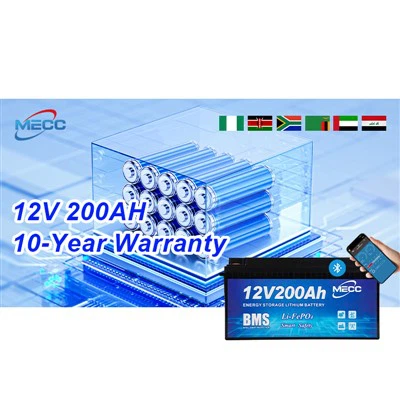
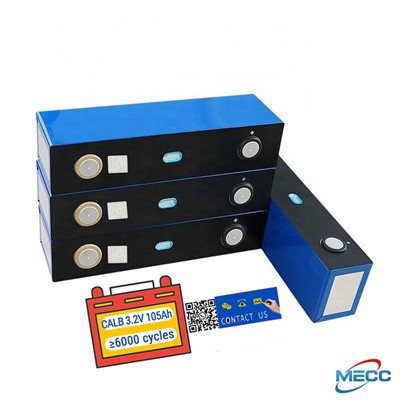
MECC industrial-grade lithium batteries are specifically designed for off-grid and grid-tied energy storage systems, as well as industrial equipment. Key advantages include: wide operating temperature range (-20℃ to 60℃), adapting to harsh environments like deserts, plateaus, and cold regions; strong overload capacity, supporting 2C continuous discharge and 5C peak discharge; and excellent compatibility with inverters and BMS (Battery Management System). The batteries are widely used in rural electrification projects, telecom base station backup power, and microgrid energy storage, providing reliable power support for critical infrastructure. We offer customized battery packs (series/parallel combinations) to meet specific voltage and capacity requirements, and provide on-site technical guidance for system integration.
Types of Lithium Battery


High Energy Density
Among battery technologies, lithium-ion batteries have one of the highest energy densities, meaning that they can store a large amount of energy within a small space. This makes them ideal for use in portable electronic devices where space is at a premium.
Long Life
Lithium-ion batteries have a longer lifespan than other rechargeable batteries, giving them an advantage in high-tech devices that require a lot of power. They are able to maintain their charge for a longer period of time and are much more stable than other battery types.
Fast Charging
Lithium-ion batteries can be charged quickly, which makes them ideal for use in portable devices where time is of the essence. In fact, some lithium-ion batteries can be charged up to 80% in just 30 minutes.
Light Weight
Lithium-ion batteries are lightweight, which makes them ideal for portable electronic devices such as laptops, tablets, and smartphones. They are also used in electric vehicles to reduce weight and increase driving range.
Low Self-Discharge Rate
Lithium-ion batteries have a very low self-discharge rate, meaning that they lose their charge much more slowly than other types of batteries. This makes them perfect for use in devices that are not used frequently as they can hold their charge for an extended period of time.
No Memory Effect
Lithium-ion batteries do not suffer from memory effect, a phenomenon in which the capacity of a battery decreases over time when it is repeatedly charged without being fully discharged. This makes them ideal for use in devices that need to be charged frequently.
Applications of Lithium Battery
Electrical Vehicles
Lithium batteries power electric and hybrid cars. They provide more energy storage, better efficiency, and longer life than traditional lead-acid batteries.

Portable Electronics
Lithium batteries are widely used in portable electronic devices, including smartphones, tablets, laptops, and digital cameras. They have a high energy density, low self-discharge, and long cycle life.

Medical Devices
Lithium batteries are used in various medical devices, including pacemakers, insulin pumps, and defibrillators. They offer a reliable, long-lasting power source for these critical devices.

Renewable Energy Storage
Lithium batteries are used to store energy generated from renewable sources such as solar and wind. They can store excess energy for later use and provide a reliable backup power source.

Aerospace
Lithium batteries are used in satellites, spacecraft, and other aerospace applications. They provide power for critical systems and enable long-duration missions.

Military
Lithium batteries power a range of military applications, including communication systems, unmanned aerial vehicles (UAVs), and defense equipment.

Cathode
The positive electrode of the battery that is typically made from a lithium metal oxide such as lithium cobalt oxide (LiCoO2), lithium manganese oxide (LiMn2O4), or lithium iron phosphate (LiFePO4).
Anode
The negative electrode of the battery that is typically made from a carbon material, such as graphite.
Electrolyte
The material that facilitates the movement of lithium ions between the cathode and anode. Typically, this is a liquid or gel-like substance that contains dissolved lithium salts, such as lithium hexafluorophosphate (LiPF6).
Separator
A thin, porous membrane that prevents the cathode and anode from coming into contact while allowing the lithium ions to pass through.
Current collectors
Metal foils that are attached to the cathode and anode to conduct electric current in and out of the battery.
Housing or casing
The outer casing that contains the components of the battery and provides protection from external damage.
Positive electrode
The positive electrode is typically made from lithium cobalt oxide (LiCoO2) or lithium iron phosphate (LiFePO4) materials. These materials provide high energy density, making them suitable for portable devices such as smartphones and laptops.
Negative electrode
The negative electrode is typically made from carbon-based materials, such as graphite. During charging, lithium ions are held in the carbon structure, releasing electrons. During discharge, the lithium ions move back to the positive electrode, completing the circuit.
Electrolyte
The electrolyte is a liquid or gel-like substance that enables the transport of lithium ions between the positive and negative electrodes. Most commonly, it is made from a lithium salt dissolved in an organic solvent.
Separator
The separator is a thin polymer film that prevents direct contact between the positive and negative electrodes, allowing ions to pass through while preventing short circuits.

Lithium Battery FAQ
We're well-known as one of the leading lithium battery manufacturers and suppliers in China. If you're going to wholesale custom made lithium battery with competitive price, welcome to get more information from our factory.