


The standard version of this comparison is a three-way bake-off: price solar, price storage, price both, pick the cheapest per kilowatt of peak reduction. That framing is tidy and mostly useless, because almost nobody arrives at the decision from a blank sheet. Most commercial sites already have a roof array, or a signed solar contract, or a battery proposed by a vendor who happens to sell batteries. The real question is incremental - given what I already have, what is the next dollar best spent on?
That question has a different answer than the three-way comparison, because the marginal value of each option depends on what is already installed. Adding storage to an existing array is not the same proposition as adding storage to an empty site. Expanding an array that already exists is cheaper per kilowatt than building one from scratch, but only if the existing array's output coincides with the peak it is meant to reduce.
This is the incremental version of the comparison. Our earlier piece covers the underlying physics of timing mismatch and residual sizing; this one is for the owner deciding what to buy next, with the keyword being adding battery to existing solar.

The Four Numbers That Decide the Increment
Before archetypes, the arithmetic. Four site-specific numbers determine which increment pays.
The coincidence factor. Of the array's output during the month's peak interval, how much is actually present? Compute it directly: for the twelve highest-demand intervals of the year, what was the array producing at that moment, as a share of the load? A site at 60 percent coincidence and a site at 15 percent are in completely different businesses, even if their arrays are the same size.
The marginal peak coverage per kilowatt. How many kilowatts of dependable peak reduction does one more kilowatt of solar capacity deliver, versus one kilowatt of battery power? Solar's marginal coverage is the coincidence factor discounted by weather risk; storage's is close to one, discounted only by availability and state of charge. This ratio, more than any price, decides the mix.
Cloud exposure during peak hours. How variable is irradiance in the peak window, and how strict is the billing? A site with single-interval billing and a cumulus-prone climate needs firmness that solar cannot provide at any price.
The export constraint. If the array's output cannot be exported, or is exported at a low value, then every kilowatt-hour the battery absorbs is worth more than the same kilowatt-hour sold - which sharply improves the battery's incremental return and, counterintuitively, can justify a larger array than the site would otherwise build.
Five Site Archetypes
With those numbers, most sites fall into one of five patterns. The right increment differs for each.
Archetype one: the peak lands while the sun is high. Hot-climate cooling-dominated buildings, cold stores, and sites whose maximum occurs between 11 am and 2 pm. Here the existing array already covers a meaningful share of the peak, the coincidence factor is high, and expanding the array is usually the cheapest incremental kilowatt of peak reduction available. A battery is still valuable - for cloud transients and for the tariff's evening block - but it is not the first increment. Expand solar, then firm it later.
Archetype two: the peak lands after the sun is gone. Office buildings with late-afternoon maxima, sites with evening EV charging, facilities with shift patterns extending into the night. The coincidence factor is low, often under 20 percent, and no amount of additional array capacity will help the billed peak. Storage is the only increment that touches the problem. Adding battery to existing solar here is straightforwardly correct: the array's energy serves the daytime load, and the battery carries the peak the array cannot reach.
Archetype three: the array is export-constrained. A large array on a small connection, or a market with poor export compensation. The array is producing more than the site can use at midday and receiving little for the surplus. Adding a battery converts that surplus into evening peak reduction - the highest-value transformation available on the site. This is the archetype where hybrid is not merely better than either alternative; it is the only configuration that makes the existing array's full capacity useful.
Archetype four: the billing is unforgiving. Single-interval demand charges, annual ratchets, or capacity tags set by the worst moment. Whatever the coincidence factor, the site needs a firm cap on the peak, and only storage provides one. Solar remains valuable for energy, but the peak-shaving decision is settled by the tariff, not by the array. Here the battery comes first, and the array expansion is justified separately on energy grounds.
Archetype five: no room for either, or room for only one. Dense urban sites with a fully used roof and no yard. If the roof is saturated, the array cannot expand and the battery is the only increment - possibly a small one, in a plant room. If neither is possible, the answer is managed load and a smaller peak target, and it is better to learn that before commissioning an engineering study.

A Worked Example
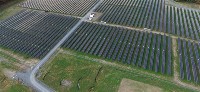
A cold storage and packing facility: 400 kW peak, 250 kW service limit, a 300 kW rooftop array already installed, peak demand occurring around 1 pm in summer.
Coincidence factor: on the twelve highest intervals, the array is producing roughly 210 kW - about 52 percent of load. Net peak is therefore around 190 kW, already below the 250 kW limit on the best days, but the worst days include cloudy afternoons when output collapses to 40 kW and net load returns to 360 kW.
Three increments are on the table. Expanding the array by 100 kW adds perhaps 70 kW of midday coverage on clear days and nothing on cloudy ones - it improves the average and leaves the tail exposed. Adding a 150 kW / 300 kWh battery covers the residual gap on every day, including the cloudy ones, and absorbs the array's midday surplus that would otherwise be exported at low value. Doing both adds capacity the site cannot use without the battery to shift it.
The arithmetic points to the battery, not because storage is better in general, but because the existing array has already captured the cheap coincidence and what remains is the firmness problem. On a site with 85 percent coincidence and forgiving billing, the same calculation would point the other way.
What Changes the Answer Later
Three developments can invert the decision, and the design should anticipate them.
Tariff reform. As more sites install solar, utilities increasingly shift fixed costs into demand and capacity charges. That trend favours storage, because it increases the value of firmness relative to energy.
EV charging. A charging installation moves the peak into the evening and adds a large new load. Sites that chose solar-only on today's load shape frequently regret it after the chargers arrive - which argues for at least provisioning the electrical infrastructure for a battery, even if the battery is deferred.
Battery cost decline and product turnover. Waiting two years for cheaper storage is a real option, but it usually costs more in foregone savings than it gains in price, and the "compatible" product you were waiting for rarely arrives. Design for expansion; do not delay the first increment for a price curve.
Sequencing Rules
Three rules keep the incremental path coherent.
Provision in the first phase for the second. Switchgear ways, conduit, pad space, and a controller that can accept a second asset cost little during construction and a great deal as a retrofit. This is the single highest-return decision in a phased project.
Never expand the array beyond what the site can consume or store. An array sized against an optimistic export assumption becomes a stranded asset the day the export rules change.
Size the battery against the residual, not the gross peak. Adding battery to existing solar means sizing for the net-load curve - load minus expected array output - with a cloudy-day correction. A battery sized on gross peaks will be roughly twice as large as necessary, and the extra capital earns nothing.
The three-way comparison asks which asset is best. The incremental question asks which asset is next, and it produces a different, cheaper, and far more defensible answer - because it starts from the site you actually have rather than the site in the brochure.
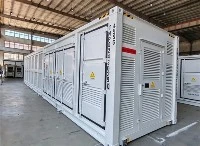
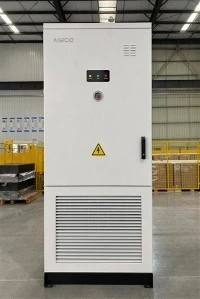
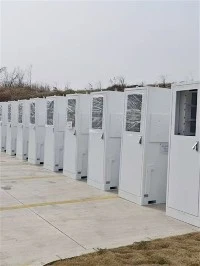
Liquid Cooling 125KW 261kWh Lithium Battery Energy Storage Cabinet
The IP55 Protected All-in-One Solar Energy Storage Cabinet is a high-performance, integrated energy solution engineered for outdoor commercial, industrial, and utility-scale solar applications. It integrates a 125kW Power Conversion System (PCS), a 261kWh lithium iron phosphate (LiFePO4) battery bank, an advanced liquid cooling system, and a intelligent Battery Management System (BMS) into a single cabinet with IP55 weatherproof protection. Designed to withstand harsh outdoor environments while delivering efficient energy conversion and storage, it supports solar energy absorption, peak shaving, load shifting, grid auxiliary services, and emergency backup power. Ideal for utility-scale solar farms, industrial parks, large commercial complexes, and remote microgrids, it provides a reliable, space-saving, and low-maintenance solution for large-scale renewable energy integration.
