


The fastest way to turn a promising commercial energy storage project into an expensive mess is to skip the site assessment. Before any battery energy storage system (BESS) is delivered, a proper survey confirms the site can physically hold it, electrically support it, and legally install it. For buyers, knowing what a site assessment covers - and what it should deliver - is the difference between a smooth install and months of surprises. Here's what to expect before install.
What a site assessment is
A site assessment (sometimes called a site survey) is a structured, on-site evaluation that validates feasibility, cost, and code compliance for a commercial battery storage install. It turns assumptions into facts: how much space you have, how much electrical capacity, what the fire code requires, and where the system will interconnect. Done well, it de-risks the project before capital is committed.
Electrical infrastructure review
The electrical survey is the most decisive part. Engineers inspect the service capacity, main switchgear, transformer, and available panel space, and identify the point of common coupling (PCC). They confirm whether the existing service can host the BESS or whether an upgrade - a larger transformer or switchgear - is required. That single finding can swing project cost significantly, so it must be established early, not discovered at commissioning.
Load profile and metering data
Storage only pays if it's sized to your real demand. The assessment gathers or requests 12 months of 15-minute interval data to establish the load profile and peak demand that drive demand charges. This data feeds commercial energy storage sizing - the C-rate and duration required for peak shaving, TOU arbitrage, demand response, or self-consumption. Without it, any quote is a guess.

Physical and structural review
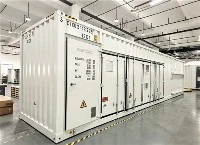
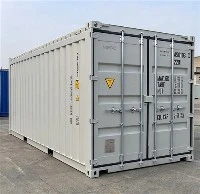
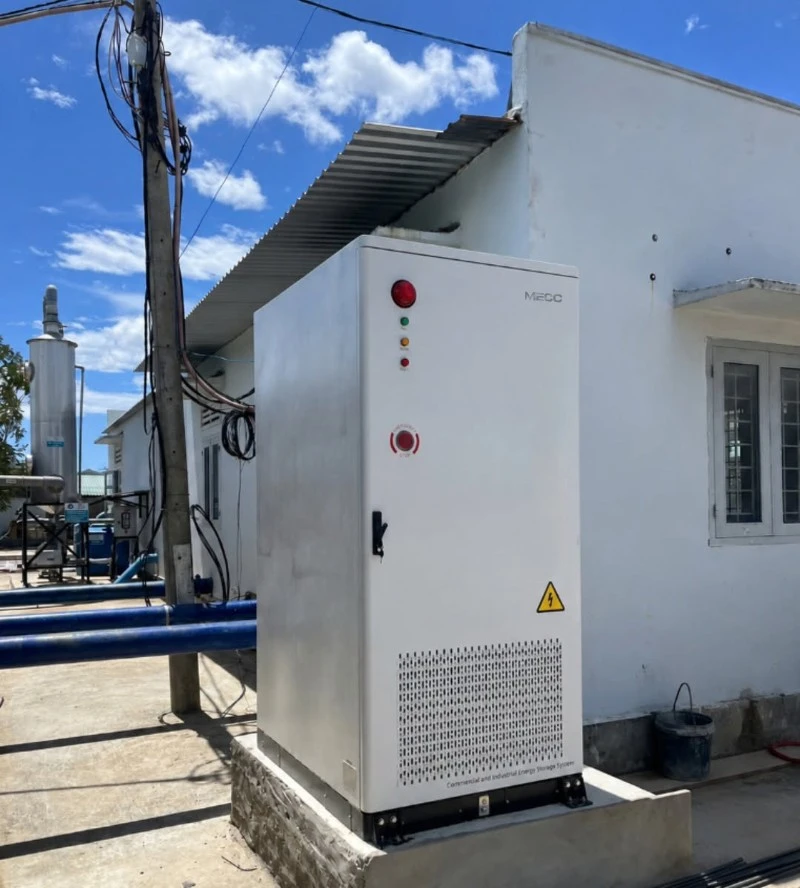
Storage is heavy, and it needs room. The survey checks footprint, weight loading, foundation or concrete pad requirements, and clearances for delivery and lifting equipment. Access - will a crane or truck reach the pad? - is often the constraint that reshapes a layout. It also flags space for future modular energy storage expansion or added EV charging.
Environmental and thermal considerations
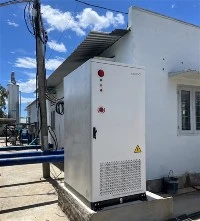
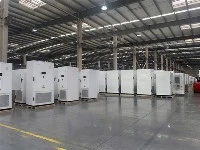
Ambient conditions drive hardware choice. Assessors note temperature extremes, ventilation, dust, humidity, and corrosive exposure. In hot or high-duty sites, liquid-cooled battery storage outperforms air-cooled units on thermal stability; in mild, low-duty settings, air-cooled may suffice. Environmental review also informs whether an all-in-one energy storage cabinet or a 215 kWh battery storage rack best fits the space.
Safety and code compliance
This is where projects are won or lost. The assessment confirms NFPA 855 spacing and separation requirements, fire-suppression strategy, and local fire-marshal expectations. Equipment must be certified to UL 9540 and UL 9540A, with IEC 62619 for international sites. Setbacks and clearances aren't negotiable - they determine where the system can physically sit.
Interconnection and utility review
For grid-tied systems, the assessor reviews interconnection requirements at the PCC, including anti-islanding protection and relay settings (per rules such as IEEE 1547). This is also where export limits and any demand response commitments are clarified, so the design matches what the utility will approve.
Integration with solar, EV, and microgrids
If the site has or plans commercial solar plus storage, EV charging, or a microgrid, the assessment maps how those systems share the bus and controls. Whether AC coupled or DC coupled, the design must coordinate the PCS, BMS (battery management system), and EMS (energy management system) across all assets - planning that's far cheaper at assessment than after install.
What the assessment should deliver
A complete assessment produces a package, not a conversation:
A feasibility report with drawings, including a single-line diagram.
A site layout showing footprint and clearances.
A cost estimate with commercial energy storage cost per kWh, LCOS (levelized cost of storage), battery storage ROI, and commercial battery storage payback.
A permitting and interconnection plan, plus an install schedule.
If a vendor quotes you without this, they're guessing on your behalf.
What to expect on the day
Expect a half-day to multi-day visit depending on site complexity. Engineers will walk the electrical room, photograph equipment, take measurements, and may request utility bills and interval data. You'll need access to the switchgear and someone who knows the site's operations. Clear access and data upfront speed everything up.
Choosing a supplier who does this well
Ask whether the commercial energy storage manufacturer or commercial energy storage supplier performs the assessment in-house or outsources it, and whether the report is engineering-grade. Confirm they plan commercial energy storage installation and battery storage maintenance access from the start - a system you can't service is a liability.
Liquid Cooling 125KW 261kWh Lithium Battery Energy Storage Cabinet
The IP55 Protected All-in-One Solar Energy Storage Cabinet is a high-performance, integrated energy solution engineered for outdoor commercial, industrial, and utility-scale solar applications. It integrates a 125kW Power Conversion System (PCS), a 261kWh lithium iron phosphate (LiFePO4) battery bank, an advanced liquid cooling system, and a intelligent Battery Management System (BMS) into a single cabinet with IP55 weatherproof protection. Designed to withstand harsh outdoor environments while delivering efficient energy conversion and storage, it supports solar energy absorption, peak shaving, load shifting, grid auxiliary services, and emergency backup power. Ideal for utility-scale solar farms, industrial parks, large commercial complexes, and remote microgrids, it provides a reliable, space-saving, and low-maintenance solution for large-scale renewable energy integration.
