


Sizing a buffer battery answers "how many kilowatts and kilowatt-hours." It does not answer "what do I write in the tender." Those are different documents, and the gap between them is where projects acquire equipment that is technically the right size and operationally wrong - a buffer that derates at 38°C, that cannot accept a recharge fast enough between waves, or whose warranty excludes the very duty cycle it was bought for.
Our earlier article sets out the sizing arithmetic: coincidence factors, the power gap, burst energy, the recharge window, and the billing interval trap. This one takes the output of that arithmetic and turns it into clauses a supplier can price and a commissioning team can test. It is written for the buyer assembling a specification for a DC fast charging buffer battery, and it assumes the sizing is already done.

Clause One: Power Rating at the Actual Ambient
State the continuous discharge rating at the site's design ambient temperature, not at 25°C. A buffer cabinet rated 150 kW at 25°C may deliver 120 kW at 45°C, and the canopy area of a charging hub in summer is closer to the latter.
Write the requirement as a pair: kilowatts at the design ambient, and the derating curve over the expected temperature range. Require the curve as a submitted document, not a verbal assurance. Then check it against the site's hottest design day, because that day is when the chargers are busiest and the buffer is most needed.
Clause Two: The Overload Window
Charging loads step. Four vehicles plugging in within a minute can move the hub's draw by hundreds of kilowatts, and the buffer must cover that step for the interval average to hold.
Specify overload capability explicitly: for example, 110 percent of rated power for 60 seconds and 120 percent for 10 seconds, with the conditions stated. Inverter-based systems have limited overload headroom, so the number must be real rather than aspirational. Ask how it is achieved - oversizing the PCS, or thermal headroom in the power stack - because the answer predicts how it will behave in year five.
Clause Three: Usable Energy at Rated Power
Nameplate kilowatt-hours are not deliverable kilowatt-hours. Two derates apply: the state-of-charge window the warranty permits, and the voltage sag of the battery as it discharges.
Write the requirement as "usable energy delivered at rated power, from 100 percent to the warranted minimum state of charge, at the design ambient." This single clause eliminates the most common source of disappointment: a cabinet advertised at 261 kWh that delivers 200 kWh at full power on a hot day.
Clause Four: Recharge Capability Under Constraint
The buffer must recharge without breaching the site limit itself. State the maximum recharge power available to it - the import limit minus the base load minus expected concurrent charging - and require the system to operate within that envelope automatically.
This is a control requirement as much as an electrical one. The specification should state that the recharge rate is dynamically limited by the site's headroom, measured at the point of common coupling, rather than set to a fixed value at commissioning.

Clause Five: The Duty Cycle, Written Out
This is the clause that determines whether the warranty is worth anything. A fast-charging buffer sees high-C-rate cycling, several times per day, with irregular depth. A warranty written around 0.5C daily cycling does not cover it.
Write a representative duty cycle into the specification: peak discharge power and duration, number of events per day, energy throughput per day, average and maximum C-rate, and the ambient profile. Require the supplier to warrant against that duty for a stated number of years, with a stated capacity retention figure at defined milestones.
If a supplier cannot warrant the duty, that is the finding - not a negotiation to be smoothed over later.
Clause Six: Response Time and Control Mode
State the response time in milliseconds from the load crossing the setpoint to the buffer delivering its share, and state how it will be measured. Then state the control objective explicitly: the buffer must hold the interval average at the meter below the limit, not merely chase instantaneous power.
That distinction matters at a charging hub more than anywhere else, because the load moves faster than the billing interval. A controller tuned to instantaneous power will over-discharge on transients, depleting the buffer on events that would never have affected the bill.
Require the interval length to be configurable to the local tariff, and require the logic to be documented.
Clause Seven: Efficiency at Realistic Load
Round-trip efficiency quoted at full load is a marketing number. A buffer spends much of its life at partial load - absorbing a session's draw, then idling.
Specify round-trip efficiency at 50 percent and 25 percent of rated power, including auxiliary consumption. Cooling load belongs in this number: at a hot site, the thermal management system can consume several percent of throughput, and a supplier quoting DC round-trip efficiency while omitting auxiliaries is quoting a different system than the one being installed.
Clause Eight: The Interface to the Chargers
The buffer does not operate in isolation; it must coordinate with the charge point management system. Specify the protocol and the data exchanged: hub demand, per-stall status, session start and stop events, and the site limit.
Then specify the fallback. If communications fail, what happens? The correct answer is a defined, safe behaviour - typically reverting to a fixed power cap that protects the interconnection - not an uncontrolled default. Require that fallback to be demonstrated.
Latency matters too. A signal that arrives four seconds late is not useful for a load that steps in one.
Clause Nine: Metering, Protection, and the Utility Interface
Specify the metering arrangement at the point of common coupling, with accuracy class and the requirement that it be the same measurement the utility bills from. Specify protection coordination for a bidirectional source: the buffer injects as well as absorbs, and the existing protection settings may not have anticipated that.
Where the site participates in demand response or a flexibility market, add the utility-facing communication requirements - protocol, telemetry points, remote disconnect. These are easier to specify now than to retrofit into a controller that was not designed for them.
Clause Ten: Physical and Environmental
State the enclosure rating, corrosion class, operating temperature range, noise limit at the nearest sensitive receptor, footprint, and lifting weight. At a charging hub, the acoustic requirement frequently binds: the buffer sits near where drivers wait, and a cabinet whose fans run at full speed during the evening peak is a complaint generator.
State the maintenance access requirements too - door swing, service clearance, and whether the unit can be serviced without shutting down the hub. A buffer that requires a full site outage for a filter change will not get its filters changed.
Clause Eleven: Commissioning Tests and the Guarantee
Close the specification with the tests that prove the clauses above, and make payment conditional on them.
A staged load test at design ambient is rarely possible, so specify the substitute: a full-power discharge test with recorded traces, a recharge test under a constrained import limit, a communications-loss test, and an interval-average control test using a synthetic load profile that reproduces the busiest observed day. Require the traces.
Then separate the two contract instruments. The product warranty covers defects; the performance guarantee covers output - capacity retention, availability, and round-trip efficiency at the stated boundaries. Our guide to performance guarantees versus warranties covers how to draft both so they do not overlap or leave gaps.
How This Reads in a Tender
A specification built from these eleven clauses is longer than most buyers expect and shorter than most EPC documents. Its value is that every clause is testable, and every test has a trace.
The practical effect on evaluation is worth noting: suppliers who have done fast-charging projects answer these clauses with documents. Suppliers who have not answer with a datasheet and a request to discuss. The response pattern is itself the most useful scoring criterion available, and it costs nothing to observe.
Sizing gets you the right number. The specification gets you the system that still delivers that number in August, in year six, with four cars plugged in and the grid at its limit - which is the only condition that ever mattered.
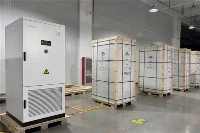
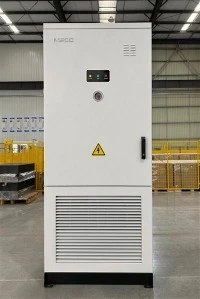
Liquid Cooling 125KW 261kWh Lithium Battery Energy Storage Cabinet
The IP55 Protected All-in-One Solar Energy Storage Cabinet is a high-performance, integrated energy solution engineered for outdoor commercial, industrial, and utility-scale solar applications. It integrates a 125kW Power Conversion System (PCS), a 261kWh lithium iron phosphate (LiFePO4) battery bank, an advanced liquid cooling system, and a intelligent Battery Management System (BMS) into a single cabinet with IP55 weatherproof protection. Designed to withstand harsh outdoor environments while delivering efficient energy conversion and storage, it supports solar energy absorption, peak shaving, load shifting, grid auxiliary services, and emergency backup power. Ideal for utility-scale solar farms, industrial parks, large commercial complexes, and remote microgrids, it provides a reliable, space-saving, and low-maintenance solution for large-scale renewable energy integration.
