


Black start is a requirement, not a technology. The question is which combination of assets meets it at a cost the site can justify - and on most commercial sites, that question has been answered by habit rather than analysis. A generator is installed because that is what has always been installed. A battery is proposed because it is cleaner and quieter. Both claims are true, and neither is the deciding factor.
The deciding factors are outage duration, load criticality, fault current, fuel logistics, and the one thing almost nobody specifies: what starts the thing that starts the site.
Our technical guide covers what black start capability actually requires - grid-forming inverters, auxiliary power, inrush, adaptive protection and the six-step energisation sequence. This article is the architecture decision: given those requirements, should the site rely on a generator, a battery, or both?

What a Generator Does That a Battery Cannot
A diesel or gas generator is an energy converter with a fuel tank attached, and that gives it two properties a battery cannot match at commercial scale.
Duration. A generator with a day tank and a refuelling contract can run for days or weeks. A commercial battery holds hours. For an outage that lasts beyond the battery's reserve, the generator is the only option that keeps the site alive without a utility.
Fault current. A generator delivers five to ten times its rated current into a fault, which means conventional protection settings work. Inverter-based sources deliver roughly 1.1 to 1.5 times rated current, which requires adaptive protection or downstream devices designed for low fault current. This is not a minor technicality: it changes the protection design, the coordination study, and sometimes the switchgear.
A generator also has a property that matters in practice: it is understood. Facility staff know how to start one, regulators know how to inspect one, insurers know how to price one. Novelty has a cost in every one of those relationships.
Its weaknesses are equally concrete. Fuel logistics - delivery contracts, storage, quality, testing, and the fact that a generator that has sat unused for a year may not start. Cold-start reliability, particularly in freezing conditions. Noise and emissions limits in urban locations. And a maintenance regime that is frequently deferred until the annual test, which is exactly when problems are discovered.
What a Battery Does That a Generator Cannot
A battery energises in milliseconds, silently, without fuel, without emissions, and without a fuel supply chain. For short outages - the kind that dominate the statistical distribution in most markets - it is strictly better than a generator on every operational dimension.
It also does something a generator cannot do well: run at partial load efficiently. A generator sized for the site's full critical load running at 15 percent load for two hours is inefficient, prone to wet stacking, and hard on the engine. A battery serving the same load at 15 percent of its rating is simply operating normally.
And a battery is always ready in the sense that matters: state of charge is measurable, and a healthy system reports it. A generator's readiness is a mechanical question that can only be answered by starting it.
Its weaknesses are the mirror image of the generator's strengths: duration measured in hours rather than days, low fault current, and a dependence on its own auxiliary systems - controls, cooling, contactors - that must be energised from the battery itself when the site is dead.

The Hybrid, and the Detail Most People Miss
The dominant architecture on well-designed commercial sites is both, and the division of labour is more interesting than "battery for short outages, generator for long ones."
The battery does three jobs. It covers the first ten to thirty seconds while the generator starts and accepts load - eliminating the blackout that resets equipment and traps people in lifts. It carries short outages entirely, so the generator never starts, saving fuel, maintenance hours and noise. And it can start the generator, replacing the engine-start battery that is the single most common cause of generator failure in a real event.
That third role is the one that changes reliability calculations. A generator's cranking battery is a small lead-acid pack, rarely tested under load, frequently neglected. Replacing it with a connection to the site's lithium system - properly engineered, with the right voltage and current limits - removes a failure mode that has stranded more sites than any other single component.
The generator then does what it is good at: run for hours or days at a reasonable load factor, refuelled as needed, carrying the site through a prolonged outage.
In this configuration the battery's energy requirement is modest - enough for the transition, the short outages, and a black start of the generator - while the generator's sizing can be based on steady critical load rather than on transient capability, because the battery handles the transients.
Sizing the Split
Three inputs determine how much of each.
The outage duration distribution. Not the average, and not the worst case, but the shape. If 90 percent of outages last under 30 minutes and 2 percent exceed eight hours, a battery sized for one hour plus a generator for the long tail is efficient. A battery sized for eight hours is capital spent on a rare event.
The critical load tiers. Life safety, tenant-critical and convenience loads have different duration requirements. A battery island for life safety and communications may be sufficient on its own, with the generator reserved for production or tenancy obligations.
Fuel logistics. A generator is only as reliable as its fuel supply. Sites with restricted delivery access, environmental constraints on storage, or a history of supply disruption during regional events should weight the battery more heavily - and should size its reserve for the realistic refuelling delay, not the contractual one.
Cost, Honestly Compared
The capital comparison is misleading in both directions.
A generator has lower capital cost per kilowatt and vastly lower cost per kilowatt-hour of duration, but it carries fuel, maintenance, testing, permitting and emissions-compliance costs that accumulate every year. A battery has higher capital cost and near-zero fuel cost, but its capacity fades and its augmentation is a real future expense.
The comparison that matters is total cost of resilience over the asset life, at the reliability level the site actually needs. A generator that fails to start has delivered zero resilience regardless of its rated capacity; a battery that is at 30 percent state of charge when the outage arrives has delivered a fraction of its nameplate. Both failure modes should be priced in, and both are managed by testing rather than by specification.
Specification Points That Decide the Outcome
For whichever architecture is chosen, four items belong in the specification.
The transition requirement, in milliseconds, with a measurement method. "Seamless" is not a specification.
The black-start scope, defined as an island - which loads, which breaker, which single-line. Attempting to black start an entire facility from a commercial battery is a promise that will not survive its first test.
The generator-start interface, if hybrid: voltage, current, cranking duration, and who is responsible for the coordination.
The test regime, in writing: a dead-bus test at commissioning, an annual drill with recorded results, and a defined procedure for what happens when the drill fails.
The Decision, Compressed
If outages are short and the load is primarily life safety and communications, a battery alone is sufficient and operationally superior.
If outages are long, the load is production-critical, or the site already has a generator with a fuel contract, the hybrid is the right architecture - and the battery's most valuable contribution may be starting the generator rather than replacing it.
If the site has neither and the resilience requirement is genuine, the hybrid is almost always the answer, because it is the only configuration that covers both the first thirty seconds and the third day.
The question is not whether batteries are better than generators. It is which failure you can tolerate: a generator that will not start, or a battery that runs out. A site that has thought about both, and specified accordingly, is the only kind that actually stays lit.

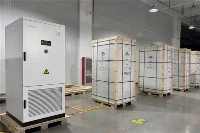
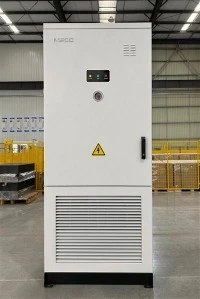
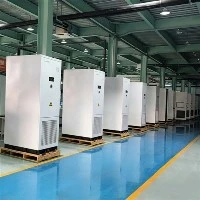
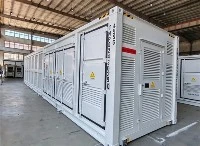
500KW/1MW 1MWh/2MWh Battery Energy Storage System Container
The 500kW/1MW 1MWh/2MWh Battery Energy Storage System Container is a turn‑key utility‑grade energy storage solution housed in standard 20ft or 40ft shipping containers, integrating bidirectional PCS, A‑grade LiFePO4 battery clusters, master BMS, liquid‑cooled thermal management, gas fire suppression, high‑voltage distribution and EMS energy management system with full factory pre‑assembly and pre‑commissioning. Requiring only foundation construction and high‑voltage cable connection for on‑site commissioning, it supports flexible power‑capacity configuration and multi‑container parallel expansion, delivering core capabilities of peak‑shaving and load shifting, renewable energy smoothing, frequency‑voltage grid support, islanded micro‑grid operation and large‑scale emergency backup. Featuring IP54 enclosure protection and comprehensive multi‑layer safety mechanisms, it adapts to diverse harsh outdoor environments, and is widely deployed for ground‑mounted PV power stations, industrial parks, mining operations, island microgrids and grid‑side auxiliary service projects to stabilize grid fluctuations, boost renewable energy utilization and reduce comprehensive energy costs.