



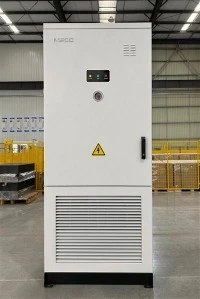
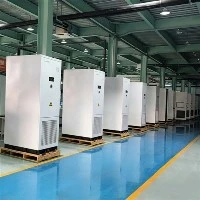
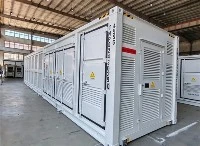
The so-called photovoltaic power station is a power station that fully utilizes the endless energy treasure trove of the sun to generate electricity. Its core components include photovoltaic panels and inverters, which complement each other and jointly accomplish the key mission of energy conversion. Photovoltaic panels are like magical energy collectors, composed of numerous efficient photoelectric conversion units. When the sun generously shines, these panels can accurately capture and efficiently convert solar energy into electrical energy. The inverter acts as the "shaper" of electrical energy, carefully converting the direct current generated by photovoltaic panels into alternating current to meet the electricity needs of various loads, or smoothly transmitting it to the huge power grid, bringing light and power to thousands of households and enterprises. What are the requirements for grid connection of photovoltaic power plants? What is the method of grid connection? The following article will explain in detail to everyone.

Standard requirements for grid connection of photovoltaic power stations
The connection between grid connected photovoltaic power generation systems and the power grid is an important link, and the design of large and medium-sized grid connected photovoltaic power stations should meet the following standard requirements:
- Design Specification for Photovoltaic Power Generation Connected to Distribution Network GB/T50865
- Design Specification for Photovoltaic Power Station Connected to Power System GB/T50866
- Technical Regulations for Connecting Photovoltaic Power Generation Systems to Distribution Networks GB/T29319
- Technical Regulations for Connecting Photovoltaic Power Stations to Power Systems GB19964
- Technical Requirements for Grid Connection of Photovoltaic Power Generation Systems GB/T19939
And refer to the "Technical Regulations for Power Quality Testing of Photovoltaic Power Stations" NB/T32006 for testing. The grid connection of photovoltaic power stations should meet the following grid connection requirements in terms of harmonics, voltage deviation, voltage imbalance, DC components, voltage fluctuations, and flicker, in order to provide electrical energy to local AC loads and transmit electrical energy to the grid.

1. Harmonic and waveform distortion
After the photovoltaic power station is connected to the power grid, the harmonic voltage at the common connection point should meet the requirements of GB/T14549 "Harmonics in Public Power Grids for Power Quality".
2. Voltage deviation
After the photovoltaic power station is connected to the grid, the voltage deviation of the common connection point should meet the requirements of GB/T12325 "Power Quality Supply Voltage Deviation", that is, the sum of the absolute values of the positive and negative deviations of the common connection point voltage of 35kV and above should not exceed 10% of the nominal voltage. The voltage deviation at the three-phase common connection point of 20kV and below is+7% of the nominal voltage.
MECC Commercial And Industrial BESS Products
We offer different kinds of battery energy storage system solutions for customer's requirements on commercial/industrial/farming


3. Voltage fluctuations and flicker
After the photovoltaic power station is connected to the power grid, the voltage fluctuation and flicker at the common connection point meet the requirements of GB/T 12326 for power quality voltage fluctuation and flicker. The voltage fluctuation limit at the common connection point caused by the photovoltaic power station alone is related to the frequency and voltage level of the variation.
The voltage flicker caused by a photovoltaic power station at a public connection point should be treated differently according to the proportion of the installed capacity of the photovoltaic power station to the power supply capacity, as well as the system voltage, in accordance with the provisions of GBT 12326 "Power Quality Voltage Fluctuations and Flicker", and classified into three levels.

4. Voltage imbalance
After the photovoltaic power station is connected to the grid, the three-phase voltage imbalance at the common connection point should not exceed the limit specified in GB/T 15543 "Power Quality Three phase Voltage Imbalance", and the negative sequence voltage imbalance at the common connection point should not exceed 2%, and should not exceed 4% in a short period of time. The negative sequence voltage imbalance caused by photovoltaic power stations should not exceed 1.3%, and should not exceed 2.6% in the short term.
5. DC component
When a photovoltaic power station is connected to the grid for operation, the DC current component fed to the grid should not exceed 0.5% of its AC rated value. For photovoltaic power stations that are directly connected to the grid without passing through transformers, the limit can be relaxed to 1% due to special factors such as inverter efficiency.
6. Power factor
The power factor of large and medium-sized photovoltaic power plants should be continuously adjustable within the range of 0.98 (lead) to 0.98 (lag). Within its reactive power output range, large and medium-sized photovoltaic power stations should have the ability to adjust reactive power output according to the grid voltage level and participate in grid voltage regulation. When the active power output of a small photovoltaic power station exceeds 50% of its rated power, the power factor should not be less than 0.98 (leading or lagging); When the active power output is between 20% and -50%, the power factor should not be less than 0.95 (leading or lagging).

Grid connection method of photovoltaic power station
- Taking household rooftop photovoltaics as an example
Generally, household rooftop photovoltaics are usually connected to DC lightning protection switches, grid connected inverters, and AC lightning protection switches through a photovoltaic array through a combiner box, and finally directly connected to the 202/328 power grid. Partial data collection and recording devices can be configured as needed.
This type of grid connected photovoltaic power generation system can be connected to the grid through two methods: "net meter metering" and "grid electricity pricing".
Note: "Net meter metering" usually connects the output terminal after the incoming meter, while "grid electricity pricing" connects the output terminal before the incoming meter.
Large and medium-sized photovoltaic power stations, like conventional power stations, input all the generated electricity into the grid. However, due to the large number of photovoltaic modules, they need to be divided into many sub arrays and equipped with many combiner boxes, sometimes requiring multiple DC distribution cabinets. The output end of the photovoltaic array must be equipped with a switch with arc extinguishing capability, and the main switch should have the ability to safely cut off the maximum short-circuit current of the array at 1.25 times the maximum open circuit voltage of the array.

The electricity generated by the photovoltaic array is connected to the inverter through a DC distribution cabinet, and the low-voltage AC power output by the inverter is also passed through an AC distribution cabinet before entering the high-voltage grid through a step-up transformer well. The step-up transformer should choose a suitable connection method to isolate the DC and harmonic components generated by the inverter system, and switch devices with obvious breakpoints should be installed at the connection between the photovoltaic power station connected to the public grid and the grid.
The AC side of the photovoltaic power generation system should also be equipped with grounding detection, overvoltage and overcurrent protection, indicating instruments, and measuring instruments. Lightning protection devices should be equipped at both the AC and DC ends. In addition, a main control and monitoring system should be configured, which can include sensing and collecting digital signals, as well as necessary processing, recording, transmission, and display of system data. The current ground photovoltaic power stations and distributed photovoltaic power stations that are centrally connected to the grid in China adopt the "grid electricity price" method.