



Most equipment in a C&I microgrid can be added to, upgraded or replaced. Panels can be extended, batteries augmented, chargers added. The microgrid controller is the exception. Once it is installed and the site's operating logic is written into it, replacing it means re-engineering every interface in the system - the battery, the inverters, the switchgear, the building management system, the utility's telemetry. In practice, nobody replaces a controller. They live with it for a decade.
That asymmetry should govern how the decision is made. The controller deserves more diligence than the battery, and it usually receives less, because it is bought as a line item inside an EPC package and evaluated on price and a demonstration screen. This article sets out what to evaluate, in the order that matters, and explains why the selection should be pulled out of the EPC bundle and negotiated separately. It follows our playbook for solar, storage and EV integration, which argues that the site controller is the real product; here the subject is how to choose one.

What the Controller Actually Does
A microgrid controller is the supervisory layer that decides, second by second, how the site's distributed resources behave relative to the grid, the load and each other. It is not the BMS, which protects cells, and not the PCS, which executes power commands - our explainer on EMS, BMS and PCS covers that hierarchy. The controller sits above them and owns four things:
Mode management - grid-connected, islanded, transitioning between the two, and black start.
Dispatch - allocating setpoints across solar, storage and flexible loads against tariff, demand limit and resilience reserve.
Protection and interlock coordination - ensuring the site does not back-feed a de-energised utility line, that breakers operate in the right sequence, and that fault current is managed within equipment ratings.
Visibility and records - the telemetry, alarms and event logs that prove what happened and support warranty and utility compliance.
A controller that handles dispatch well but transitions poorly is a liability. A controller that transitions well but cannot integrate a second vendor's inverter is a dead end. Both dimensions must be evaluated.
Criterion One: Operating Modes and Transition Performance
Ask for the mode matrix explicitly: grid-connected, islanded, open transition, closed transition, black start. Then ask for measured transition times, not targets.
Open transition - disconnect, brief outage, re-energise from the microgrid - takes hundreds of milliseconds to several seconds, and every load on the site sees it. Acceptable for a site whose critical loads have their own UPS, unacceptable for a facility where a two-second interruption stops a process.
Closed transition - synchronising the microgrid source to the grid before transferring - avoids the outage but requires the controller to manage synchronisation, and requires the utility to permit momentary parallel operation. Many utilities do not, and the permission is a negotiation, not a setting.
Seamless or make-before-break transfer with grid-forming assets can achieve transfer in tens of milliseconds, effectively invisible to loads - but only if the assets support grid-forming operation, which is a separate specification covered in our grid-forming microgrid article.
Have the vendor demonstrate the transition on a test bench or in a reference site, with the timing recorded. A controller that claims seamless transfer without a grid-forming source is describing a capability it does not have.

Criterion Two: Interoperability and Protocol Coverage
The controller will outlive the equipment it was bought with. Whether it can integrate the next vendor's hardware is the single most consequential technical question.
Check the protocol list against reality: Modbus TCP and RTU for most inverters and meters; DNP3 for utility telemetry; IEC 61850 for substation-class devices and increasingly for protection; IEEE 2030.5 for utility-facing DER communication; OpenADR for demand response. A controller that speaks only its own vendor's proprietary protocol forces every future purchase back to that vendor - which may be acceptable if the vendor's roadmap is strong, and ruinous if it is not.
Then test the claim rather than reading the datasheet: ask for a reference project where the controller integrates at least two third-party device types, ideally a competitor's PCS and a different manufacturer's BMS. "We support Modbus" means the port exists. It does not mean the point map has been implemented for the device you own.
Also ask about point capacity: how many devices, how many data points, and what happens when the site adds a fifth asset type in year three. Controllers sized to the initial project are a common source of expensive mid-life replacement.
Criterion Three: Grid Code and Utility Requirements
Utilities treat a microgrid as a generator with unusual behaviour, and their requirements vary widely. The controller must satisfy the local grid code and the specific interconnection agreement, not a generic standard.
The relevant requirements typically cover anti-islanding, ride-through behaviour for voltage and frequency disturbances, reactive power capability, ramp rates on reconnection, telemetry to the utility's operations centre, and remote disconnect. Some utilities require a specific communication path and protocol; some require the controller to be on an approved list.
Ask the vendor for evidence of approval in your jurisdiction or one with comparable rules, and for the engineering support to prepare the interconnection study inputs. A controller that has never been through your utility's process will consume months of your schedule learning it.
Criterion Four: Cybersecurity
A controller with remote access and dispatch authority over megawatts is a high-value target, and the attack surface is larger than most operators assume: vendor remote support, cloud dashboards, cellular modems, and integrator laptops all connect to it.
Evaluate against IEC 62443 concepts, at minimum: role-based access control with defined privilege tiers, certificate-based device authentication rather than shared passwords, encrypted communications, an audit log, and a documented patch process with a stated cadence. Ask how the vendor's own remote access works, whether it can be disabled, and what happens to the site's operation if the vendor's cloud service is unavailable.
The last question is the practical one. A controller whose local control depends on a cloud service is not a microgrid controller; it is a remote terminal with a subscription. Local autonomy must be complete: the site keeps operating, and keeps islanding correctly, with the wide-area network down.
Criterion Five: Operability by Real Staff
The controller will be operated by a facility team, not by its designers. The human interface is a reliability feature.
Evaluate three things. Alarm quality: does the system present a small number of actionable alarms, or a flood of raw device faults? Setpoint governance: who can change the demand target, the reserve floor, the operating schedule, and is there an audit trail of who did? Mode visibility: can an operator tell at a glance whether the site is grid-connected or islanded, and why?
A controller that requires the integrator to change a setpoint is a controller that will run on commissioning-day settings for years.
Criterion Six: The Vendor's Lifecycle
Hardware is easy to compare; longevity is not, and it is where the real cost sits.
Ask for the firmware support commitment in years, in writing. Ask whether the vendor will place the site configuration in escrow, so that another integrator could take over if the relationship ends. Ask what the end-of-life policy is and what migration path exists. Ask how many controllers of this model are in service and for how long - a platform with a large installed base and a decade of history is a safer bet than a newer, more capable one with a two-year record.
This is also the argument for buying the controller outside the EPC package. An EPC contractor is incentivised to minimise capital cost and complete the project; it bears none of the ten-year integration risk. Specifying and contracting the controller directly - or at least naming the model and requiring the EPC to procure it - preserves the owner's leverage over the party that will support it.
Testing: Demand FAT and HIL
Factory acceptance testing for a controller should be behavioural, not documentary.
Require a FAT that exercises the mode matrix on real or simulated hardware: a grid loss, a return to grid, a black start, a demand-limit excursion, a battery at minimum state of charge during islanding, a loss of communications to one asset. Where the project justifies it, hardware-in-the-loop testing against a simulated power system is the most efficient way to find logic errors before they are found by the site.
Record the results. The FAT record becomes the baseline for commissioning and for any later dispute about whether the system behaves as specified.
The Selection, Compressed
Confirm the mode matrix and measured transition times. Verify third-party integration on a reference site. Match the grid code and the utility's process. Require local autonomy and IEC 62443-grade security. Insist on operable alarms and governed setpoints. Get the support commitment and configuration escrow in writing. Test behaviourally before shipment. And buy it as an owner-controlled package, not an EPC afterthought.
The microgrid controller is the one component whose mistakes cannot be fixed by adding equipment later. Treat the selection accordingly, and the rest of the system retains the flexibility that made it worth building.

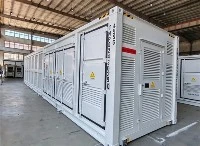
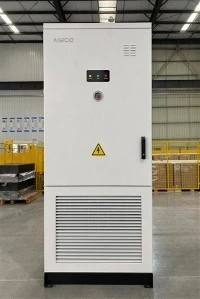
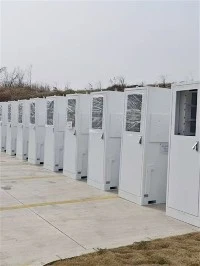
125KW 241kWh Battery Energy Storage System Cabinet
The BESS 125KW 241kWh Lithium Battery Energy Storage Cabinet is a high-power, large-capacity integrated energy storage solution engineered for medium-to-large commercial, industrial, and utility-scale applications. It integrates a 125kW high-performance bidirectional inverter, a 241kWh lithium iron phosphate (LiFePO4) battery bank, and a full-featured intelligent energy management system (EMS) into a modular cabinet design. This system enables efficient renewable energy storage, peak shaving, load shifting, grid frequency regulation, and emergency backup power supply. Ideal for large factories, shopping malls, industrial parks, utility-scale solar/wind farms, and microgrids, it enhances energy independence, reduces high grid demand charges, and supports the stable integration of high-penetration renewable energy into the grid.