


Islanding and black start are routinely conflated in sales conversations, and the confusion costs projects money. Islanding is what happens when the grid disappears while the site is running: the storage system, already energised and synchronised, holds the local network up. Black start is what happens when there is nothing to hold up - a dead bus, no voltage reference, no frequency, no auxiliary power, and a battery that must create an entire electrical system from a DC source.
Most commercial storage systems can do the first. Far fewer can do the second, and fewer still can do it for a whole building rather than a defined block of critical loads. This article explains what black start actually requires, why a black start battery storage capability is a system-level property rather than an inverter setting, and how to scope and test one realistically. It sits alongside our guides to grid islanding, grid-forming versus grid-following inverters, and grid-forming microgrids, which cover the steady-state and transition behaviour this article assumes.

The Definition That Sets the Bar
A black start is the energisation of a de-energised electrical network from a source that is itself capable of establishing voltage and frequency without an external reference. In a commercial context it means: the utility feed is gone, the main breaker is open, every bus is dead, and the site's own resources must rebuild a functioning grid.
Three conditions make this hard, and each is a distinct engineering problem.
No reference. A grid-following inverter needs to see a voltage and phase before it can inject current. With a dead bus it sees nothing and does nothing. Black start therefore requires at least one grid-forming source that can synthesise a voltage waveform and hold it against whatever load appears. This is the subject of our grid-forming versus grid-following comparison, and it is the non-negotiable first requirement.
No auxiliary power. Controls, contactors, cooling pumps, fire detection and communications all need power. In normal operation they take it from the grid. In a black start they must take it from somewhere else - usually a UPS or a DC-DC feed from the battery - and that auxiliary supply must be sized and tested for the dead-bus condition. Systems that assume the controls are energised will fail at the first step.
No fault current. This is the least appreciated constraint. An inverter-based source delivers fault current of roughly 1.1 to 1.5 times its rated current, where a transformer-fed grid might deliver five to ten times. Protection settings calibrated for utility fault levels will not operate correctly on inverter fault current. Black start capability therefore requires either adaptive protection settings for island mode, downstream protection that can operate at low fault current, or both - and this must be engineered, not assumed.

The Sequence, Step by Step
A black start is a choreographed sequence, and each step has a failure mode.
Step one: establish auxiliary power. Close the battery's DC path, energise the control system from the UPS or battery-side supply, and confirm communications with the controller. If the auxiliary supply has been sitting unmaintained, this is where the sequence stops.
Step two: form voltage on the first bus. The grid-forming unit energises a defined bus - usually the storage system's own switchboard - at nominal voltage and frequency, with no load. This is a controlled no-load build, and the inverter's voltage control loop must be stable into an open circuit, which not every grid-forming implementation handles well.
Step three: energise the transformer. Closing onto a transformer produces magnetising inrush - a transient current that can reach eight to twelve times the transformer's rated current for a few cycles, with a decaying DC offset. An inverter rated for the transformer's steady-state load may still trip on inrush. The mitigations are a larger inverter relative to the transformer, controlled closing angle, or energising a smaller transformer first. This step is where black-start designs most often fail in commissioning.
Step four: pick up load in blocks. Bring on loads in defined, sequenced blocks - lighting and controls, then HVAC, then process - each small enough that the frequency and voltage excursion stays within limits and the inverter's overload capability is not exceeded. Motor loads need particular care: a direct-on-line start draws five to seven times rated current, so large motors need soft starters, VFDs, or sequential starting with recovery time between each.
Step five: stabilise and hold. With the critical load block energised, the system must hold voltage and frequency within the site's operating tolerances and manage the balance between generation and load as loads cycle on and off. This is steady-state islanded operation, and it is easier than the build but harder than grid-connected operation, because there is no grid to absorb imbalance.
Step six: re-synchronise. When the utility returns, the controller must match voltage, frequency and phase before closing the paralleling device - a closed transition back, subject to the utility's permission for momentary parallel operation.
The Energy Accounting Nobody Does
Black start consumes energy before it delivers any. The auxiliary systems, the no-load losses of the inverters, the transformer magnetising losses and the cooling all draw from the battery while the site is being rebuilt. Add the inrush transients and the motor starts, and the energy required to reach a stable island can be a meaningful fraction of the reserve.
Then the site must run. Critical loads for the duration of the outage, plus the battery's own thermal management, which in a hot climate can be several percent of throughput.
The reserve calculation therefore needs three components, not one: the black-start energy to build the island, the critical load energy for the expected outage duration, and a margin for the cooling and auxiliaries. Projects that size the reserve on critical load alone routinely discover, in a real event, that they had enough energy for the building but not enough to start it.
Scope: A Black Start for What, Exactly?
The most useful design decision is to define the black-start island explicitly rather than promising the whole building.
A commercial BESS of a few hundred kilowatt-hours cannot start an entire office tower or factory from dead. The inrush of the main transformers, the aggregate motor load and the duration required all exceed what a commercial-scale inverter and battery can deliver. Attempting it produces a system that fails its first real test.
What works is a defined island: a subset of loads with its own distribution path, isolated by a defined breaker, served by the storage system and its grid-forming source. Life safety, communications, cold storage, server rooms, a production line's control system. The island boundary is a design output, documented in the single-line diagram, and it should be visible to the site's operators - because in an event, someone will need to know what is supposed to come back.
The corollary is that the transfer scheme must guarantee the island cannot accidentally parallel with the utility, and that non-islanded loads are positively disconnected. That is a protection and interlock design question, not a software setting.
Testing and Drills
A black-start capability that has never been tested is a claim, not a capability.
Commissioning should include a genuine dead-bus test: open the main breaker, de-energise the auxiliary supply path as it would be in an outage, and execute the full sequence with the actual loads. Record voltage and frequency traces at each step, the inrush current at transformer energisation, and the recovery time after each load block. Where a full dead-bus test is impractical, a partial test with the island breaker open and the critical loads live is the minimum.
Then drill annually. Batteries age, auxiliary UPS batteries fail, control logic gets modified during unrelated maintenance, and the operator who knows the sequence leaves. An annual drill with a written procedure and a recorded result is what keeps the capability real.
For the authority having jurisdiction and the utility, document the sequence, the island boundary, the anti-islanding and re-synchronisation settings, and the operator training record. Utilities are understandably cautious about a customer asset that can energise a de-energised line, and the documentation is what makes approval tractable.
The Honest Assessment
Black start is achievable with commercial storage, but it is a specification package rather than a checkbox: a grid-forming source, independent auxiliary power, inrush and motor-start capability, adaptive protection, a defined island, a reserve sized for the build plus the run, and a tested procedure.
Buyers should ask for the sequence, the test record, and the island single-line - not the phrase "black start capable." The vendors who can produce the documents are the ones who have actually done it. The ones who answer with a datasheet have a grid-following inverter and a marketing department.
For most C&I sites, the right scope is a critical-load island rather than a whole-building restart. That scope is achievable, testable, and genuinely valuable - and it is the version of black start battery storage that survives contact with a real outage.

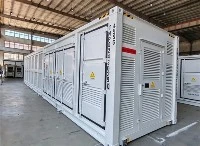
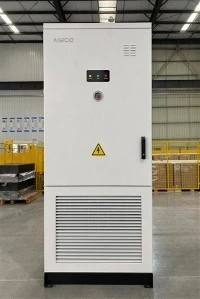
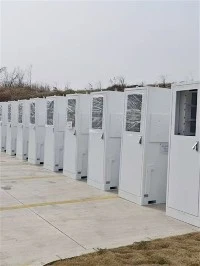
500KW/1MW 1MWh/2MWh Battery Energy Storage System Container
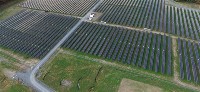
The 500kW/1MW 1MWh/2MWh Battery Energy Storage System Container is a turn‑key utility‑grade energy storage solution housed in standard 20ft or 40ft shipping containers, integrating bidirectional PCS, A‑grade LiFePO4 battery clusters, master BMS, liquid‑cooled thermal management, gas fire suppression, high‑voltage distribution and EMS energy management system with full factory pre‑assembly and pre‑commissioning. Requiring only foundation construction and high‑voltage cable connection for on‑site commissioning, it supports flexible power‑capacity configuration and multi‑container parallel expansion, delivering core capabilities of peak‑shaving and load shifting, renewable energy smoothing, frequency‑voltage grid support, islanded micro‑grid operation and large‑scale emergency backup. Featuring IP54 enclosure protection and comprehensive multi‑layer safety mechanisms, it adapts to diverse harsh outdoor environments, and is widely deployed for ground‑mounted PV power stations, industrial parks, mining operations, island microgrids and grid‑side auxiliary service projects to stabilize grid fluctuations, boost renewable energy utilization and reduce comprehensive energy costs.