FOR IMMEDIATE RELEASE
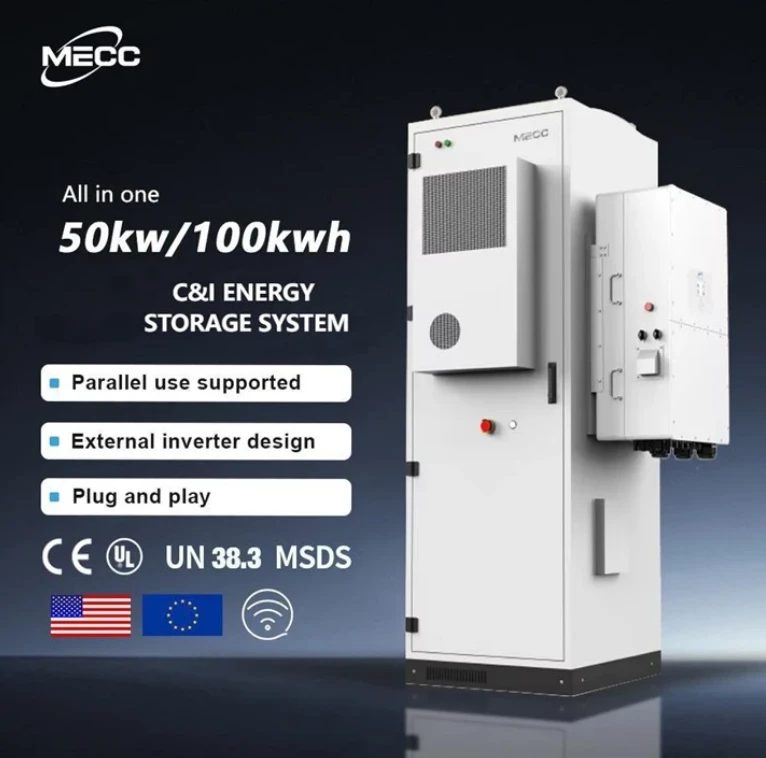
Rising electricity tariffs, unstable public grid conditions and high diesel consumption have become major operational challenges for global commercial and industrial facilities. Many factories, rural farms and remote commercial sites rely heavily on diesel generators for backup power, resulting in excessive fuel costs, noisy operation and high carbon emissions. To resolve these widespread pain points, MECC launches its integrated 108kWh/50kW solar-battery-diesel hybrid energy cabinet, a compact all-in-one power solution that unifies solar PV generation, battery energy storage, grid power and diesel generator backup within a single optimized system. Designed for flexible, stable and cost-efficient energy management, this hybrid ESS helps C&I users maximize solar utilization, minimize diesel dependency and achieve reliable on-site power independence.
Traditional distributed power systems often operate in isolation, with separate solar setups, battery banks and diesel units lacking intelligent linkage and unified scheduling. Disconnected equipment leads to low solar energy utilization, frequent diesel idling and inefficient energy allocation, especially in off-grid and weak-grid regions. Additionally, fragmented system layouts increase installation complexity, on-site wiring workload and long-term maintenance pressure for EPC contractors and project owners. MECC's new hybrid energy cabinet eliminates fragmented system drawbacks through fully integrated design and intelligent energy scheduling, creating a unified, scalable and easy-to-deploy power solution for diverse commercial and industrial scenarios.
Core System Design: Integrated Multi-Energy Complementary Architecture
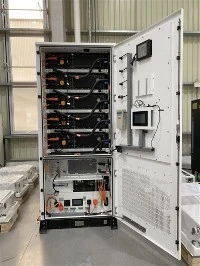
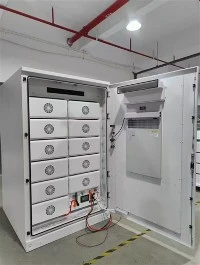
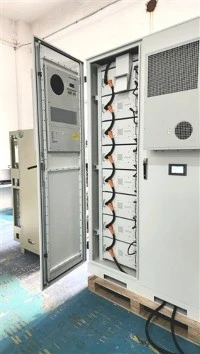
The MECC 108kWh/50kW hybrid energy cabinet features a highly integrated structure that merges four core power sources: solar PV input, lithium battery energy storage, municipal grid connection and diesel generator backup. Equipped with a 50kW hybrid inverter and 108kWh high-capacity lithium battery pack, the system intelligently switches and coordinates multiple energy sources according to real-time load demand, solar irradiation and grid status.
Different from conventional single-mode energy storage equipment, this hybrid system achieves complementary operation between clean solar energy, stored battery power, grid electricity and diesel backup power. It avoids the waste of photovoltaic resources and unnecessary startup of diesel generators, forming a fully optimized closed-loop energy supply system. The entire function module is encapsulated in a unified cabinet, realizing compact layout and greatly simplifying on-site engineering deployment.
Key Operational Advantages for C&I Energy Optimization
Maximized Solar Energy Utilization
The system prioritizes solar power supply during peak daylight hours to directly support on-site industrial and commercial loads. Excess photovoltaic power is automatically stored in the 108kWh battery cluster instead of being wasted. When solar generation drops in cloudy weather or at night, the system releases stored battery power to sustain continuous operation, drastically improving local solar self-consumption rates and reducing reliance on purchased grid electricity.
Reduced Diesel Generator Operation and Fuel Costs
For off-grid and remote facilities that depend on diesel generators, the hybrid ESS serves as the primary power source most of the time. Diesel generators are only activated as emergency backup during prolonged low solar irradiation and high-load peak periods. This intelligent scheduling effectively cuts unnecessary diesel startup frequency and working hours, significantly reducing fuel consumption, operational noise and mechanical wear, lowering long-term operational expenditures.
Stable and Flexible Multi-Scenario Power Supply
By dynamically balancing solar, battery, grid and diesel power sources, the hybrid cabinet delivers consistent voltage and frequency output. It effectively mitigates grid fluctuation, instantaneous power surge and sudden power outage risks, ensuring stable power supply for production equipment, daily office and facility operation. The flexible multi-mode switching capability adapts to grid-tied, off-grid and weak-grid environments, meeting complex power demands of diverse C&I sites.
Simplified Engineering Deployment
The all-in-one cabinet integrates all core control, power conversion and energy storage components, avoiding tedious separate equipment procurement, matching and debugging processes. The pre-assembled structural design shortens project construction cycles, reduces on-site labor costs and lowers technical barriers for installation teams, bringing higher construction efficiency for global EPC and solar installation partners.
Wide Application Coverage for Global Industrial and Commercial Scenarios
MECC 108kWh/50kW hybrid energy cabinet features strong scenario adaptability, suitable for factory workshops, agricultural farms, resort hotels, urban commercial buildings and remote industrial sites. For urban commercial facilities with high electricity bills and stable grid access, it realizes peak-valley arbitrage and solar self-use to cut electricity expenses. For rural farms and suburban industrial workshops with unstable grids, it provides reliable power backup to avoid production losses caused by power failures.
For remote industrial zones and island hotels completely relying on diesel power generation, the solar-battery-diesel hybrid mode fundamentally optimizes the energy structure, reduces long-term fuel investment and realizes green and low-carbon operational upgrades. It is a versatile cost-effective solution covering grid-connected, weak-grid and off-grid C&I projects.
Custom Solution Support for Global B2B Partners
MECC provides professional customized hybrid energy system design services for global distributors, EPC contractors and project developers. To deliver accurate system configuration and optimal project quotations, the technical team supports tailored solution design based on key project parameters including on-site load curve, existing PV capacity, diesel generator rated power, local grid conditions and project geographical location.
Global partners can obtain complete technical datasheets, system schematic diagrams and one-stop technical support by contacting the MECC professional team. From pre-sales scheme optimization to after-sales operational guidance, MECC provides full-cycle service support to ensure stable and efficient project implementation.
Market Outlook
As global commercial and industrial energy consumption continues to shift toward low-carbon economy and cost refinement, multi-energy complementary hybrid power systems will become the mainstream solution for distributed energy upgrades. MECC will continue to optimize intelligent scheduling algorithms and integrated system performance of hybrid energy cabinets, launch more diversified capacity specifications, and empower global C&I users and cooperative partners to achieve energy saving, cost reduction and intelligent power management.
About MECC
MECC is a professional provider of integrated hybrid energy storage and power supply solutions. Focusing on the R&D, manufacturing and customized configuration of solar-battery-diesel complementary ESS products, the company delivers efficient, stable and cost-saving energy solutions for global commercial, industrial and remote energy projects.
MECC 50KW 112KWH BESS Battery Energy Storage System
The MECC 50kw 112kWh Battery Energy Storage Cabinet is a high-capacity energy storage solution designed for industrial and commercial applications. Featuring 358V, 314Ah lithium iron phosphate (LiFePO4) battery, it ensures long-lasting, safe, and efficient energy storage.
High-efficiency 50kW/112kWh Industrial and Commercial Energy Storage System (C&I ESS). Features LiFePO4 battery, peak shaving, and smart EMS. Reduce operational costs and ensure power backup. Inquire for custom BESS solutions.
Designed with a compact footprint of less than 1.2 square meters, this 112kWh cabinet features a pre-integrated all-in-one design, reducing on-site installation time by 40% compared to modular rack systems.