


When the grid goes down, most businesses go dark. But a facility with behind-the-meter commercial battery storage doesn't have to. The system can island - instantly disconnect from the failed utility feed and keep powering the site from its own battery energy storage system (BESS) and on-site generation. For a manufacturer mid-shift, a cold-storage operator, or a data center, that capability is the difference between a minor event and a catastrophic loss. Grid islanding with commercial storage turns an outage from a business interruption into a non-event.
What grid islanding means
Islanding is the ability of a local energy system to operate independently of the main grid. There are two kinds:
Intentional islanding: the site deliberately disconnects (planned maintenance, storm warning, or a detected outage) and runs on its own.
Unintentional islanding: an unplanned grid failure that the system must detect and respond to within milliseconds.
A properly designed C&I battery storage system does the latter automatically, with no human in the loop - that's what keeps the lights on during outages.
How the transition works
The magic is in the controls. The EMS (energy management system) continuously monitors grid voltage and frequency. The instant it detects a disturbance, it opens the interconnect, and the PCS (power conversion system) shifts the BESS from grid-support mode to island mode, supplying stable AC to the site. The BMS (battery management system) protects the cells throughout. A seamless transition means critical loads never blink; a transfer switch and a designated critical-load panel decide what stays powered.
Some systems also support black start - booting the microgrid from a dead state using the battery alone, then bringing generation online.
Sizing for the outage, not just the bill
Unlike peak shaving or time-of-use (TOU) arbitrage, islanding is sized around resilience. Commercial energy storage sizing here starts with the critical-load list: refrigeration, controls, safety systems, IT. That defines the required duration - how many hours of backup you need - and the C-rate needed to pick up the load instantly. A 215 kWh battery storage module, or a modular energy storage stack of them, is scaled to cover those hours, with commercial solar plus storage extending runtime during daylight.
Stacking resilience with economics
The same commercial energy storage that rides through outages also earns daily:
Peak shaving to clip peak demand and cut demand charges.
TOU arbitrage across tariff periods.
Demand response payments for grid support.
Critical peak pricing protection on event days.
So islanding isn't a dormant insurance policy - it's layered on top of constant savings, improving battery storage ROI.
Hardware built to ride through
Outage-grade storage runs hard and often outdoors:
LFP (lithium iron phosphate) chemistry for safety and deep-cycle life.
Liquid-cooled battery storage (vs air-cooled) for stable performance in harsh sites.
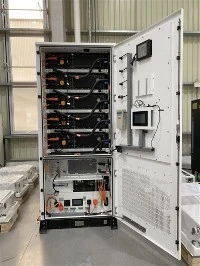
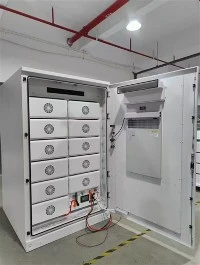
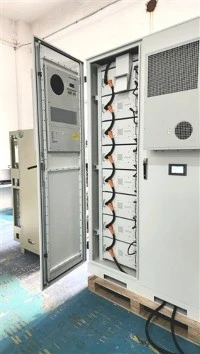
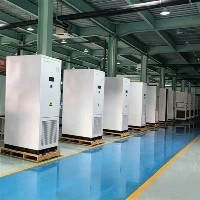
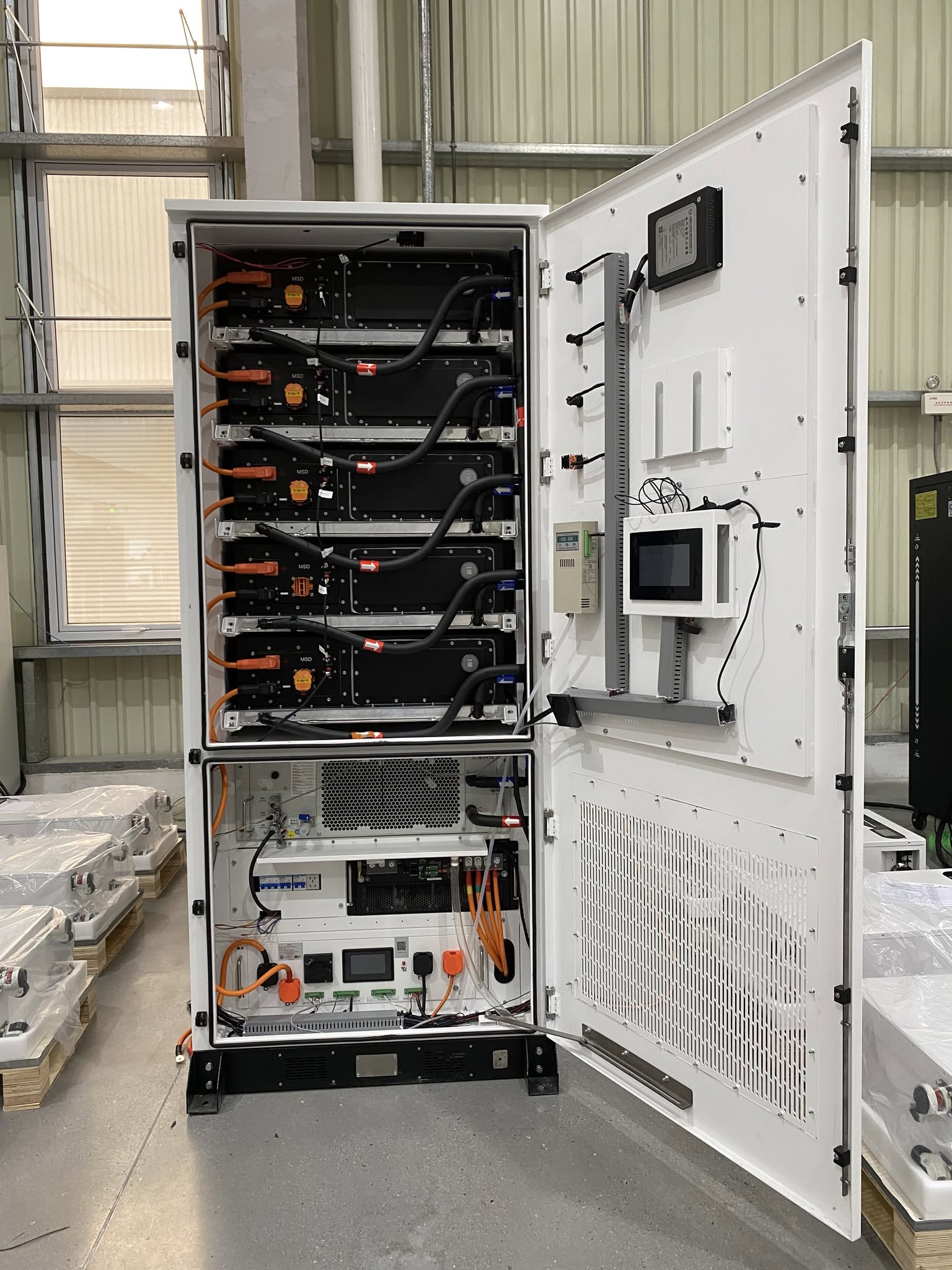
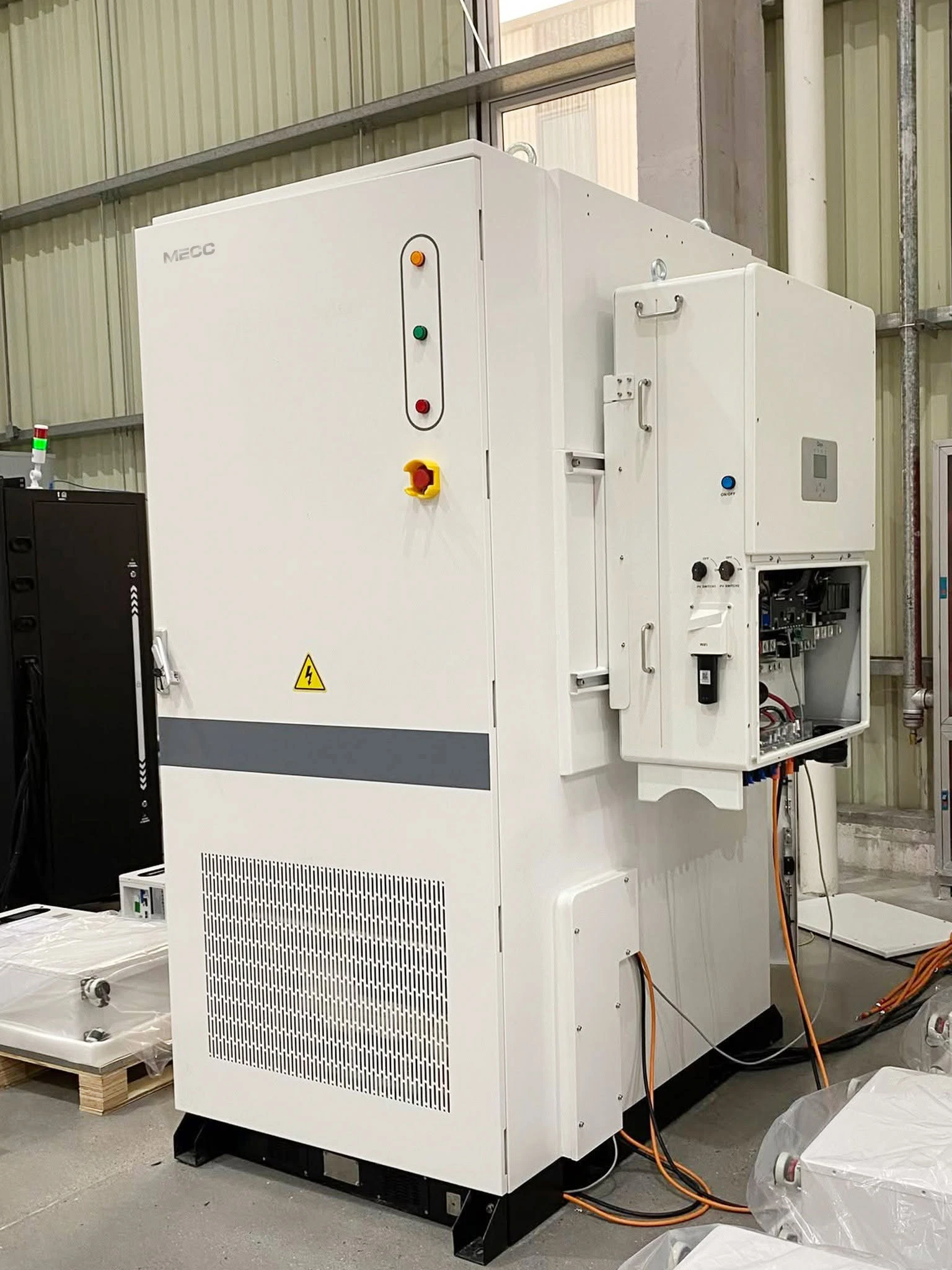
All-in-one energy storage cabinets for fast, clean commercial energy storage installation.
High round-trip efficiency so stored energy isn't wasted.
Whether AC coupled or DC coupled, the architecture must support clean islanding and resync.
The economics of staying powered
Buyers ask commercial energy storage cost per kWh first, but the islanding case is really about avoided loss. One prevented spoilage event, one saved production run, or one avoided SLA breach often justifies the system - and the stacked energy savings then drive commercial battery storage payback. LCOS (levelized cost of storage) captures the full lifetime value of a battery that both protects and profits.
Compliance and safety
Islanding adds strict requirements. Batteries must meet UL 9540 and UL 9540A, installations NFPA 855, and international sites IEC 62619. Just as important is anti-islanding protection per interconnection rules (e.g., IEEE 1547): the system must never back-feed a dead grid and endanger utility workers. Proper battery storage maintenance keeps detection and transfer logic reliable when it matters most.
Choosing the right partner
Islanding is unforgiving - it only works if engineered correctly. A credible commercial energy storage manufacturer or commercial energy storage supplier should model your critical loads, demonstrate the seamless transition, and prove resync to grid. Ask to see a simulated outage, not just a spec sheet.
Related Products
Liquid Cooling 125KW 261kWh Lithium Battery Energy Storage Cabinet
The IP55 Protected All-in-One Solar Energy Storage Cabinet is a high-performance, integrated energy solution engineered for outdoor commercial, industrial, and utility-scale solar applications. It integrates a 125kW Power Conversion System (PCS), a 261kWh lithium iron phosphate (LiFePO4) battery bank, an advanced liquid cooling system, and a intelligent Battery Management System (BMS) into a single cabinet with IP55 weatherproof protection. Designed to withstand harsh outdoor environments while delivering efficient energy conversion and storage, it supports solar energy absorption, peak shaving, load shifting, grid auxiliary services, and emergency backup power. Ideal for utility-scale solar farms, industrial parks, large commercial complexes, and remote microgrids, it provides a reliable, space-saving, and low-maintenance solution for large-scale renewable energy integration.
