


A rooftop or ground-mount solar array is only as valuable as the solar energy you actually use. For years, businesses leaned on net metering and generous feed-in tariffs to make PV pay: export the surplus, collect the credit. That model is fading fast. Utilities across major markets have cut export rates, added export limits, and shifted to "avoided-cost" compensation that pays a fraction of retail. The result is simple - a kilowatt-hour you consume on-site is now worth far more than a kilowatt-hour you sell back. This is the moment commercial solar plus storage stops being a nice-to-have and becomes the standard way to lift your self-consumption rate and compound your savings.

Why self-consumption now beats export
When export value drops, the economics flip. A business that self-consumes its solar avoids buying expensive grid power during the day - and, with storage, during the evening peak too. PV self-consumption is the share of generated solar that is used on-site rather than exported; raising it from, say, 35% to 80% can double the effective value of the same array. For commercial & industrial battery energy storage buyers, maximizing self-consumption is now the primary design goal, with arbitrage and backup as bonus layers.
How a solar-plus-storage system works behind-the-meter
In a behind-the-meter setup, your PV produces electricity that flows three ways: directly to on-site loads, into a battery energy storage system (BESS), or - only the leftover - to the grid. The PCS (power conversion system) manages the energy flow, the BMS (battery management system) protects the cells, and the EMS (energy management system) decides when to charge and discharge based on load, solar generation, and tariff.
Two architectures dominate:
AC coupled: the solar inverter and the battery inverter sit on the AC bus. Flexible, easy to retrofit onto an existing array.
DC coupled: PV feeds the battery directly at DC before inverting. Slightly higher round-trip efficiency and better for new builds.
Either way, the battery captures midday solar surplus that would otherwise be exported at a low rate and releases it when the site needs it most.
Raising your self-consumption rate
The lever is commercial energy storage sizing matched to your solar curve. Most commercial surpluses peak around midday and last 2–4 hours, so a system built from 215 kWh battery storage modules, sized at roughly 0.5C C-rate with a 2-hour duration, captures the bulk of the surplus. Modular energy storage lets you start small and add cabinets as you tune the system to real behavior. The objective isn't maximum battery - it's the smallest buffer that lifts self-consumption to your target without stranding capacity.

Layering savings: self-use + peak shaving + TOU arbitrage
A well-controlled system does three jobs at once:
Self-consumption: store midday solar, use it through the afternoon and evening.
Peak shaving / demand charge reduction: discharge during the site's monthly peak window to clip the peak demand that drives demand charges.
Time-of-use (TOU) arbitrage: shift stored energy into the most expensive time-of-use periods.
Because the same commercial battery storage asset serves all three, the combined savings shorten battery storage ROI well beyond what self-consumption alone would deliver.
Microgrid capability and resilience
Adding storage to solar also unlocks microgrid operation. During an outage or a grid event, the system can island the site - keeping critical loads running on PV and battery. For facilities where downtime is costly, this resilience value often justifies the project on its own, independent of energy savings.
Hardware choices for commercial sites
Industrial and commercial environments are demanding, so component selection matters:
LFP (lithium iron phosphate) chemistry offers safety, stability, and long cycle life - the right call for daily solar cycling.
Liquid-cooled battery storage holds tighter temperature control than air-cooled units, protecting capacity in hot warehouses and plants.
All-in-one energy storage cabinets simplify commercial energy storage installation and reduce footprint.
Watch round-trip efficiency - every point lost is solar energy you paid to generate but never use.
Sizing and the economics
The question buyers ask first is commercial energy storage cost per kWh, but the metric that proves the case is LCOS (levelized cost of storage) - the lifetime cost of each discharged kWh. High self-consumption directly improves LCOS because more of the stored energy displaces retail-priced grid power rather than low-value exports. Together with demand-charge and arbitrage savings, most C&I battery storage projects reach payback in a competitive window, with commercial battery storage payback accelerating as export rates keep falling.
Compliance you can't skip
Large behind-the-meter batteries must meet safety standards: UL 9540 and UL 9540A for system and fire testing, NFPA 855 for installation spacing and protection, and IEC 62619 for international sites. Specifying certified equipment and proper commissioning keeps the system insurable and code-compliant.
Choosing the right partner
Finally, the savings model is only as good as the engineering behind it. A credible commercial energy storage manufacturer or commercial energy storage supplier should model your actual load and solar generation, simulate the self-consumption lift and demand-charge reduction, and support battery storage maintenance over the life of the asset.

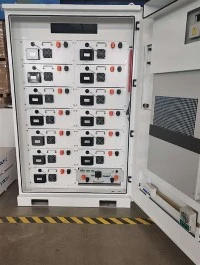
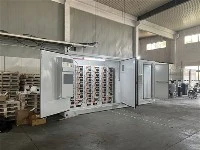
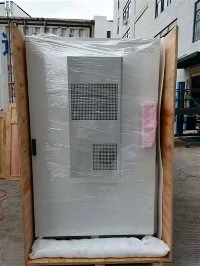
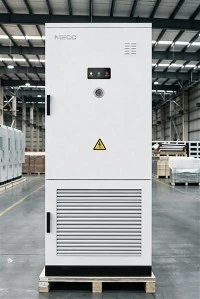
125KW 241kWh Battery Energy Storage System Cabinet
The BESS 125KW 241kWh Lithium Battery Energy Storage Cabinet is a high-power, large-capacity integrated energy storage solution engineered for medium-to-large commercial, industrial, and utility-scale applications. It integrates a 125kW high-performance bidirectional inverter, a 241kWh lithium iron phosphate (LiFePO4) battery bank, and a full-featured intelligent energy management system (EMS) into a modular cabinet design. This system enables efficient renewable energy storage, peak shaving, load shifting, grid frequency regulation, and emergency backup power supply. Ideal for large factories, shopping malls, industrial parks, utility-scale solar/wind farms, and microgrids, it enhances energy independence, reduces high grid demand charges, and supports the stable integration of high-penetration renewable energy into the grid.