


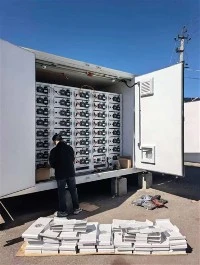
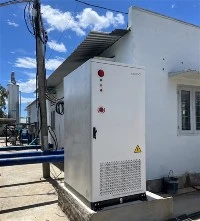
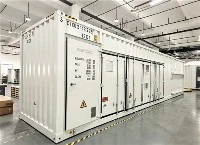
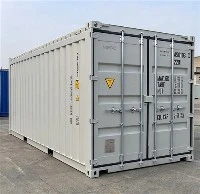
High voltage rack mounted lithium batteries, with their characteristics of "high voltage, high power, and high density," demonstrate strong adaptability in different high-power scenarios - data centers require high reliability and low latency, new energy heavy trucks require high rate and long endurance, and industrial and commercial energy storage requires large capacity and flexible scheduling. Global manufacturers have developed scenario specific high-voltage rack lithium battery solutions through targeted technological innovation, which not only meet the core requirements of the scenario, but also reduce costs through modular design, promoting the transformation of high-voltage rack lithium batteries from "niche products" to "scene necessities".
1 Data center scenario: high reliability and uninterrupted power supply
China's' Dual Active Redundant High Voltage Scheme '. A certain brand of 480V/2MWh high-voltage rack mounted lithium battery is designed for a data center with a "main backup dual path" architecture: the main path is responsible for 90% of the load power supply (in parallel with UPS), and the backup path synchronously charges and discharges in real time (voltage difference<0.1V). When the main path fails, the backup path seamlessly switches within 5ms to ensure that the server does not power down (meeting the "zero interruption" requirement of the data center). At the same time, the system adopts a "zero maintenance design": the battery cells are made of long-cycle lithium iron phosphate (with a capacity retention rate of 80% after 10000 cycles), and vulnerable parts such as fans and contactors are made of military grade components (MTBF>100000 hours), which can achieve 5 years of maintenance free operation and reduce downtime maintenance time by 60% compared to traditional lead-acid batteries. The application of a supercomputer center in Beijing shows that the system has an availability of 99.999% and an average annual failure time of less than 5 minutes, ensuring the continuous operation of supercomputer tasks.
The "High Voltage Direct Supply and Energy Efficiency Optimization" Plan in Europe. A 600V/1MWh high-voltage rack lithium battery in Germany directly supplies power to high-voltage IT equipment in data centers (such as blade servers, rated voltage 400V), eliminating the traditional "high voltage to low voltage" process (reducing 2 energy conversions and reducing losses by 5%). The system is equipped with an "intelligent load balancing" algorithm, which dynamically allocates power supply current (with a deviation of less than 2%) based on the power requirements of each server cabinet to avoid local overload. At the same time, utilizing the waste heat from the data center to insulate the batteries (introducing server heat dissipation into the battery compartment in winter to maintain a temperature of 25 ℃) reduces heating energy consumption (saving 12000 kWh of electricity per year). The actual test of a cloud data center in Munich shows that this solution improves the power supply efficiency of the data center to 95%, saves 300000 yuan in annual electricity bills, and reduces carbon emissions by 180 tons.

2 New energy heavy-duty truck scenario: high magnification and long endurance
The "High Rate Fast Charging High Voltage Solution" in the United States. A high-voltage rack mounted lithium battery with a capacity of 800V/500kWh in California is designed for new energy heavy-duty trucks with a "4C fast charging" capability: using a "silicon carbon negative electrode+highly conductive positive electrode" (silicon content of 15%, positive electrode added with 3% carbon nanotubes), the ion migration rate is increased by three times; At the same time, "liquid cooled microchannels" are used for heat dissipation (aluminum tubes with an inner diameter of 3mm are embedded between the battery cells, and ethylene glycol solution is circulated). During 4C fast charging, the temperature difference between the battery cells is controlled within 3 ℃, and the maximum temperature does not exceed 45 ℃. This battery supports "charging for 15 minutes, with a range of 200 kilometers", meeting the needs of heavy trucks for "fast charging and fast turnover". Tests in a logistics park show that heavy-duty trucks equipped with this battery can meet all day transportation needs (with a range of 400 kilometers) by charging twice a day, reducing charging time by 70% compared to traditional batteries and improving logistics efficiency by 30%.
China's' Long Range and Lightweight High Voltage Solution '. A 480V/600kWh high-voltage rack mounted lithium battery adopts a "high-energy density cell+lightweight structure": the cell energy density reaches 180Wh/kg (lithium iron phosphate), which is 20% higher than traditional cells; The shell adopts an aluminum alloy frame (40% lighter than a steel frame), while optimizing the module layout (increasing space utilization by 15%), resulting in a battery system energy density of 140Wh/kg, which is 30% higher than the industry average. This battery provides a range of 600 kilometers (fully loaded) for new energy heavy-duty trucks, meeting the needs of long-distance transportation; At the same time, it supports "braking energy recovery" (with a recovery efficiency of 75%), which can increase the range by 10% on mountainous roads. According to the application of a certain freight company, heavy-duty trucks equipped with this battery have reduced power consumption by 8kWh per 100 kilometers compared to traditional batteries, saving 24000 yuan in annual electricity bills.

3 Industrial and Commercial Energy Storage Scenarios: Large Capacity and Flexible Scheduling
Europe's' High Voltage Cluster Energy Storage Solution '. A 600V/5MWh high-voltage rack mounted lithium battery cluster in Germany (consisting of 5 1MWh modules) adopts a "master-slave control" architecture: one central controller (response time<10ms) uniformly receives grid dispatch instructions and dynamically allocates charging and discharging power to each module (deviation<1%). Support "multi period charging and discharging plan" (8 periods can be set), adapted to the peak and valley electricity prices of industry and commerce (0.5 euros/kWh during peak hours, 0.1 euros/kWh during valley hours): full power charging during valley hours (00:00-06:00), full power discharging during peak hours (10:00-12:00, 16:00-20:00), with an annual arbitrage profit of 180000 euros. At the same time, the cluster has a "reactive power compensation" function (with a power factor of 0.8 leading to 0.8 lagging), which improves the power quality of the factory. After being applied in a certain automotive parts factory, the power factor was increased from 0.75 to 0.95, saving 12000 euros in monthly power adjustment electricity costs.
China's' High Voltage Photovoltaic Energy Storage Collaborative Program '. A 10kV/10MWh high-voltage rack mounted lithium battery operates in conjunction with a 10MW photovoltaic power station, using the "high-voltage direct parallel" technology (without the need for a step-up transformer, directly connected to the 10kV distribution network) to reduce transformer losses (improve efficiency by 2%). Through the "photovoltaic energy storage collaborative algorithm": when the photovoltaic output is overloaded, excess electricity is directly charged into high-voltage energy storage (to avoid inverter overload); When the photovoltaic output is insufficient, the energy storage can be quickly discharged and replenished (response time<200ms), resulting in a green electricity utilization rate of 85% in the factory, which is 15% higher than the traditional "low-voltage photovoltaic storage" solution. The application of a certain chemical industrial park shows that the collaborative system reduces the annual purchase of electricity from the power grid by 8.6 million kWh, saves 5.16 million yuan in electricity bills, and reduces carbon emissions by 6000 tons, achieving the park's carbon neutrality goal ahead of schedule.
The scenario adaptation of high-voltage rack mounted lithium batteries is essentially a precise match between technical characteristics and scenario requirements. In the future, with the application of solid-state batteries (safer under high voltage) and intelligent BMS (scenario based algorithm optimization), high-voltage rack mounted lithium batteries will achieve breakthroughs in more high-power scenarios (such as aviation ground power supplies and deep-sea exploration equipment), becoming the "core engine" of high-power energy systems and promoting the transformation of global energy towards "high voltage, high power, and high efficiency".