


For decades, inverters were passive participants in the grid: they sensed the voltage and frequency already present and injected current to match. That approach - grid-following - worked fine on a grid dominated by large spinning generators. But as solar and storage proliferate, the grid is changing, and the inverters connecting to it must change too. Grid-forming inverters don't just follow the grid; they help define it. For C&I battery storage, knowing the difference is increasingly the difference between a system that's approved and one that isn't.

The fundamental difference
A grid-following inverter behaves like a current source. It needs an existing voltage and frequency reference to synchronize to, and it injects current accordingly. It cannot operate without a stable grid - if the grid disappears, so does its reference.
A grid-forming inverter behaves like a voltage source. It establishes voltage and frequency itself, much as a generator does, and other assets synchronize to it. That single architectural difference unlocks a range of capabilities the grid-following design simply cannot provide.
Why the distinction has become urgent
As distributed energy resources (DER) - rooftop and utility solar, storage, EV charging - displace traditional synchronous generation, the grid loses inertia and becomes "weaker" in electrical terms. In weak-grid conditions, large concentrations of grid-following inverters can destabilize voltage and frequency. Regulators and utilities have responded: several markets now require or reward grid-forming capability for new storage interconnections. What was a niche technical detail is becoming a procurement requirement.
What grid-forming enables
Grid-forming capability is what makes a storage system a true grid citizen. It provides:
Islanding and microgrid operation - running the site independently when the grid fails.
Black start - energizing a system from a de-energized state.
Seamless backup - transitioning critical loads without interruption.
Voltage and frequency support - actively stabilizing the local grid.
Synthetic inertia - emulating the stabilizing effect of spinning mass.
Better ride-through - remaining connected and helpful during disturbances.
For resilience-focused projects, these aren't luxuries - they're the point.

What grid-following is good at
Grid-following isn't obsolete. It's mature, well-understood, cost-effective, and efficient for straightforward grid-tied applications on strong grids. If your goal is bill savings - peak shaving, TOU arbitrage - and your local grid is robust, a grid-following system may deliver the same economics at lower cost. The mistake is specifying it by default for projects that actually need forming capability.
What it means for C&I projects
The choice maps to your goals:
Resilience, backup, microgrid, outage ride-through → grid-forming is required.
Grid services and ancillary revenue → grid-forming unlocks more options.
Pure bill savings on a strong grid → grid-following may be sufficient and cheaper.
Sites in high-renewable, weak-grid areas → grid-forming improves stability and may be mandatory.
For industrial facilities where downtime is expensive, grid-forming is often the deciding feature.
Standards and certification
Several standards govern this territory. IEEE 1547 sets interconnection requirements, including ride-through and voltage support. UL 1741 certifies inverters, with provisions addressing grid-support and grid-forming functions. At the system level, UL 9540 applies, with NFPA 855 for installation and IEC 62619 for international markets. Buyers should confirm exactly which functions a product's certification actually covers - "grid-support" and "grid-forming" are not the same claim.
Architecture and control
Grid-forming capability lives primarily in the PCS (power conversion system), but it only works when coordinated with the BMS (battery management system) and EMS (energy management system). The BMS must supply power within limits; the EMS must decide when to form an island, support the grid, or return to grid-following. Whether the design is AC coupled or DC coupled affects how these functions are implemented.
Cost and trade-offs
Grid-forming adds cost and complexity relative to grid-following. The question is whether the value justifies it - and for resilience, weak-grid stability, or regulated markets, it frequently does. Conversely, paying for grid-forming on a strong-grid, savings-only project may be unnecessary. Match capability to requirement.
How it affects the economics
Beyond hardware price, this choice shapes commercial energy storage cost per kWh, LCOS (levelized cost of storage), battery storage ROI, and commercial battery storage payback - mainly through resilience value and market access. A grid-forming system that keeps production running through an outage, or that qualifies for grid-service revenue, can outperform a cheaper grid-following unit on lifetime return. In liquid-cooled and air-cooled designs alike, and across modular energy storage and all-in-one energy storage cabinets, the inverter's grid behavior is a core specification, not a footnote.

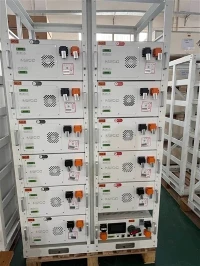
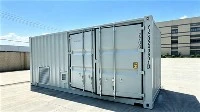
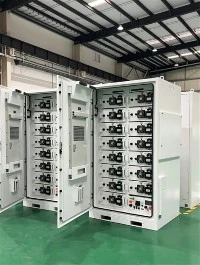
125KW 241kWh Battery Energy Storage System Cabinet
The BESS 125KW 241kWh Lithium Battery Energy Storage Cabinet is a high-power, large-capacity integrated energy storage solution engineered for medium-to-large commercial, industrial, and utility-scale applications. It integrates a 125kW high-performance bidirectional inverter, a 241kWh lithium iron phosphate (LiFePO4) battery bank, and a full-featured intelligent energy management system (EMS) into a modular cabinet design. This system enables efficient renewable energy storage, peak shaving, load shifting, grid frequency regulation, and emergency backup power supply. Ideal for large factories, shopping malls, industrial parks, utility-scale solar/wind farms, and microgrids, it enhances energy independence, reduces high grid demand charges, and supports the stable integration of high-penetration renewable energy into the grid.