


Most buyers come to this question expecting a straight answer: cabinets or containers. But the choice is rarely about the box. It is about the unit of expansion - what you add when the load grows, and how much of the existing system you have to disturb to add it.
That distinction matters more than ever in 2026. A 250 kWh cabinet and a 5 MWh container can use the same LFP cells, the same liquid-cooling architecture and the same EMS, yet behave completely differently when a site goes from 500 kWh to 3 MWh in three stages. One scales by addition. The other scales by re-engineering.
This guide breaks down where modular battery storage wins, where containerised battery storage wins, and how to choose based on your site rather than your supplier's catalogue.
First, the terminology is messier than it looks
"Modular" is used to mean at least three different things in this industry:
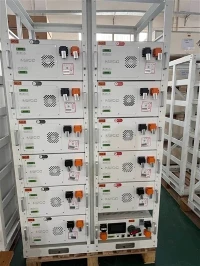
A cabinet or rack of 100–500 kWh, shipped complete, paralleled at the AC or DC bus.
A skid or packaged unit of 500 kWh–1 MWh, often with integrated PCS and fire suppression.
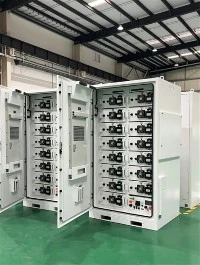
A container that is itself built from modules - meaning the container is modular internally, but monolithic externally.
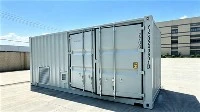
"Containerised" usually means a 10ft, 20ft or 40ft ISO footprint. In practice, a 20ft LFP unit with liquid cooling now carries roughly 3.5–5 MWh, and a 40ft unit roughly 5–8 MWh, depending on duration, cooling margin and whether the PCS is inside the box.
So the honest framing is this: almost every modern C&I battery storage product is modular at the cell and module level. The real difference is the shipping and paralleling unit - and that is what governs scalability.

What "scales better" actually means
Scalability is not a single number. For a commercial or industrial site it decomposes into five practical questions:
Can I add capacity without replacing switchgear, transformers or the PCS?
Can I add capacity without a new permit, a new fire review or a new site plan?
Can I land the equipment on my site with the crane and access I actually have?
Can I take one unit out of service without losing the whole system?
Does the cost per kWh fall, stay flat or rise as I add units?
A technology that scores well on all five is genuinely scalable. A technology that only scores well on the first one is merely expandable on paper.
Where containerised systems scale best
Containers are the default answer for one reason: cost per kWh at block scale. Above roughly 1–2 MWh, a 20ft or 40ft unit usually beats cabinet-based builds on $/kWh, because the enclosure, HVAC, fire detection and cabling are amortised over far more cells.
They also scale well in a specific pattern - the single large block, added in identical increments:
A 2 MWh first phase becomes 4 MWh, then 6 MWh, by repeating the same unit.
Engineering is repeated, not redesigned. The second unit is a copy of the first.
Commissioning is familiar: one block, one set of protection settings, one acceptance test.
Site works are front-loaded. If you know the final capacity at the start, you pour the pad, pull the cable and size the transformer once.
This is why containerised architecture dominates utility-scale and larger industrial projects. If your load profile is well understood, your final capacity is predictable, and your site has hardstanding and crane access, containers are hard to beat.
The failure mode is equally specific: containers punish uncertainty. If phase two arrives with a different PCS vendor, a different DC voltage window or a tighter footprint, you may find yourself re-engineering the AC side rather than repeating it.
Where modular battery storage scales best
Modular battery storage in the cabinet sense wins on a different axis: granularity.
A 100–250 kWh cabinet lets you:
Match capacity to a load that grows in small increments - a retail site adding refrigeration, a factory adding a production line, a building adding EV chargers.
Fit into plant rooms, basements, service corridors and rooftop plant areas where a 20ft container simply will not go.
Distribute storage across a campus instead of centralising it, which reduces cable runs and can defer transformer upgrades.
Replace or service one unit while the rest of the system keeps running.
Start with a smaller cheque and a smaller permitting footprint, then add units as the business case proves itself.
The trade-off is real. Cabinets typically cost more per kWh at equivalent scale, need more field labour per unit of capacity, and multiply the number of connections, protection devices and communication nodes you have to manage. At 3 MWh, a cabinet-based system can mean twelve or more units to wire, address and commission - and every one of them is a potential point of failure in the EMS topology.
Modularity also has a hidden limit: paralleling behaviour. Some systems parallel cleanly to eight or sixteen units; others require a master controller, derating, or a minimum load per unit to stay stable. Always ask for the tested maximum unit count at your target C-rate, not the marketing maximum.

The six dimensions that actually decide it
Footprint and energy density. Containers win on energy per square metre of land. Cabinets win on energy per cubic metre of usable space, because they fit where containers cannot go. Measure the space you truly have, including maintenance clearance - not the space on the site plan.
Logistics and site access. A 20ft unit needs a crane, a rigging plan and usually 6–8 m of turning space. A cabinet can often be moved with a pallet truck and a goods lift. If your site is a basement or a multi-tenant building, this dimension alone settles the question.
Electrical architecture. Containers usually centralise the PCS; cabinets often distribute it. Centralised PCS is cheaper per kW and simpler to protect. Distributed PCS offers redundancy and lets you island individual loads. Decide which of those two you actually need before comparing prices.
Thermal and fire strategy. A container is one fire compartment, so a fault can take 5 MWh offline at once - but it is also easier to isolate, detect and suppress as a single engineered volume. Cabinets create many smaller compartments, which limits fault propagation but multiplies the detection and suppression hardware. Neither is automatically safer; the difference is in how the design handles propagation and access for firefighters.
Augmentation and serviceability. Ask what happens at year eight when you add 500 kWh, and what happens when one unit fails. Modular systems answer both easily. Containerised systems answer the first well if the design reserved space and the second badly if the whole block must be de-energised.
Cost curve and lead time. Below roughly 500 kWh, cabinets are usually cheaper delivered and installed. Between 1 and 3 MWh the two converge. Above 3 MWh, containers normally pull ahead - unless your site constraints force civil works that erase the advantage.
The answer many projects should choose: hybrid
The most scalable architecture is often not one or the other.
A common pattern is a containerised backbone plus modular edge. Put a 20ft or 40ft block at the service entrance for bulk capacity and grid services, then place cabinets closer to specific loads - a cold store, a charging hub, a production line - where the value comes from local resilience rather than bulk energy.
This gives you the container's $/kWh on the volume that matters, and the cabinet's granularity exactly where the site is constrained. It also keeps the two functions electrically separable, so a fault in the edge does not take out the backbone.
An eight-question decision framework
Before you compare quotes, answer these:
What is the capacity at year one, year five and year ten - and how confident are you in each?
Is the final capacity known now, or will it be discovered?
What is the smallest increment you could realistically need to add?
What are the actual access dimensions - door widths, lift capacity, turning radius, crane reach?
Is the storage centralised at the service entrance or distributed near loads?
How many units can be paralleled at your target C-rate, per the vendor's test report?
What is the service strategy - swap a unit, or isolate a block?
Which permits are already granted, and which would a larger footprint trigger?
If answers 1 and 2 point to a known, large, single-block requirement, containerised storage is probably correct. If they point to uncertainty, small increments and constrained space, modular battery storage is probably correct - even at a higher $/kWh, because you are buying the option to stop, pause or redirect.
Four mistakes that cost real money
Buying the format before the load profile. A container sized on a guessed peak will be either oversized or stranded. Model 15-minute interval data first.
Ignoring the transformer. Adding 2 MWh often means a new or upgraded transformer, and that cost can exceed the difference between the two architectures.
Assuming "modular" means "infinitely parallelable." Check the tested unit count and the EMS architecture, not the brochure.
Forgetting the fire review. In many jurisdictions the number of compartments, spacing and separation distances drive approval more than total energy does.
FAQ
Is modular battery storage cheaper than containerised?
Per kWh, usually not at scale. Per project, sometimes yes - because it avoids civil works, crane hire, transformer upgrades and a larger permitting footprint. Compare installed cost, not equipment cost.
Can I mix cabinet and container systems on one site?
Yes, and it is often the best design, provided both sit behind one EMS and one point of grid connection with clear priority logic.
How much can a container system grow?
Typically by repeating identical blocks, subject to switchgear, transformer and fault-level headroom. Plan the electrical infrastructure for the final capacity at day one; that is the single highest-leverage decision in the project.
Which is better for a leased building?
Modular cabinets, almost always. They are easier to remove, relocate and re-permit, which matters if your lease is shorter than your asset life.
Does containerisation limit augmentation?
Not inherently - but only if the original design reserved pad space, conduit and bus capacity. Retrofitting those later is where costs appear.
The bottom line
Containerised systems scale up: efficiently, predictably, and at the lowest cost per kWh, as long as the site and the load are known. Modular battery storage scales out: in small steps, into awkward spaces, and around uncertainty.
The question is not which one is more scalable. It is which kind of growth your site will actually experience. Answer that honestly, and the format choice becomes obvious.

High Voltage Lithium Battery LiFePO4 314Ah Racked
MECC High Voltage Battery 314AH, the epitome of safety and reliability in the world of energy storage. This cutting-edge lithium iron phosphate battery system is specifically designed to cater to the demanding needs of UPS, home storage, and industrial as well as commercial energy storage fields. Whether you're looking to secure uninterrupted power supply, optimize home energy consumption, or enhance industrial energy capabilities, this battery energy storage system delivers the solution you need with unmatched versatility and reliability.