


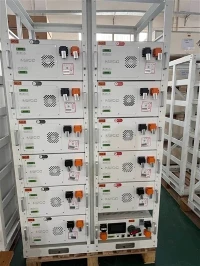
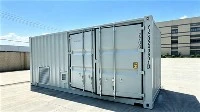
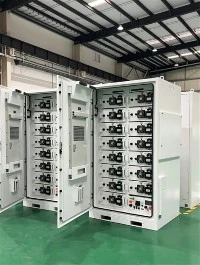

Two cabinets. Same footprint. Same enclosure. Same PCS options. One is 241 kWh, the other 261 kWh, and the price difference is roughly proportional to the capacity difference - which means the cost per kWh is nearly identical.
So which do you buy?
The answer is not "the bigger one, obviously." It depends on what the extra 20 kWh costs you in weight, thermal margin, certification scope, and stranded capacity. This article walks through the decision properly.
Where the Two Numbers Come From
Both ratings almost always describe the same physical platform: the same outdoor enclosure, the same rack structure, the same thermal management, often the same PCS interface. The difference comes from one of two places.
Cell capacity generation. LFP cells have been climbing in capacity per cell for years. When a manufacturer moves from one cell generation to the next, the same rack volume holds more energy without any mechanical redesign. This is how a platform that was 215 kWh becomes 241 kWh, and then 261 kWh, with no change to the enclosure drawing.
Module count or string configuration. Less commonly, the larger rating comes from fitting one additional module or extending the series count within the same cabinet envelope.
The practical implication: the two products are usually the same machine with a different energy inventory. That is good news for footprint and installation planning, and it is exactly why the decision is subtler than it looks.
Start With Usable AC Energy, Not Nameplate
The nameplate number is DC energy at beginning of life under defined test conditions. What you actually operate is AC energy delivered to the site, after depth of discharge limits, conversion losses, auxiliary consumption, and degradation.
A reasonable planning calculation looks like this: nameplate capacity × usable depth of discharge × round-trip efficiency, allowing for the fact that thermal management draws power.
Take a site that needs 200 kWh of AC discharge per day with an 80 kW peak.
For the 241 kWh unit: 241 × 0.95 usable depth of discharge × 0.90 round-trip efficiency ≈ 206 kWh AC at beginning of life.
For the 261 kWh unit: 261 × 0.95 × 0.90 ≈ 223 kWh AC.
Both meet the requirement. The 241 kWh unit clears it with about 3 percent margin. That margin is thin - and it shrinks every year as the battery ages.

The Degradation Question Nobody Models Properly
Run the same numbers at year ten, assuming a typical 70 percent capacity retention guarantee.
The 241 kWh unit delivers roughly 144 kWh AC. The 261 kWh unit delivers roughly 156 kWh AC.
Now compare against your 200 kWh requirement. Neither meets it at year ten. That is normal - most systems are sized so that the economics still work at end of warranty, not so that full output is preserved. But the gap tells you something important: the 20 kWh difference is worth about 12 kWh of AC energy in year ten.
If your load is flat and predictable, that extra headroom may be worthless. If your load is growing - a new production line, more EV chargers, an added cold room - it is cheap insurance. The marginal cost of 20 kWh at the point of purchase is far lower than the cost of adding capacity later.
Weight and Structural Load
This is the most overlooked difference. The 261 kWh cabinet is roughly 8 percent heavier than the 241 kWh unit - typically several hundred kilograms more.
That matters in three places:
Roof or podium installations. Structural capacity is finite. An 8 percent increase can push a rooftop installation from feasible to requiring reinforcement.
Ground conditions. Pad design, point loads, and anchorage all scale with mass. On poor soils, the heavier unit may need a larger foundation.
Lifting and transport. Crane capacity, rigging plans, and forklift ratings are set by weight, not capacity. Verify the loaded weight against your site's lifting equipment before ordering.
If your site is a ground-level pad with adequate bearing capacity, this is a minor consideration. If it is anything else, check it early.
Thermal Margin at Higher Density
More energy in the same enclosure means more heat generated per unit of cooling capacity, unless the thermal system was upgraded alongside the cells.
Ask the supplier directly: is the thermal management system identical between the two ratings, and what is the derating curve at 40°C ambient?
A cabinet designed for 241 kWh and then uprated to 261 kWh with the same cooling hardware may have less headroom at high ambient temperatures, particularly at sustained high C-rates. If your site sees 38°C summers and you plan daily deep cycling, the smaller unit may actually deliver more usable energy in August than the larger one - because it derates less.
This is the kind of question most buyers never ask, and it is exactly where the "bigger is better" assumption breaks down.

PCS Pairing and Duration
Cabinet capacity does not determine power - the PCS does. But the ratio between them determines duration, and duration determines what the system can actually do.
Pair both cabinets with a 100 kW PCS and you get 2.4 hours from the 241 kWh unit and 2.6 hours from the 261 kWh unit. That difference is usually irrelevant.
Pair them with a 125 kW PCS and the durations become 1.9 and 2.1 hours. Still close.
Where it starts to matter is at the edges: if your tariff's peak window is exactly 2.5 hours long, the 241 kWh unit at 100 kW covers it with a small margin, and the 261 kWh unit covers it comfortably. In that specific case, the larger cabinet buys you the ability to run full power through the entire window without leaning on your degradation margin.
Certification Is Configuration-Specific
This is the item that most often decides the question.
UL 9540 listings and UL 9540A test reports apply to specific configurations. A different cell model, a different module, or a different energy rating may fall outside the tested configuration - even if the enclosure is identical.
Before you choose, ask for the certificate and test report that name the exact rating you are buying. If the 241 kWh unit is listed and the 261 kWh variant is a newer SKU awaiting certification, that settles it, regardless of which is technically better.
The same logic applies to private-label arrangements: the certificate holder's name and the product designation must match what appears on your nameplate.
Cost, Standardisation, and Supply
Cost per kWh is usually close between the two, with the larger unit marginally cheaper because enclosure, controls, and thermal hardware are shared across more energy.
But price is not the only commercial factor. Consider:
Which rating is the manufacturer's volume standard? Higher-volume SKUs have shorter lead times, better spare-parts availability, and more field history. A transitional rating may be discontinued within a couple of years, complicating fleet standardisation.
Which one matches your existing fleet? If you already operate cabinets from this supplier, matching the installed rating simplifies spares, EMS configuration, and service training. A 5 percent efficiency gain is not worth a second SKU in your maintenance inventory.
Which one has real operating data? Ask how many units of each rating are in the field and for how long. A rating with two years of fleet data is a lower-risk choice than one shipping for six months.
A Practical Decision Rule
Choose the 241 kWh cabinet when:
Your energy requirement is comfortably met with margin at year one and year ten
The site has structural, weight, or lifting constraints
Your climate is hot and you are already near the thermal limit
The 241 kWh configuration is the certified, volume-standard product
You value fleet commonality over marginal capacity
Choose the 261 kWh cabinet when:
Your load is expected to grow, or you want expansion headroom without a second cabinet
Footprint is fixed and you cannot add units later
The thermal system was genuinely upgraded for the higher density
The 261 kWh configuration is certified and is the manufacturer's mainstream SKU
Cost per kWh is meaningfully better and weight is not a constraint
And in either case, confirm four things in writing: the exact certified configuration, the derating curve at your design ambient temperature, the usable AC energy at year one and year ten, and the loaded weight.
The Bottom Line
The difference between 241 kWh and 261 kWh is small enough that it should not be the centre of your specification. It is a fine-tuning decision, made after you have settled duration, power, chemistry, cooling, and certification.
Get those right, and the cabinet size becomes what it should be: a margin call on how much headroom you want to buy today versus how much you are willing to add later.

125KW 241kWh Battery Energy Storage System Cabinet
The BESS 125KW 241kWh Lithium Battery Energy Storage Cabinet is a high-power, large-capacity integrated energy storage solution engineered for medium-to-large commercial, industrial, and utility-scale applications. It integrates a 125kW high-performance bidirectional inverter, a 241kWh lithium iron phosphate (LiFePO4) battery bank, and a full-featured intelligent energy management system (EMS) into a modular cabinet design. This system enables efficient renewable energy storage, peak shaving, load shifting, grid frequency regulation, and emergency backup power supply. Ideal for large factories, shopping malls, industrial parks, utility-scale solar/wind farms, and microgrids, it enhances energy independence, reduces high grid demand charges, and supports the stable integration of high-penetration renewable energy into the grid.