


The decision between an indoor and an outdoor battery cabinet is usually made in the first meeting, almost casually: "We'll put it outside by the service entrance." Everything that follows - the enclosure rating, the fire protection strategy, the thermal design, the permitting path, the maintenance routine - flows from that one sentence.
It deserves more deliberation than it usually gets. The two options are not the same product in different packaging. They are subject to different code provisions, different environmental loads, and different lifetime costs.
What Actually Distinguishes the Two
An outdoor cabinet is not simply an indoor cabinet with a rain cover. The differences that matter are engineering decisions:
Ingress protection. Outdoor units typically carry IP54 or IP55 - protected against dust and water spray. Indoor units may be IP20 or IP31, because the building envelope does the weatherproofing. A lower IP rating is cheaper, but only valid if the room genuinely stays dry and clean.
Corrosion class. Outdoor installations need a defined corrosivity category - C3 for typical urban and industrial atmospheres, C4 for coastal or heavily polluted sites, C5 for offshore or severe salt exposure. Indoor units in conditioned spaces rarely need more than C3.
UV and thermal cycling. Outdoor enclosures face solar gain, day-night cycling, and ultraviolet degradation of seals, coatings, and cable entries. Indoor units do not, which extends seal life considerably.
Condensation management. This is the quiet killer of outdoor installations. A sealed cabinet that heats during the day and cools at night draws moisture inward. Outdoor units need breathers, desiccant, or active humidity control - and heaters in cold climates.
Fire rating and separation. Indoor installations bring the battery into a building, which triggers occupancy, egress, and fire-area provisions that outdoor installations avoid entirely.

The Outdoor Case
Outdoors is the default for most commercial and industrial projects, and for good reasons.
No building footprint consumed. On a site where floor area is productive - manufacturing, warehousing, retail - giving up 15 to 30 square metres of interior space has a real opportunity cost.
Simpler fire compliance. NFPA 855 imposes separation distances from buildings, property lines, and exposures rather than compartmentation requirements. Meeting a distance table is usually cheaper than building a fire-rated room with detection, suppression, and ventilation.
Easier expansion. Adding a second cabinet outdoors is a pad and a cable. Adding one indoors may mean re-opening a fire analysis and re-negotiating with the authority having jurisdiction.
Faster deployment. No building works, no room construction, no modifications to the building's fire strategy.
Lower structural burden indoors. An outdoor pad carries the load directly to grade. An indoor installation must satisfy floor loading, which on upper floors or mezzanines can be prohibitive.
The costs are environmental. Outdoor cabinets are exposed to the full ambient range, which means derating in heat and heating load in cold. They face snow accumulation, wind loading, driving rain, dust, wildlife, and vandalism. Maintenance happens in whatever weather the site offers.
The Indoor Case
Indoor installation wins in specific conditions, and when it wins, it wins clearly.
Thermal stability. A conditioned plant room holds a narrow temperature band year-round. That means less derating, slower degradation, and a flatter capacity curve over ten years. In a hot climate, this can be worth more than the cost of the room.
Maintenance quality. Technicians work dry, at a comfortable temperature, with better lighting and easier access to test points. Service visits are faster and diagnostics are more reliable.
Security and aesthetics. No exterior enclosure to vandalise, no visible industrial equipment near customer entrances, no separate site security perimeter to extend.
Shorter cable runs. If the electrical room and the point of connection are indoors, putting the battery nearby can save significant DC and AC cable cost - sometimes enough to offset the room build.
The constraints are regulatory and structural. Indoor lithium storage is subject to NFPA 855 provisions on maximum stored energy per fire area, separation between units, fire detection, suppression, ventilation, and emergency planning. In many occupancies, the allowable energy per fire area is capped at a relatively low threshold unless additional protection or separation is provided - and the exact figure depends on the code edition your jurisdiction has adopted. Verify it against the local version rather than a number from a blog post, including this one.
Beyond code, indoor installation imposes floor loading limits, HVAC capacity for the battery's heat load, acoustic considerations, and a harder path to expansion.
Climate and Site Factors That Decide It
Cold climates. Outdoor cabinets need heating to keep cells above their charging temperature limit. That is a continuous parasitic load all winter. An indoor unit in a heated building may need no additional heating at all. Run the annual kWh cost of both before assuming outdoor is cheaper.
Hot climates. Outdoor units derate earlier and run the thermal system harder. Shade structures and orientation help, but a west-facing cabinet in a desert summer is a hard duty. Indoor conditioned space often delivers more usable energy from the same nameplate.
Coastal and industrial atmospheres. Salt and chemical exposure push you to C4 or C5 coatings, stainless fasteners, and sealed cable entries. That premium is real; budget for it rather than discovering it in year three when the enclosure shows corrosion.
Dusty environments. Mining, aggregate, and agricultural sites clog filters and heat exchangers. Indoor rooms with filtered ventilation can be easier to manage than an outdoor cabinet breathing abrasive dust.
Flood risk. An outdoor pad needs to sit above the local flood level, with drainage that does not route water toward the cabinet. Indoors, flood risk may be lower or higher depending on the floor level.
Snow and wind. Roof snow load and wind uplift are structural design inputs for outdoor units. In high-wind regions, anchorage and enclosure rating must be specified, not assumed.

A Decision Framework
Ask these eight questions before committing.
Do you have secure, accessible outdoor space that satisfies separation distances?
What is the site's ambient temperature range, and what is the resulting derating or heating load?
What corrosivity category applies - C3, C4, or C5?
Is there an existing conditioned room with spare floor area and floor-loading capacity?
How much would the room build, fire protection, and HVAC cost relative to an outdoor pad?
How close is the point of connection, and what is the cable cost difference?
Will the system need to expand within ten years, and which option accommodates that?
What will the AHJ actually approve, and how long will that take?
The last question is often decisive. An outdoor solution that clears the fire department in six weeks beats an indoor solution that requires a variance and four months of review - even if the indoor design is technically superior.
Hybrid Options Worth Considering
The binary is not always necessary.
Canopy or shade structure over an outdoor cabinet. Reduces solar gain and slows coating degradation at modest cost. Common in hot climates.
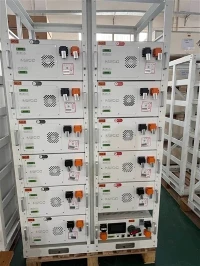
Skid-mounted unit in a dedicated room. Keeps the factory-integrated outdoor-rated enclosure but places it indoors, gaining thermal stability while retaining the certified configuration.
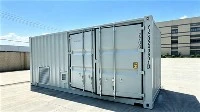
Walk-in container. Provides weather protection and service access for larger systems, effectively an outdoor-rated enclosure with an indoor working environment.
Outdoor-rated cabinet inside a simple shelter. The cheapest way to get most of the indoor thermal benefit without a fire-rated room - provided the shelter does not create a confined-space or ventilation problem.
The Cost Comparison Most People Skip
The purchase price of an outdoor cabinet is usually lower than an indoor unit plus room works. But the total comparison should include:
Room construction or pad, foundation, and drainage
Fire protection: detection, suppression, fire-rated separation, ventilation
HVAC capacity and its lifetime energy consumption
Heating load for outdoor units in cold climates
Derating losses in hot climates, valued at your tariff
Cable and conduit runs to the point of connection
Coating and corrosion maintenance for outdoor units
Insurance premium differences
Permitting time and the cost of delay
When those are included, outdoor wins in most ground-mount industrial projects and indoor wins in most building retrofits where a suitable room already exists.
Bottom Line
Choose outdoor when you have space, a manageable climate, and a fire separation path that the AHJ will accept quickly. Choose indoor when the building already offers conditioned space, the climate is extreme, or the point of connection makes cable runs expensive.
Whichever you choose, specify the enclosure to the environment rather than to a catalogue default - IP rating, corrosivity class, temperature range, snow and wind loads, and condensation control. The cabinet that survives year twelve is the one that was specified for the site, not the one that was cheapest on the quote.
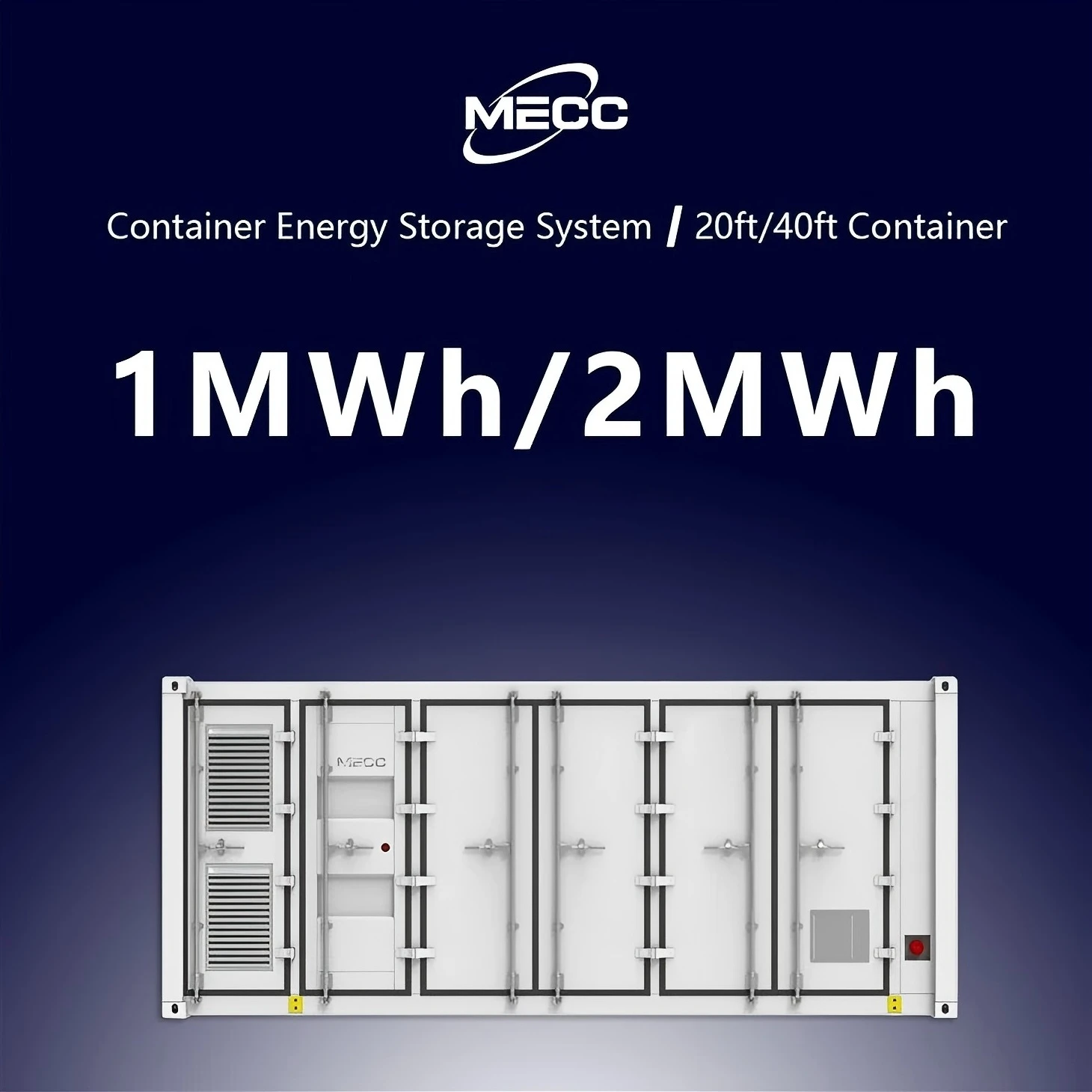
500KW/1MW 1MWh/2MWh Battery Energy Storage System Container
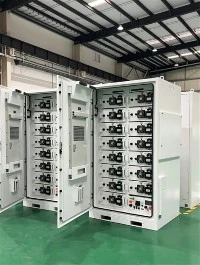
The 500kW/1MW 1MWh/2MWh Battery Energy Storage System Container is a turn‑key utility‑grade energy storage solution housed in standard 20ft or 40ft shipping containers, integrating bidirectional PCS, A‑grade LiFePO4 battery clusters, master BMS, liquid‑cooled thermal management, gas fire suppression, high‑voltage distribution and EMS energy management system with full factory pre‑assembly and pre‑commissioning. Requiring only foundation construction and high‑voltage cable connection for on‑site commissioning, it supports flexible power‑capacity configuration and multi‑container parallel expansion, delivering core capabilities of peak‑shaving and load shifting, renewable energy smoothing, frequency‑voltage grid support, islanded micro‑grid operation and large‑scale emergency backup. Featuring IP54 enclosure protection and comprehensive multi‑layer safety mechanisms, it adapts to diverse harsh outdoor environments, and is widely deployed for ground‑mounted PV power stations, industrial parks, mining operations, island microgrids and grid‑side auxiliary service projects to stabilize grid fluctuations, boost renewable energy utilization and reduce comprehensive energy costs.