


Manufactured in-house on 314Ah LFP cells, the rack-mounted battery platform targets commercial and industrial storage, solar integration, and critical backup.
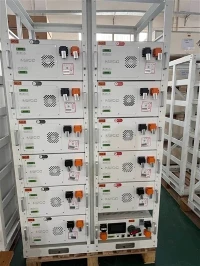
A new high-voltage rack-mounted lithium battery system has entered production, assembled from standardized 16kWh modules built on 314Ah lithium iron phosphate (LFP) cells. The platform is designed for commercial and industrial (C&I) energy storage, solar-plus-storage, and backup power where installers need predictable capacity and straightforward scaling. Production takes place inside the manufacturer's own battery factory, which keeps cell screening, module assembly, and rack integration under one roof.
The system answers a common request from overseas buyers: a battery rack that reaches the DC voltages modern three-phase inverters require, without custom engineering for every project. By standardizing on a single 16kWh module, the same building blocks serve a small commercial site and a multi-rack industrial installation.
Built on 314Ah LFP Cells
The 314Ah cell is the foundation of the product. Each module arranges 16 cells in series to form a 51.2V nominal block that delivers 16kWh of usable energy. LFP chemistry brings inherent thermal stability and a long service life, which suits stationary storage better than higher-energy-density chemistries that trade safety for capacity. For a battery that sits in one place for a decade, that trade is the right one.
Because every module uses the same cell, the production line stays simple and quality control is repeatable. Cells are graded and matched before assembly, so modules shipped in the same order behave consistently under load. That consistency matters to buyers who commission several racks at once and expect uniform performance.
Core Highlights of the High-Voltage Rack
16kWh Standardized Module
Each 16kWh pack is a self-contained unit with its own balancing and management. Standardizing on one module size lets integrators build systems from a few kilowatt-hours to several hundred without redesign. The module is compact enough for rack or cabinet mounting and light enough for two-person handling, which reduces crane use and site labor.
High-Voltage Rack Architecture
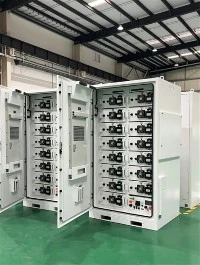
Modules connect in series within a rack to reach the higher DC voltages that commercial inverters demand. By stacking 16kWh blocks, a single rack delivers substantial energy at voltages suited to 3-phase C&I equipment, while reducing the number of parallel strings and the cabling that comes with them. The rack frame carries the busbars, management wiring, and mechanical support in one structure, so on-site work is mostly connection rather than fabrication.
In-House Manufacturing and Traceability
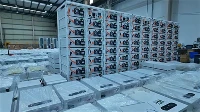
Produced inside the manufacturer's battery factory, the system benefits from vertical integration. Cell screening, module assembly, and final rack integration happen under one quality system, which shortens lead times and keeps traceability from individual cell to finished rack. Distributors and EPCs receive consistent documentation and deal with a single point of accountability across hardware and support.
Technical Advantages That Lower Lifecycle Cost
The 314Ah LFP cell supports a long cycle life, typically in the range of 6,000 cycles at 80% depth of discharge. Over a project's service life, that endurance is the main driver of low stored-energy cost, more so than a slightly lower upfront price on a shorter-lived pack.
Each module carries its own battery management system with per-cell voltage and temperature monitoring, balancing, and protection against overcharge, over-discharge, and short circuit. Standard communication ports (CAN and RS485) let the rack report status to an external energy management system or inverter. Rack-level fusing, a disconnect, and temperature sensors add layers of protection that matter for permitting and insurance in stricter markets.
Optional thermal management keeps the pack within its operating window in cold or hot climates, which protects winter capacity and summer lifespan. The modular design also means a faulty module can be isolated and replaced without taking the whole rack offline.
Application Scenarios for Overseas Buyers
The rack fits a range of commercial and industrial uses:
Factories and warehouses using the system for peak shaving and demand-charge reduction.
Commercial buildings and farms pairing the rack with rooftop or ground solar for self-consumption.
Critical facilities such as small data centers and clinics needing clean backup during grid outages.
Off-grid and microgrid sites, including islands, remote communities, and mining camps.
Telecom and utility infrastructure where reliable, low-maintenance storage is mandatory.
For engineering, procurement, and construction (EPC) contractors, the standardized 16kWh module reduces design risk and on-site labor. For distributors, it is a scalable SKU backed by factory engineering, datasheets, and spare-part support. For project owners, it provides a single warranty and a clear path to capacity expansion as load grows.
Market Value Across the Project Lifecycle
The value of a rack lithium battery is measured over years, not at the point of purchase. The LFP chemistry and matched 314Ah cells protect capacity retention, which preserves the energy available for arbitrage and backup as the system ages. Fewer parallel strings mean fewer points of failure, and front-access modules keep service simple.
For procurement teams, vertical integration removes a layer of supplier coordination. One manufacturer handles cell grading, module build, rack assembly, and after-sales support, which shortens schedules and clarifies warranty responsibility. In regions where skilled battery labor is scarce, receiving a pre-integrated rack rather than loose components is a meaningful advantage.
Outlook
The manufacturer positions the 314Ah, 16kWh-based high-voltage rack as a core building block in its energy storage lineup. As 314Ah LFP becomes a de facto standard cell size across the industry, systems built on it gain from scale, stable supply, and broad compatibility with commercial inverters. The company continues to expand production capacity and regional service coverage to meet growing C&I demand in Europe, the Middle East, Southeast Asia, and Latin America.
The high-voltage rack is available now for project evaluation and volume orders. Interested buyers, EPCs, and distributors can contact the manufacturer for module specifications, rack configuration tools, and regional delivery terms.

High Voltage Lithium Battery LiFePO4 314Ah Racked
MECC High Voltage Battery 314AH, the epitome of safety and reliability in the world of energy storage. This cutting-edge lithium iron phosphate battery system is specifically designed to cater to the demanding needs of UPS, home storage, and industrial as well as commercial energy storage fields. Whether you're looking to secure uninterrupted power supply, optimize home energy consumption, or enhance industrial energy capabilities, this battery energy storage system delivers the solution you need with unmatched versatility and reliability.