


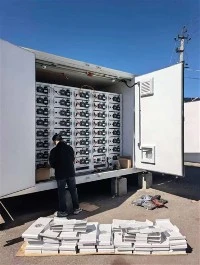
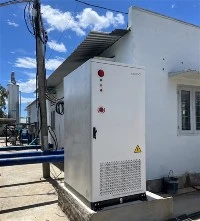
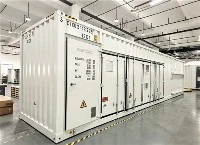
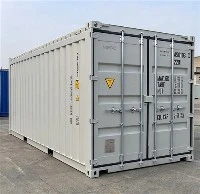
Energy storage containers, with their characteristics of prefabrication, modularity, and mobility, have become a "rapid response force" to meet sudden energy demands and fill the gap in the power grid. Global projects have achieved "deployment and grid connection within 1-2 weeks" in scenarios such as natural disaster emergency response, power grid load growth, and new energy consumption, shortening the construction period by 80% compared to traditional civil energy storage. This plays a key role in ensuring energy security and improving power grid resilience, demonstrating the flexible value of energy storage containers that can be deployed wherever needed.
1 Natural disaster emergency: rapid restoration of power supply
The Hurricane Emergency Energy Storage Cluster in the United States. Hurricane Ida will hit Louisiana in 2023, causing power outages for 2 million users. FEMA (Federal Emergency Management Agency) urgently dispatched 50 50MWh energy storage containers and deployed 10 emergency power supply points within 48 hours through the "trailer transportation+temporary grid connection" mode, providing continuous power for hospitals, shelters, and communication base stations. The energy storage container adopts a "off grid and grid connected dual-mode" design: the initial off grid is used to supply power to critical loads, and after the power grid is restored, it switches to grid connection and cooperates with diesel generators (to supplement nighttime power), making the power supply reliability of the shelter reach 99%, which is 30% higher than relying solely on generators. The emergency power supply lasts for 15 days until the power grid is fully restored.
China's' Earthquake Emergency Energy Storage Plan '. Ganzi Prefecture, Sichuan Province has deployed 20 10MWh "mobile emergency energy storage containers", equipped with trailer chassis (which can be towed by trucks), fast grid connection interface (completed wiring within 1 hour), and integrated photovoltaic charging function (with 20kW flexible photovoltaic panels laid on the top). After the local earthquake in 2024, three energy storage containers arrived in the earthquake area within four hours to provide lighting and medical equipment power for temporary resettlement sites. Photovoltaic daytime charging can meet 30% of electricity demand, and the remaining is supplemented by emergency power grids to avoid diesel generator noise and pollution problems. After the earthquake, the power supply continued for 10 days, serving more than 2000 affected people.

2 Power grid load growth: temporary energy replenishment support
India's' Summer Load Peak Energy Storage Supplement '. The summer electricity load in Uttar Pradesh, India has surged (peak exceeding 20GW), and the power grid frequently experiences power outages and restrictions. The local power company leases 100 20MWh energy storage containers from April to June each year and deploys them in load intensive industrial parks and residential areas. They adopt a "peak discharge, valley charging" mode, releasing 400MWh of electricity every day from 18:00 to 22:00 (peak load) to alleviate the power supply pressure on the grid. Energy storage containers, through "short-term leasing+flexible scheduling", avoid long-term investment in new power plants (with costs only 1/5 of new power plants). By the summer of 2023, the frequency of power outages and restrictions will be reduced from 10 times per day to 2 times per day, reducing production losses for industrial enterprises by 30%.
Transition energy storage for power grid upgrade in Europe. During the upgrade period of the London power grid in the UK (2023-2025), in order to avoid power outages caused by construction, 30 30MWh energy storage containers will be deployed around the upgraded section as a "transitional power source": during the construction period (8:00-18:00 every day), energy storage will be connected to the grid for power supply, ensuring electricity supply for surrounding commercial districts and residents; After the power grid is restored at night, energy storage and charging are carried out. The deployment of energy storage containers enables the upgrading of the power grid without the need for power outages, and the revenue of commercial districts is not affected. At the same time, the construction period is shortened by 20% (without waiting for nighttime power outage windows), and the economic and social benefits of the project are significant.

3 New energy consumption: on-site storage improves utilization efficiency
Australia's' Rapid Deployment of Photovoltaic Energy Storage '. A 1GW photovoltaic power station in Queensland is unable to connect some of its photovoltaic output to the grid due to insufficient grid capacity (with a curtailment rate of 15%). The power station operator urgently deployed 50 40MWh energy storage containers, connected to the nearest photovoltaic array, to store abandoned solar power during the day (about 150MWh/day), connect to the grid during low load periods at night, and participate in grid frequency regulation (providing 50MW frequency regulation capacity). The energy storage container will be deployed within 2 weeks, reducing the curtailment rate to below 5%, increasing the annual photovoltaic grid connected electricity by 5.4 GWh, and generating a frequency modulation income of AUD 2 million per year. The investment payback period is only 4 years.
China's' wind power consumption and energy storage buffer '. The winter wind power curtailment rate at Jiuquan Wind Power Base in Gansu is relatively high (about 20%), mainly due to the limited capacity of the power grid transmission channels. 80 25MWh energy storage containers are deployed locally, adopting the strategy of "priority charging for wind power and on-demand discharge for the power grid": when the wind power is large (wind speed 8-12m/s), the energy storage is fully charged (2000MW) to avoid wind power abandonment; When the power grid needs it (such as peak electricity consumption or sudden drop in wind power output), energy storage can be quickly discharged and replenished. The energy storage container reduces the wind power curtailment rate to 8% through "on-site storage+flexible adjustment", increases the annual wind power grid capacity by 1 billion kWh, and enhances the grid's ability to accept wind power.
The "multi scenario rapid deployment" capability of energy storage containers is redefining the application value of energy storage - from "fixed assets" to "flexible energy resources". In the future, with the standardization (unified interface, compatible size) and intelligence (autonomous positioning, automatic grid connection) of energy storage containers, "global dispatch and instant response" will be achieved, playing a more critical role in emergency supply, grid regulation, new energy consumption and other scenarios, and becoming a "mobile reserve force" of the global energy security system.