


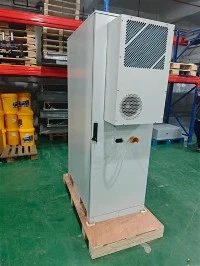
Industrial and commercial energy storage containers, with their "flexible deployment+multiple benefits" characteristics, have become the core tool for enterprises to cope with high electricity prices and reduce electricity costs. Global projects earn electricity price differentials through "peak valley arbitrage", combined with "demand management" to reduce basic electricity bills, and construct a dual benefit model to shorten the investment payback period of energy storage to 3-5 years, while enhancing enterprise energy autonomy. In the context of intensified energy price fluctuations, it provides a dual value of "stable cost+risk hedging" for industrial and commercial users.
1 Peak valley arbitrage: optimizing returns in the time dimension
China's' dynamic charging and discharging strategy '. A 10MWh energy storage container project at an electronics factory, based on the local peak valley electricity price difference (1.2 yuan/kWh during peak hours and 0.3 yuan/kWh during valley hours), adopts the "AI prediction dynamic adjustment" charging and discharging strategy: by analyzing historical electricity consumption data and the next day's production plan, a charging and discharging curve is formulated in advance - valley segment (00:00-08:00) full power charging (10MW), storing 80000 kWh of electricity; During peak periods (10:00-12:00, 16:00-20:00), dynamic discharge is carried out based on production load, with priority given to replacing high priced electricity from the power grid. The actual project testing shows that the annual arbitrage profit reaches 3.24 million yuan, which is 15% higher than the fixed charging and discharging mode, while reducing the amount of electricity purchased from the power grid by 20%, and saving more than 5 million yuan in annual electricity bills.
Real time electricity price response technology in Europe. A 5MWh energy storage container from a German automotive parts factory is connected to real-time electricity price data from the European Electricity Exchange (EPEX) (updated every 15 minutes). Through the "electricity price threshold trigger" mechanism, when the real-time electricity price exceeds 0.5 euros per kilowatt hour, the discharge will automatically start (with a maximum discharge power of 5MW); When the electricity price is below 0.2 euros per kilowatt hour, start charging. During the 2023 energy crisis, the project captured fluctuations in electricity prices (up to 1.2 euros/kWh) and achieved a monthly arbitrage profit of over 200000 euros, which is three times higher than conventional peak valley arbitrage, effectively hedging against the pressure of rising energy costs.

2 Demand Management: Cost Control in the Power Dimension
The 'demand forecasting and reduction' plan of the United States. A 20MWh energy storage container cluster of a supermarket chain enterprise in California predicts the maximum demand of each store 2 hours in advance through a "demand forecasting algorithm" (combining store foot traffic, cold chain load, and weather data) (the power grid charges basic electricity fees based on the maximum demand). When the predicted demand exceeds the contracted capacity, automatic energy storage discharge is initiated to reduce the power grid load - for example, if a store predicts that the demand will exceed the contracted capacity by 100kW, the energy storage will immediately release 100kW to keep the actual demand within the contracted range. After the implementation of the project, the basic electricity bill of the enterprise was reduced by 25%, saving an annual cost of 1.8 million US dollars, while avoiding overloading fines (California overloading fines reached 20 US dollars/kW).
China's' demand bidding participation 'model. A 200MWh energy storage container project in an industrial park participated in the local power grid's "demand bidding" market: the power grid released the demand reduction demand for the next day one day in advance (such as reducing 50MW), and the park bid by aggregating energy storage resources. After winning the bid, it reduced the load by 50MW during a designated period (such as 14:00-16:00), and received a subsidy of 0.8 yuan for each 1kW reduction. The project has won 300 bids annually, with a demand subsidy income of 1.2 million yuan. At the same time, the basic electricity bill has been reduced by 20%, forming a triple income of "arbitrage+subsidy+demand savings". The investment payback period has been shortened from 5 years to 3.5 years.

3 Dual mode collaboration: maximizing multi-dimensional benefits
Europe's' peak valley demand synergy control '. A 15MWh energy storage container at a chemical plant in France adopts the "peak valley demand synergy algorithm": during peak discharge, priority is given to meeting production loads while ensuring that the contracted capacity for demand is not exceeded; When charging in the valley section, avoid the peak load of the power grid (such as charging from 2-4 am when the power grid load is at its lowest), and avoid pushing up your own demand. The algorithm will also dynamically adjust the priority of charging and discharging based on changes in electricity prices and demand contracts - prioritizing arbitrage when there is a large difference in electricity prices, and prioritizing demand control when demand approaches overcapacity. The actual measurement of the project shows that the annual comprehensive income of the dual mode synergy is 40% higher than that of the single mode, and the investment payback period is shortened by 1.2 years.
China's' multi energy complementary synergy '. A 30MWh energy storage container in a certain steel plant is operated in coordination with the photovoltaic (10MW) and waste heat power generation (5MW) in the plant area: during the day when the photovoltaic is in full swing, priority is given to using photovoltaic power supply, and the surplus electricity is charged into the energy storage, while controlling the total load to not exceed the demand contract; During the evening peak period, energy storage and waste heat power generation are discharged in coordination to replace high priced electricity from the power grid. Through the "multi energy complementarity+peak valley demand dual mode", the enterprise reduces the annual electricity purchase from the power grid by 40%, saves over 12 million yuan in electricity bills, and reduces carbon emissions by 15000 tons, achieving a win-win situation of "economic benefits+environmental benefits".
The dual mode of "peak valley arbitrage+demand management" for industrial and commercial energy storage containers is shifting from "single benefit" to "multi-dimensional collaboration". In the future, with the aggregation of virtual power plants (participating in grid auxiliary services) and the linkage of carbon markets (obtaining carbon benefits through emission reduction), industrial and commercial energy storage will realize the quadruple value of "arbitrage+demand+auxiliary services+carbon benefits", becoming the "core asset" of enterprise energy transformation, and promoting the transformation of the industrial and commercial sector from "used electricity" to "active energy management".