


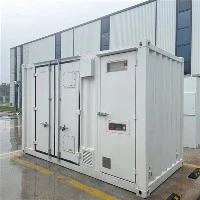
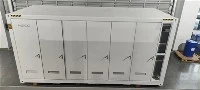
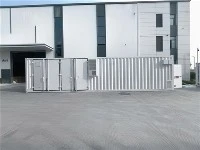
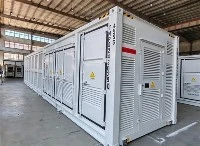
Container energy storage, as a key equipment for global energy transformation, has formed differentiated technological routes in different climate zones and power grid demands. Liquid cooling systems dominate the market in high-temperature regions with their efficient heat dissipation, while air cooling solutions dominate temperate regions with their low-cost advantages, and antifreeze design in cold regions has become a technological breakthrough. This localized technological choice is not only an adaptation to the environment, but also a microcosm of the diversified innovation in the global energy storage industry.
1 Liquid cooling system: a heat dissipation necessity in tropical regions
In regions such as the Middle East and Africa where temperatures consistently exceed 30 ℃, liquid cooled container energy storage has become a standard feature. Its core lies in "precise temperature control" - by circulating ethylene glycol aqueous solution (freezing point -35 ℃) through the pipes between battery clusters, the temperature of the battery cells is controlled at 25 ± 2 ℃, which is 5 ℃ lower than the temperature difference of the air-cooled system. In the 1.2GWh energy storage project in Saudi Arabia's Red Sea New City, the liquid cooling system extends the battery cycle life to 6000 times, which is 20% higher than the same capacity air-cooled system and sufficient to support an operating cycle of more than 15 years.
The regional adaptability of liquid cooling technology is constantly upgrading. In response to the sandstorm environment in the Middle East, a certain enterprise has developed a "fully enclosed liquid cooled cabin", which uses positive pressure protection (the cabin pressure is 50Pa higher than the outside) to prevent sandstorms from entering, and at the same time uses titanium alloy heat exchangers to resist seawater corrosion (seawater cooling is used in the Red Sea region). This design extends the equipment maintenance cycle from 3 months to 1 year, reducing the single GWh operation and maintenance cost by $400000. In humid areas of Southeast Asia, liquid cooling systems integrate dehumidification function to control the humidity inside the cabin below 60%, avoiding short circuits of battery terminals due to moisture.

2 Air cooling system: cost advantage in temperate markets
Temperate regions in Europe and America prefer air-cooled solutions, which have an initial investment 15% -20% lower than liquid cooling, making them the preferred choice for household and industrial energy storage. A 50MWh energy storage power station in Germany adopts a "side in, top out" airflow organization design, with fan layout at a 45 ° angle to the battery cluster, which improves the uniformity of temperature distribution in the cabin to ± 3 ℃, meeting the heat dissipation needs of ternary lithium batteries. In Europe, where the power grid is stable, the low complexity of air-cooled systems means higher reliability. The average time between failures (MTBF) of a certain project reaches 1800 hours, which is 30% higher than that of liquid cooled systems.
Intelligent air cooling technology is narrowing the performance gap. The "adaptive variable frequency fan" developed by American companies can automatically adjust the speed (500-2000rpm) according to the temperature of the battery cell, saving 40% energy compared to traditional fixed frequency fans. In the 100MWh project in New York State, this technology reduced the annual electricity consumption from 25000 kWh to 15000 kWh, with a cost reduction of $0.01 per kWh. In response to the temperature difference between day and night in temperate regions, the air cooling system has added a "natural ventilation at night" mode, introducing cold air through louvers to further reduce mechanical cooling energy consumption. In the practice of Bavaria, Germany, this mode can cover 30% of the annual heat dissipation demand.

3 Cold Zone Special Supply: Technological Breakthrough in Antifreezing and Thermal Insulation
Container energy storage in cold regions such as Russia and Northern Europe is facing the challenge of extreme low temperatures of -40 ℃. The core solution is the combination of "active preheating+passive thermal insulation": the battery cluster is wrapped with 50mm thick aerogel felt (thermal conductivity 0.018W/(m ・ K)), and the cabin is made of PU foam sandwich plate (thermal insulation performance is 5 times that of ordinary steel plate); When the temperature of the battery cell is detected to be below 5 ℃, start the PTC heater (power 3kW) and heat the battery to 15 ℃ within 30 minutes. The 20MWh project in Siberia, Russia has demonstrated that this design enables the energy storage system to charge and discharge normally at -35 ℃, with a capacity retention rate of 90%.
Innovation of "off-season utilization" of cold zone technology. Norwegian companies are applying winter "insulation technology" in reverse to summer by installing phase change materials (PCM) on the top of containers. By utilizing low-temperature freezing at night and heat absorption through phase change during the day, the cooling energy consumption of a storage power plant in Oslo during summer is reduced by 50%. This cycle of "storing cold in winter and using cold in summer" perfectly adapts to the climate characteristics of large temperature differences between day and night in Northern Europe, opening up new application scenarios for cold zone technology.
The technological roadmap for global container energy storage is shifting from "regional isolation" to "integrated innovation". The liquid cooling system developed by Chinese companies for the Middle East market has been integrated with intelligent control algorithms from Europe; The wind cooling scheme in Europe and America draws on insulation materials from Russia. This technological intersection not only enhances the global adaptability of products, but also promotes the upgrading of container energy storage from "standardized products" to "customized solutions", providing more accurate support for energy transformation in different regions.