


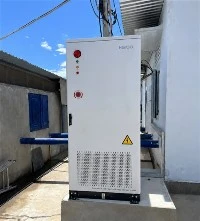
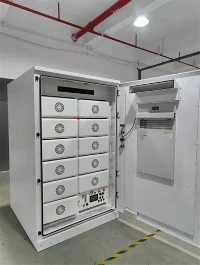
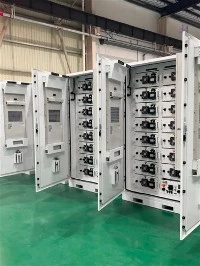
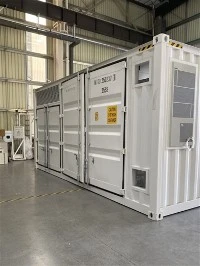
Container energy storage, with its flexible deployment and convenient expansion, has spawned diverse application scenarios worldwide. From grid level peak shaving to off grid microgrids, from new energy support to emergency power supply, project cases in different regions reflect the deep coupling between energy storage technology and local energy demand, outlining a panoramic view of energy storage applications spanning continents and oceans.
1 Grid level peak shaving: a stabilizer for the energy transformation of major countries
The MosLanding energy storage project in the United States can be regarded as the "giant" of container energy storage. This 1.2GWh energy storage plant located in California consists of 1800 40 foot containers and uses Tesla's Megapack system to release 400MW of power in 15 minutes, meeting the electricity needs of 200000 households for one hour. Its core function is to stabilize the output fluctuations of local photovoltaic and wind power - absorbing excess electricity during the noon photovoltaic peak and releasing it during the evening electricity peak, increasing the acceptance rate of new energy in the California power grid by 25%, and successfully avoiding three potential power supply crises in 2023.
The Qinghai Gonghe Energy Storage Project in China is exploring a collaborative model of "hydro photovoltaic storage". The project will integrate 1.4GWh container energy storage with the Longyangxia hydropower station, forming a closed-loop system of "daytime photovoltaic+energy storage power generation, nighttime hydropower replenishment". The energy storage system undertakes peak shaving tasks during the day, with a single charge and discharge capacity of 800MWh, reducing the photovoltaic curtailment rate from 12% to 3%; During the dry season in winter, it serves as a backup power source to ensure the stable operation of the Qinghai power grid, reducing the annual amount of abandoned hydropower by 150 million kWh.

2 Island microgrid: an energy independent 'icebreaker'
Tahiti Island in the South Pacific has freed itself from dependence on diesel power generation through container energy storage. This microgrid system consisting of 600kW photovoltaic and 1.2MWh energy storage (4 20 foot containers) reduces diesel consumption on the island by 60% and lowers electricity prices from $0.4/kWh to $0.25/kWh. The energy storage system adopts a control strategy of "photovoltaic priority+energy storage buffer+diesel minimum guarantee", which can support the operation of critical loads (hospitals, communication base stations) for 8 hours in the event of photovoltaic interruption caused by typhoons, significantly improving the energy security of the island.
The Arctic energy storage project in Svalbard, Norway, demonstrates reliability in extreme environments. The project deploys 2MWh cold resistant container energy storage, combined with wind power to supply power to the scientific research station, and can maintain 85% charging and discharging efficiency in an environment of -40 ℃. Through the synergy of "wind power energy storage diesel", the carbon emissions of the scientific research station have been reduced by 70%, saving $1.2 million in diesel transportation costs annually and becoming a benchmark for clean energy applications in polar regions.

3 Industry, Commerce, and Emergency Response: A Multi faceted Approach to Distributed Scenarios
The energy storage project at BMW's Munich factory in Germany combines container energy storage with on-site photovoltaics to create a model of a "zero carbon factory". The photovoltaic power stored in four 40 foot containers (with a total capacity of 5MWh) not only meets 20% of the factory's electricity demand, but also serves as a backup power source in case of grid failure, ensuring the continuous operation of the production line. By participating in frequency regulation services in the German electricity market, the project generates an additional annual revenue of approximately 800000 euros and shortens the investment payback period to 5 years.
Türkiye earthquake emergency energy storage project highlights the value of rapid deployment. After the Kahraman Malash earthquake in 2023, 10 500kWh container energy storage systems were installed within 72 hours to provide stable power for temporary hospitals and disaster relief command centers. The system adopts a "plug and play" design, which does not require complex infrastructure and supports solar charging and diesel generator energy replenishment. During the 3-month reconstruction period after the earthquake, it provided a cumulative power supply of 1.2GWh, becoming the "energy lifeline" for humanitarian rescue.
The global practice of container energy storage projects is redefining the flexibility and resilience of energy systems. From giant power plants in the desert to microgrids on isolated islands, these standardized steel enclosures carry the energy transformation demands of different regions, and the continuous iteration of technology (such as liquid cooling retrofitting and long-term energy storage) will further expand their application boundaries, making container energy storage a core component of the global energy system from a "transit solution".