


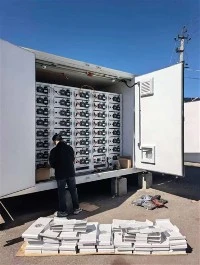
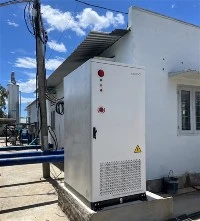
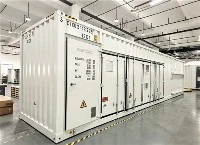
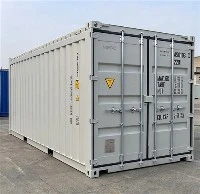
Thermal management is the backbone of safe, long-lasting containerized energy storage systems. The choice between air cooled vs liquid cooled energy storage container solutions directly impacts BESS safety, operational efficiency, equipment lifespan, and overall project ROI. For EPC contractors, industrial facility managers, and energy project investors, understanding the core pros and cons of air cooled and liquid cooled ESS containers is critical for making cost-effective, scenario-based configuration decisions. This article delivers a professional comparison of the two mainstream cooling technologies for commercial and industrial battery storage containers.
How Air and Liquid Cooled ESS Containers Work
Air-cooled energy storage containers adopt a simple fan-driven convection system, relying on internal and external air circulation to dissipate battery heat. Featuring a lightweight, streamlined structure, this cooling mode requires minimal auxiliary equipment and straightforward installation logic. In contrast, liquid cooled BESS containers utilize a closed-loop circulating cooling system. Coolant flows through pipeline modules attached to battery cells, achieving precise, point-to-point heat dissipation and consistent internal temperature control.
Air Cooled Energy Storage Container: Pros & Cons
Air cooled energy storage container pros focus on cost and simplicity. First, it boasts lower upfront CAPEX, with fewer auxiliary devices and no complex pipeline layout, significantly reducing procurement and construction costs. Second, the system structure is simple and stable, with low failure rates and convenient daily maintenance, requiring no professional technical support for routine upkeep. It is highly suitable for small and medium-sized C&I energy storage projects with low-frequency charge-discharge cycles.
However, air cooled ESS disadvantages are obvious. Fan convection leads to uneven temperature distribution inside the container, causing inconsistent battery cell attenuation. The cooling efficiency is limited, failing to cope with long-duration high-load operation and high-temperature outdoor environments. Additionally, continuous fan operation generates high noise and accelerates battery aging, shortening the overall containerized battery storage lifespan.

Liquid Cooled Energy Storage Container: Pros & Cons
Liquid cooled energy storage container advantages lie in superior performance and safety. The closed-loop cooling system achieves precise temperature control, maintaining uniform cell temperature and effectively suppressing battery thermal runaway risks. It delivers higher energy efficiency, lower operational noise, and excellent adaptability to extreme high-temperature and harsh industrial environments. Stable heat dissipation greatly reduces battery capacity attenuation, extending the ESS system's service life by 3–5 years and ensuring long-term stable project revenue.
The primary drawback of liquid-cooled solutions is higher upfront investment. The precision pipeline system, dedicated coolant equipment, and intelligent control modules raise initial project costs. Meanwhile, the complex structure requires professional maintenance teams for regular inspection to prevent liquid leakage and pipeline blockage, leading to slightly higher technical maintenance thresholds.
Scenario-Based Selection & ROI Impact
The choice between the two cooling systems depends on project scale, operating conditions, and long-term operational goals. Air-cooled containers are ideal for budget-limited C&I projects, temperate climate regions, and low-load energy storage scenarios with flexible cost control needs. Liquid-cooled containers are the preferred option for large-scale industrial energy storage stations, high-load continuous operation projects, and facilities in high-temperature or corrosive environments.
In terms of ROI, air-cooled systems reduce short-term investment pressure, while liquid-cooled systems lower long-term OPEX, avoid early equipment replacement costs, and deliver more stable long-term economic returns.
FAQ
1. Which is better: air cooled or liquid cooled ESS containers?
Air cooling suits small, low-budget C&I projects, while liquid cooling is better for large-scale, high-load, long-term industrial energy storage deployments.
2. Does liquid cooling extend energy storage container lifespan?
Yes. Precise and uniform heat dissipation slows battery aging significantly, greatly extending the overall service life of containerized BESS systems.
Conclusion
Both air cooled and liquid cooled energy storage containers have unique strengths and weaknesses. There is no one-size-fits-all solution; the optimal choice depends on project budget, operating environment, load characteristics, and long-term ROI plans. Matching the right thermal management system is key to maximizing the safety, efficiency, and service life of commercial and industrial energy storage projects.