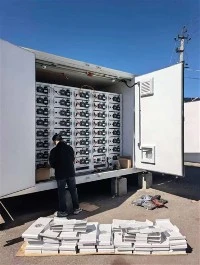
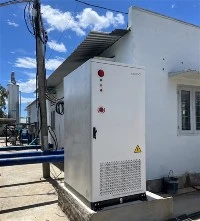
Railway construction routes are exposed to harsh operating conditions - high altitudes ranging from 2,000 m to 3,000 m, persistent low temperatures and an unstable utility grid. To resolve power‑supply bottlenecks during on‑site rail‑welding operations, the project is equipped with 5 units of 125 kW string‑type PCS modules configured in AC‑DC parallel connection. The system is engineered to handle unbalanced load characteristics and high inrush currents, adapt to severe field environments, and replace conventional diesel generators to enable zero‑emission welding.
Rail welding is a typical high‑impact intermittent process. Welding equipment generates instantaneous high inrush current and pronounced three‑phase unbalanced loads during rail‑joint welding cycles. At altitudes of 2,000–3,000 m, air density drops significantly, causing conventional diesel generators to suffer output derating under low‑temperature and high‑altitude conditions. Meanwhile, local grid infrastructure is weak and grid voltage fluctuates frequently. Relying solely on utility‑grid power exposes welding quality to voltage sags. Diesel generators, on the other hand, produce noise, exhaust fumes and carbon emissions that conflict with the low‑carbon requirements of modern railway engineering.
Powered by 5 sets of 125 kW string‑type PCS modules in AC‑DC parallel architecture, the mobile energy‑storage system delivers stable output for rail‑welding processes, withstands unbalanced loads and high impulse currents, adapts to high‑altitude low‑temperature conditions, and achieves emission‑free operation by phasing out diesel‑generator units.
Core System Operation Logic
The mobile energy‑storage solution adopts AC‑DC parallel connection based on 125 kW string‑type PCS modules. In grid‑tied mode, the system draws energy from the local weak grid to charge the battery bank while performing real‑time power‑quality conditioning against grid‑side fluctuation. During welding tasks, the energy‑storage system discharges rapidly to offset the large instantaneous impulse current generated by welding machines. The PCS supports 100 % three‑phase unbalanced output to match the asymmetric nature of welding loads. When the grid becomes severely unstable or fails entirely, the system switches to off‑grid standalone mode and independently powers the welding equipment. With no diesel generator running on‑site, the entire welding procedure achieves zero exhaust emission and low‑noise operation.
Key On‑site Technical Pain Points & MECC Targeted Solutions
Pain Point 1: Performance degradation of power‑electronic equipment under high‑altitude low‑temperature conditions
Problem description
The construction site sits at 2,000–3,000 m altitude with thin air and long‑lasting low temperatures. Conventional PCS products rely on air convection for heat dissipation. Reduced air density at high altitude weakens cooling efficiency. Without dedicated altitude‑adaptation optimization, power‑electronic devices will trigger over‑temperature derating, lowering actual available output capacity. In severe cases, unexpected protection shutdown may occur during high‑current welding moments, interrupting rail‑welding procedures and jeopardizing construction quality and schedule.
MECC Solution
The 125 kW string‑type PCS deployed in this project adopts high‑altitude‑adapted hardware and firmware co‑optimization. Derating‑curve parameters are recalibrated inside the control firmware for 2,000–3,000 m altitude scenarios. The ventilation and heat‑dissipation system is redesigned with enlarged airflow capacity to compensate for cooling loss caused by thin high‑altitude air. Key power components are selected from wide‑temperature‑range parts to guarantee reliable startup and stable output under low‑temperature ambient conditions.
The background monitoring system tracks module temperature in real time, and intelligent variable‑speed fan control dynamically matches heat‑dissipation demand. Even during continuous high‑impulse‑current welding cycles in high‑altitude cold surroundings, the PCS maintains full‑rated output capability and avoids unexpected derating or tripping, ensuring uninterrupted, stable power supply for rail‑welding operations.
Pain Point 2: Frequent high‑impact unbalanced loads threaten stability of the multi‑PCS parallel mobile system
Problem description
Railway welding equipment produces intermittent sharp impulse current and severe three‑phase unbalanced loads. Five 125 kW PCS modules operate in AC‑DC parallel within this mobile energy‑storage system. Without a targeted parallel‑control strategy, impulse‑load shocks may induce circulating current among paralleled PCS units, causing output power oscillation, local overheating of power modules and deteriorated output power quality. Poor power‑supply stability directly affects welding‑current accuracy and the forming quality of rail joints.
MECC Solution
MECC optimizes the parallel‑coordination algorithm for multi‑PCS operation under heavy unbalanced impulse‑load conditions. Each 125 kW string‑type PCS natively supports 100 % three‑phase unbalanced output. A master‑slave synchronization mechanism ensures consistent current distribution among parallel units under unbalanced working conditions. Circulating‑current suppression logic is embedded to restrain inter‑module circulating current during sudden welding‑load surges.
The AC‑DC parallel architecture enables flexible power allocation: the energy‑storage side responds to instantaneous impulse components while the grid bears part of the steady‑state load. The PCS cluster rapidly compensates voltage fluctuation caused by welding‑machine startup, guaranteeing stable output current for welding equipment and eliminating rail‑joint quality risks stemming from power distortion.
Project Functions & Industry Impact
For railway‑construction contractors, this mobile energy‑storage solution eliminates dependence on traditional diesel generators at high‑altitude construction sites. It delivers reliable power assurance for critical rail‑welding procedures even under low‑temperature and unstable‑grid conditions. Zero‑emission operation cuts fuel consumption and exhaust pollution, fulfilling the green‑construction requirements of railway projects. Its mobile‑deployment feature enables flexible transfer across different construction sections.
Technically, the project validates the comprehensive performance of multi‑parallel 125 kW string‑type PCS under high‑altitude, low‑temperature, heavy‑unbalanced‑impulse‑load conditions. It verifies core technologies including high‑altitude hardware‑firmware co‑optimization and multi‑unit parallel control for unbalanced impulse loads, providing replicable references for mobile energy‑storage applied in plateau transportation‑engineering scenarios.
From an industry perspective, this case expands the application boundary of mobile energy‑storage within the rail‑transit construction sector. It offers a green and reliable alternative to diesel power sources for plateau field engineering, demonstrating that string‑type mobile energy‑storage can simultaneously address harsh‑environment adaptability, high‑impact unbalanced loads and carbon‑emission reduction, and accelerating the adoption of clean mobile power‑supply solutions in transportation infrastructure construction.
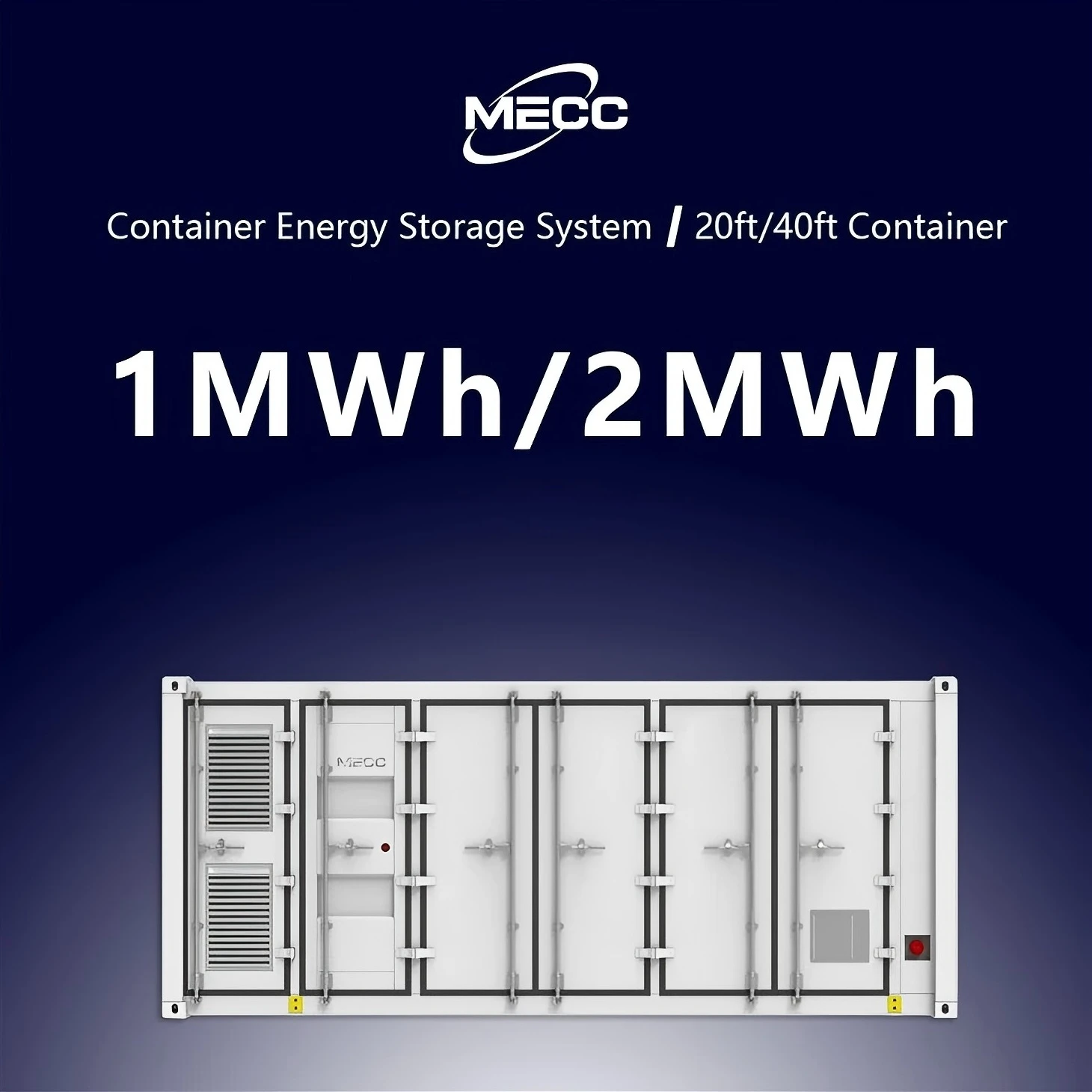
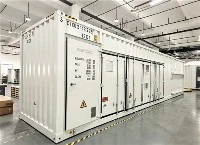
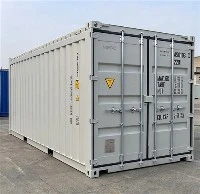
500KW/1MW 1MWh/2MWh Battery Energy Storage System Container
The 500kW/1MW 1MWh/2MWh Battery Energy Storage System Container is a turn‑key utility‑grade energy storage solution housed in standard 20ft or 40ft shipping containers, integrating bidirectional PCS, A‑grade LiFePO4 battery clusters, master BMS, liquid‑cooled thermal management, gas fire suppression, high‑voltage distribution and EMS energy management system with full factory pre‑assembly and pre‑commissioning. Requiring only foundation construction and high‑voltage cable connection for on‑site commissioning, it supports flexible power‑capacity configuration and multi‑container parallel expansion, delivering core capabilities of peak‑shaving and load shifting, renewable energy smoothing, frequency‑voltage grid support, islanded micro‑grid operation and large‑scale emergency backup. Featuring IP54 enclosure protection and comprehensive multi‑layer safety mechanisms, it adapts to diverse harsh outdoor environments, and is widely deployed for ground‑mounted PV power stations, industrial parks, mining operations, island microgrids and grid‑side auxiliary service projects to stabilize grid fluctuations, boost renewable energy utilization and reduce comprehensive energy costs.