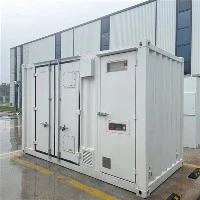
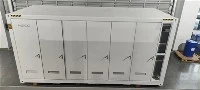
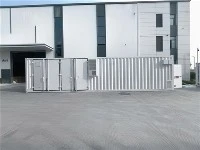
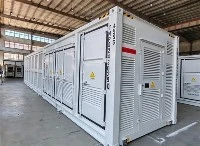
This new‑energy‑vehicle charging solution adopts 5 units of 125 kW string‑type converters to build a 500 kW / 1000 kWh redundant cabinet‑type energy‑storage system. When new‑energy generation output exceeds charging power demand, surplus electric power is automatically stored into battery packs to avoid energy waste. The system achieves high‑proportion clean‑energy consumption, which aligns with dual‑carbon goals, and improves the enterprise's social‑responsibility image as well as market competitiveness.
The charging site is equipped with on‑site renewable power generation facilities. Solar output fluctuates heavily affected by weather conditions and sunshine hours. During periods of strong sunlight, renewable energy generation may surpass real‑time EV‑charging load. Without energy‑storage buffer, excess clean power has to be fed back to the grid or directly discarded, resulting in low local renewable‑energy self‑consumption rate. Meanwhile, charging stations face stochastic and spiky EV charging loads. Pure renewable power cannot match the random arrival rhythm of electric vehicles. If relying only on grid power to fill the energy gap, the station cannot give full play to the value of on‑site green power and fails to demonstrate outstanding low‑carbon performance for corporate brand promotion.
Built upon 5 sets of 125 kW string‑type PCS modules, the 500 kW / 1000 kWh redundant cabinet‑type energy‑storage system serves as an energy buffer bridge between on‑site new‑energy generation and EV charging loads. It captures surplus renewable energy for later charging usage, lifts clean‑energy utilization ratio, supports carbon‑reduction targets and strengthens the operator's market‑competition advantages.
Core System Operation Logic
When photovoltaic or other on‑site new‑energy output is higher than real‑time EV‑charging consumption, the string‑type PCS cluster automatically switches to charging mode and stores surplus green electricity inside the battery cabinet. When charging demand rises while renewable‑energy output drops, the energy‑storage system discharges preferentially to supply power for EV chargers. Only when stored energy is insufficient will the system draw supplementary power from the utility grid. Benefiting from system‑level redundant design, partial single‑unit PCS failure will not bring full‑system shutdown. The charging‑station energy‑supply chain remains continuous and stable. By maximizing on‑site green‑power reuse, the solution reduces grid‑power dependency, supports carbon‑emission‑reduction objectives and helps the enterprise shape a responsible low‑carbon brand image.
Key On‑site Technical Pain Points & MECC Targeted Solutions
Pain Point 1: Stochastic super‑imposed load brings challenges for multi‑PCS redundant coordinated control
Problem description
EV charging load features strong randomness. Multiple vehicles may start high‑power charging simultaneously and create sharp load jumps. This project deploys 5‑unit 125 kW string‑type PCS to form a redundant system. Under frequent steep load changes, without refined redundant scheduling logic, PCS units may show unbalanced power distribution. Individual modules run under heavy load while others stay lightly loaded, wasting hardware redundancy value. In case one PCS unit goes into fault status, seamless power hand‑over among remaining parallel units cannot be guaranteed, which may cause instantaneous power drop for ongoing EV charging sessions and negatively impact user charging experience.
MECC Solution
MECC matches the cabinet‑type energy‑storage system with a dedicated charging‑station‑oriented EMS platform. The EMS implements dynamic load‑sharing control for all five 125 kW string‑type PCS modules. Under normal operating status, power tasks are evenly and reasonably assigned across parallel PCS units to make full use of system redundancy margin. Once EV‑charging load surges rapidly, the whole PCS cluster responds synchronously with unified power ramp limitation to avoid output oscillation.
When fault occurs on any single PCS module, the system triggers pre‑configured redundant hand‑over logic instantly. Healthy remaining PCS units automatically undertake the power burden of the faulty unit within millisecond‑level latency. Charging output will not be interrupted. The redundant architecture guarantees continuous service of the energy‑storage buffer system and delivers stable power for EV chargers.
Pain Point 2: Solar‑generation and charging‑load time mismatch causes long‑term SOC imbalance across battery strings
Problem description
Renewable‑energy generation concentrates in daytime hours, while EV‑charging demand may distribute across day and night. The energy‑storage system runs through repeated charge‑discharge cycles driven by the time offset between generation and load. For the cabinet‑type system matched with multi‑string batteries, differences in cell ageing, internal resistance and self‑discharge rate will gradually accumulate. Without per‑string refined management, SOC divergence will expand. Some battery strings will hit charge‑discharge cut‑off points in advance, reducing the actual available capacity of the 1000 kWh cabinet. As a result, the station cannot fully absorb excess photovoltaic power, and the actual clean‑energy consumption effect falls below expectation.
MECC Solution
Leveraging string‑type architecture, each battery string connects to an independent 125 kW PCS converter. The MECC EMS continuously collects voltage, temperature and SOC data of every battery string. It executes AC‑side cross‑string equalization scheduling throughout the operating cycle. During surplus‑power charging periods, the system allocates more charging current to battery strings with lower SOC. For slightly aged strings, corresponding PCS modules implement adaptive derating.
"One string, one management" breaks the cask‑barrel effect caused by traditional DC‑side parallel connection. SOC deviation of each battery string is kept within a reasonable range in long‑term operation. The real usable capacity of the cabinet‑type energy‑storage system is preserved, securing reliable absorption of surplus new‑energy power and stable high clean‑energy‑consumption performance over the project lifecycle.
Project Functions & Industry Impact
From the operator's perspective, this redundant cabinet‑type energy‑storage solution effectively collects and reuses on‑site surplus new‑energy power, greatly lifting the local consumption rate of clean energy. It reduces the charging station's purchase volume of grid‑sourced conventional electricity and cuts operational energy costs. The project practically advances the site's carbon‑reduction progress, helps the enterprise demonstrate environmental‑social‑governance performance, enhances social‑responsibility image and strengthens differentiated market competitiveness in public‑charging‑service business.
Technically, this project verifies the practical performance of 500 kW / 1000 kWh redundant string‑type cabinet‑energy‑storage under EV‑charging‑station scenarios. It validates core technologies including multi‑PCS redundant seamless hand‑over, dynamic load sharing and per‑string refined equalization management, providing replicable engineering references for numerous new‑energy‑integrated charging‑station retrofits.
From the industry dimension, this case offers a proven technical path for charging‑station operators to realize high‑ratio renewable‑energy integration. It proves that string‑type redundant cabinet‑storage can resolve the contradiction between volatile new‑energy output and random EV‑charging demand. It promotes the popularization of energy‑storage‑plus‑charging‑station modes in the background of dual‑carbon strategies and accelerates the low‑carbon transformation of public EV‑charging infrastructure.
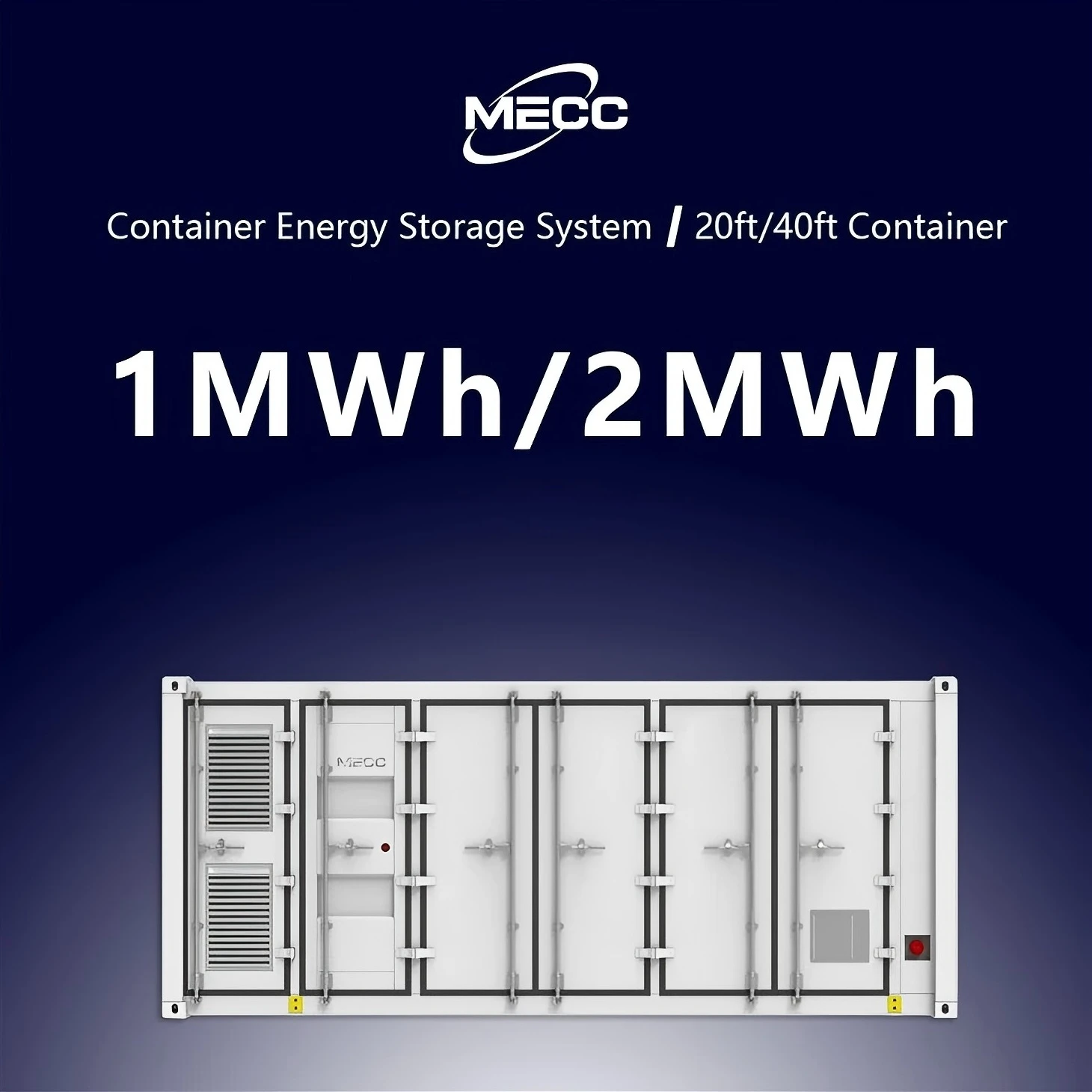
500KW/1MW 1MWh/2MWh Battery Energy Storage System Container
The 500kW/1MW 1MWh/2MWh Battery Energy Storage System Container is a turn‑key utility‑grade energy storage solution housed in standard 20ft or 40ft shipping containers, integrating bidirectional PCS, A‑grade LiFePO4 battery clusters, master BMS, liquid‑cooled thermal management, gas fire suppression, high‑voltage distribution and EMS energy management system with full factory pre‑assembly and pre‑commissioning. Requiring only foundation construction and high‑voltage cable connection for on‑site commissioning, it supports flexible power‑capacity configuration and multi‑container parallel expansion, delivering core capabilities of peak‑shaving and load shifting, renewable energy smoothing, frequency‑voltage grid support, islanded micro‑grid operation and large‑scale emergency backup. Featuring IP54 enclosure protection and comprehensive multi‑layer safety mechanisms, it adapts to diverse harsh outdoor environments, and is widely deployed for ground‑mounted PV power stations, industrial parks, mining operations, island microgrids and grid‑side auxiliary service projects to stabilize grid fluctuations, boost renewable energy utilization and reduce comprehensive energy costs.