


Before you pick a battery, you pick an architecture. In commercial energy storage, the coupling choice - AC-coupled or DC-coupled - determines how power flows between your solar array, the battery energy storage system (BESS), and your building loads. It shapes round-trip efficiency, retrofit flexibility, and cost. Neither option wins outright; each fits different sites. Here's how the trade-offs actually break down.
What AC coupling means
In an AC-coupled system, the solar inverter and the battery's inverter are separate. PV generates AC, feeds the building, and the BESS connects to the same AC bus through its own bidirectional PCS (power conversion system). The battery charges from AC and discharges to AC, independent of the solar inverter. This separation is what makes AC coupling so flexible - especially when storage is added after the fact.
What DC coupling means
In a DC-coupled system, the PV array and the battery share a common DC bus, connected through a single hybrid inverter. Solar can charge the battery directly at DC before any inversion, eliminating one conversion step on the solar-to-battery path. The result is higher round-trip efficiency for self-consumption, at the cost of tighter, more interdependent design.
The core trade-off: efficiency vs flexibility
This is the heart of it. DC coupling wins on efficiency: fewer conversions mean less energy lost between panel and battery. AC coupling wins on flexibility: independent inverters mean the battery and PV can be sized, upgraded, and serviced separately, and the battery can even be added with no PV at all. Sites optimizing pure self-consumption lean DC; sites valuing modularity and phased build-out lean AC.
Retrofit vs new build
The single biggest deciding factor is timing:
Retrofit: adding storage to an existing PV system almost always points to AC coupling - you keep the existing inverter and bolt on a battery with its own PCS.
New build: when PV and storage are designed together, DC coupling often wins on efficiency and shared hardware.
If your site already has solar, AC coupling usually avoids the cost and disruption of re-engineering the array.
Efficiency and conversion losses in detail
Every power conversion loses roughly a few percent. A DC-coupled system moves energy from PV to battery to load with fewer conversions, so it delivers more usable commercial battery storage capacity per kWh installed. In high-cycle applications - daily TOU arbitrage or heavy self-consumption - that efficiency compounds across thousands of cycles and shows up directly in LCOS (levelized cost of storage).
Cost considerations
The cost profiles differ:
AC coupling adds a separate battery inverter but reuses existing PV hardware - often cheaper to retrofit.
DC coupling shares one hybrid inverter but constrains sizing to that inverter's limits.
Compare both on commercial energy storage cost per kWh, total installed cost, and lifetime LCOS - not on hardware price alone. The cheaper architecture up front is sometimes the more expensive one over twenty years.
Application fit
Different goals favor different architectures:
Self-consumption of on-site solar → DC coupling (efficiency).
Peak shaving and demand charge reduction → either, depending on existing assets.
TOU arbitrage → either, with efficiency favoring DC.
Demand response and fast grid services → AC coupling shines, since the battery operates independently of PV.
Backup / islanding and microgrid → either, but controls must support seamless transition.
EV charging buffering → often AC coupling for modular scaling.
Hardware and controls
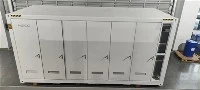
Both architectures need coordinated PCS, BMS (battery management system), and EMS (energy management system). Storage can be delivered as modular energy storage racks or all-in-one energy storage cabinets, with liquid-cooled battery storage (vs air-cooled) chosen for climate and duty. The C-rate and duration of the selected modules are independent of coupling - you size power and energy the same way either way.
Scaling and redundancy
AC coupling scales in blocks: add another battery-plus-inverter unit for more capacity or redundancy. DC coupling shares a single hybrid inverter, which can become a single point of failure and a sizing bottleneck. For sites planning staged growth - common in multi-year efficiency programs - AC coupling's modularity is a real advantage.
Safety and compliance
Regardless of coupling, specify systems certified to UL 9540 and UL 9540A, compliant with NFPA 855, and built to IEC 62619 for international deployments. Coupling affects DC fault protection and commercial energy storage installation details, so commissioning must match the architecture, with battery storage maintenance planned for both inverters and battery.
How to decide
Ask three questions: Do you already have solar (retrofit favors AC)? Is solar and storage designed together (new build favors DC)? Do you need independent scaling or fast grid services (AC) versus maximum self-consumption efficiency (DC)? Your answers point to the architecture. Then have a commercial energy storage manufacturer or commercial energy storage supplier model both against your load profile, tariff, and goals before committing.
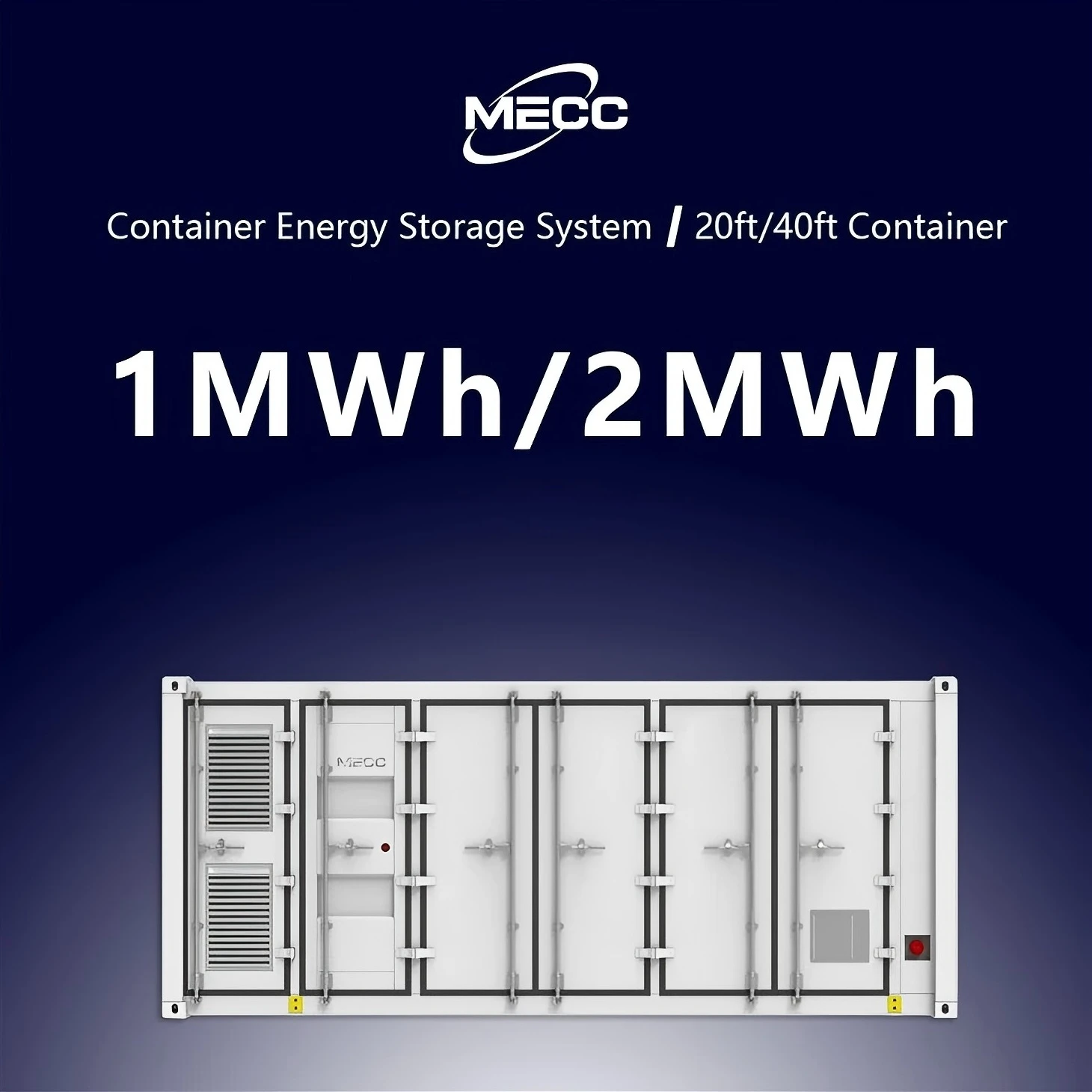
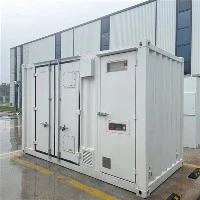
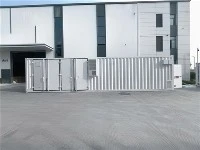
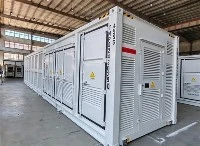
500KW/1MW 1MWh/2MWh Battery Energy Storage System Container
The 500kW/1MW 1MWh/2MWh Battery Energy Storage System Container is a turn‑key utility‑grade energy storage solution housed in standard 20ft or 40ft shipping containers, integrating bidirectional PCS, A‑grade LiFePO4 battery clusters, master BMS, liquid‑cooled thermal management, gas fire suppression, high‑voltage distribution and EMS energy management system with full factory pre‑assembly and pre‑commissioning. Requiring only foundation construction and high‑voltage cable connection for on‑site commissioning, it supports flexible power‑capacity configuration and multi‑container parallel expansion, delivering core capabilities of peak‑shaving and load shifting, renewable energy smoothing, frequency‑voltage grid support, islanded micro‑grid operation and large‑scale emergency backup. Featuring IP54 enclosure protection and comprehensive multi‑layer safety mechanisms, it adapts to diverse harsh outdoor environments, and is widely deployed for ground‑mounted PV power stations, industrial parks, mining operations, island microgrids and grid‑side auxiliary service projects to stabilize grid fluctuations, boost renewable energy utilization and reduce comprehensive energy costs.