


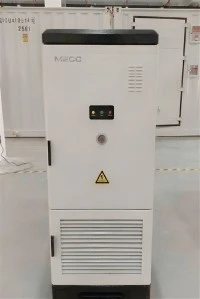
1.Severe PV curtailment and low self‑consumption. At noon peak solar irradiation, PV output exceeds local load demand. Local grid regulation prohibits power export to mainland grid, forcing partial PV shutdown and heavy energy waste, lowering PV project return.
2.High energy cost and demand‑charge risk under grid‑tied status. Obvious peak‑valley tariff gap exists in local grid. High electricity price applies during daytime peak hours. During tourism peak seasons, simultaneous startup of hotel air‑conditioning and processing equipment brings sharp load surges, easily exceeding contracted maximum demand and triggering heavy penalty fees.
3.Poor off‑grid power reliability. Once disconnected from mainland grid, the original system fully relies on diesel generators. Diesel fuel transportation is expensive, while generators produce high noise and frequent maintenance work. During night or heavy cloudy weather, power shortage frequently occurs, threatening hotel facilities and production lines and bringing tangible business loss.
4.Drawbacks of single‑coupling solution. Pure AC‑coupled architecture suffers multiple AC‑DC conversion and extra energy loss. Pure DC‑coupled solution cannot reuse existing AC PV inverters, requiring full hardware replacement and pushing up total project cost. The client expected one integrated system combining high‑efficiency DC‑coupling and existing‑device‑compatible AC‑coupling, with seamless switch between grid‑tied and off‑grid modes.
5.Harsh marine environmental challenge. The island features C5‑M heavy salt‑fog, high temperature and high humidity, placing strict requirements on equipment ingress protection, thermal management and anti‑corrosion performance.
Key equipment includes:
One set of MECC 1‑2 MWh grade containerized energy‑storage system reserved for future capacity expansion. Expansion interfaces are pre‑installed. Partial capacity is deployed for Phase‑1; full‑scale upgrade up to 2 MWh is available when local load grows. Inside container are integrated power‑distribution unit, liquid‑cooled thermal management, fire‑protection system and earthing protection, adapted to high‑salt‑fog high‑temperature island environment.
One set of MECC‑EMS industrial energy‑management platform including local edge controller and cloud backend, acting as microgrid core dispatching brain. It manages both DC‑coupled branch and AC‑coupled branch simultaneously. Collect operating data from PV DC‑side, AC busbar, grid incoming point, onsite loads and diesel gensets. Embedded AI‑driven PV‑load forecasting algorithm enables automatic strategy switching: anti‑reverse‑power / peak‑valley arbitrage / demand‑control for grid‑tied condition; direct‑PV‑connection / peak‑shaving / PV‑storage‑diesel coordination for off‑grid condition. Cloud remote monitoring, report generation and parameter configuration are supported.
One unit of MECC micro‑grid coordination controller, millisecond‑level real‑time control hardware. It judges grid‑tied/off‑grid status and realizes seamless mode switching within less than 50 ms. It sends coordinated power commands to DC‑coupled PV‑storage cabinets and AC‑coupled liquid‑cooled PCS clusters, implements diesel‑genset interlock logic, and supports black‑start capability for island microgrid.
Multiple sets of high‑precision sensing assemblies including CT current transformers, multi‑function smart meters and DC voltage acquisition modules. Installed at PV DC combiner side, main grid incoming point, AC busbar, ESS AC combiner cabinet and diesel genset parallel‑connection point. Millisecond‑level acquisition of AC‑DC power, voltage, current and power‑flow direction, providing real‑time data for AC‑DC coupling coordination algorithm and anti‑reverse‑power protection.
One set of PV DC combiner cabinet, collecting power from onsite 800 kWp PV array, equipped with DC circuit‑breaker, surge protection and over‑voltage protection. DC output connects to MPPT ports of three PV‑storage all‑in‑one cabinets.
One set of AC grid‑connection combiner cabinet, equipped with circuit‑breaker, secondary surge protection device, hardware reverse‑power‑protection relay and STS static transfer switch. Realizes power combination and switching among liquid‑cooled PCS cabinets, energy‑storage container, diesel gensets, park loads and submarine‑cable grid. Hardware reverse‑power relay serves as fail‑safe backup against software failure, together with short‑circuit protection and EPO emergency shutdown interface.
One set of communication assembly including industrial Ethernet switch, 4G‑wired dual‑link and super‑capacitor backup power source. It guarantees stable communication among EMS, micro‑grid coordination controller, PV‑storage all‑in‑one units, liquid‑cooled PCS and BMS. Even when cloud connection drops, local edge controller can run full set of protection and dispatching logics independently to secure island site operation.
Core Technical Principles
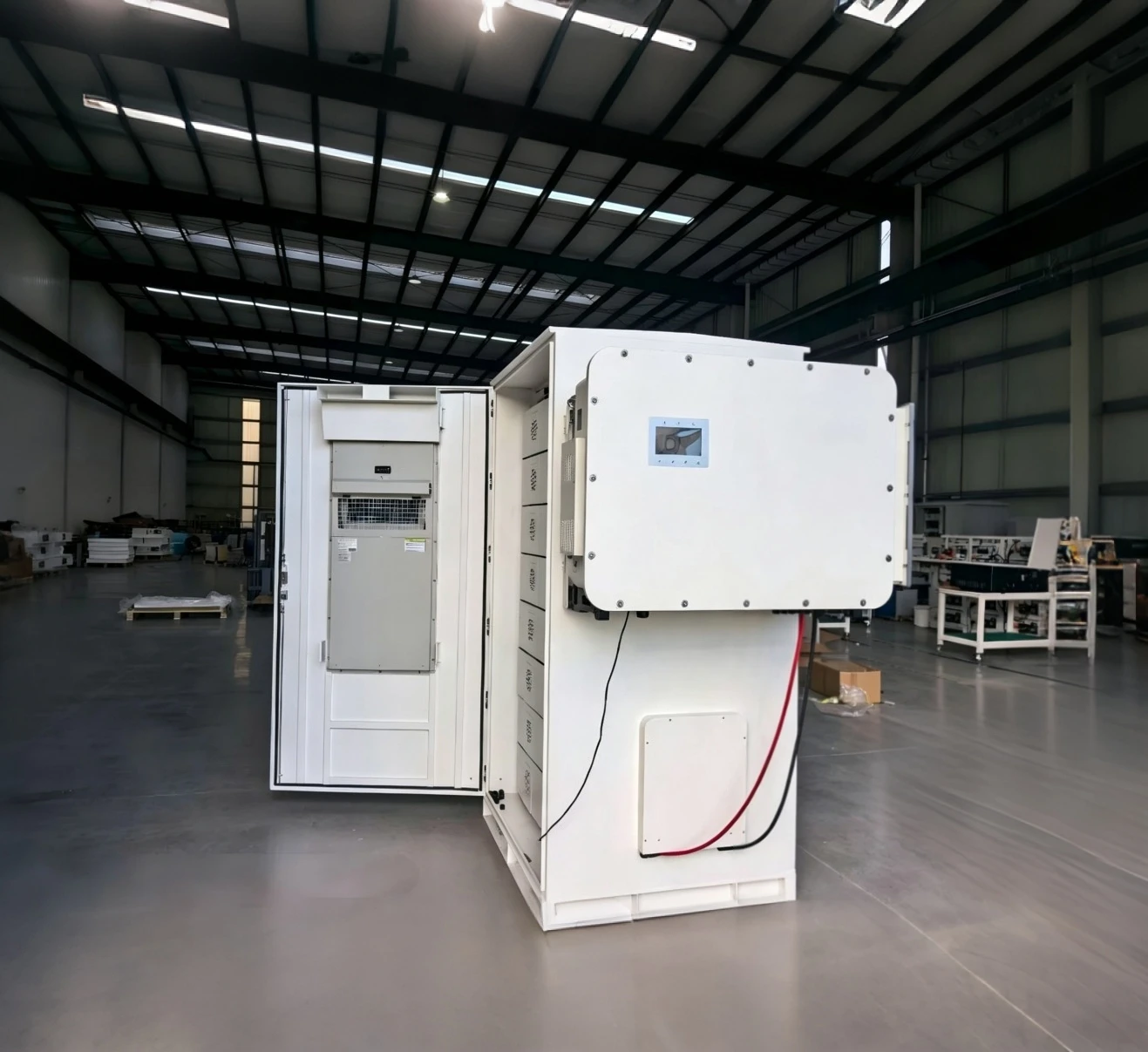
DC‑coupled branch (MECC 125 kW/241 kWh PV‑storage all‑in‑one cabinet)
PV array connects to MPPT port of PV‑storage cabinet via DC combiner. PV modules and batteries share the same DC bus. Solar energy is directly stored into battery without redundant AC‑DC conversion, improving overall system efficiency by 5%‑8%.
Anti‑reverse‑power protection: CT monitors power‑flow direction at grid incoming point. Once reverse‑power trend is detected, AC‑coupled ESS starts charging immediately. Meanwhile DC‑coupled branch increases charging power to absorb surplus PV energy to the maximum. When battery reaches high SOC limit, EMS sends command to smoothly derate PV output. Dual protection of software algorithm plus hardware relay eliminates reverse‑power risk and avoids unnecessary PV curtailment.
Peak‑valley arbitrage: ESS charges from grid during low‑tariff night hours. During high‑price daytime periods, stored energy together with PV generation supplies onsite loads to reduce expensive grid power purchase.
Demand control: When sharp load surges occur in tourism peak seasons, coordination controller triggers instant ESS discharge to share grid stress, constraining maximum demand below contracted threshold and eliminating penalty risk.
Automatic grid‑tied / off‑grid switching logic:
1.Greatly improved PV self‑consumption and reduced curtailment. Coordinated AC‑DC coupling absorbs noon surplus solar power. PV self‑consumption ratio rises from original 52% to 89%, significantly cutting loss caused by forced PV shutdown and improving PV project revenue.
2.Obvious cost reduction under grid‑tied condition. Combined effect of peak‑valley arbitrage and demand control lowers monthly grid power purchase by around 31%, demand‑charge penalty is fully eliminated. Benefited from DC‑coupling reduced conversion loss, overall system efficiency rises by 6%, compared with pure AC‑coupled solution.
3.Reliable off‑grid islanding power supply. Multiple field tests during submarine‑cable maintenance prove that PV‑storage microgrid independently supports hotel air‑conditioning, catering and agricultural‑processing critical loads. Diesel genset only starts during successive heavy‑cloudy periods. Diesel fuel consumption drops by 65%, cutting fuel transportation and O&M expenditure and avoiding business loss caused by blackout.
4.Stable equipment performance under marine harsh environment. Liquid‑cooled thermal design plus C5 anti‑corrosion treatment guarantee reliable operation under high‑temperature high‑salt‑fog conditions, without corrosion or thermal power derating. On‑site technicians can maintain DC‑coupled all‑in‑one cabinets and AC‑coupled liquid‑cooled PCS cabinets separately, without full‑system shutdown.
Project Significance & Industry Demonstration Value

125KW 241kWh Battery Energy Storage System Cabinet
The BESS 125KW 241kWh Lithium Battery Energy Storage Cabinet is a high-power, large-capacity integrated energy storage solution engineered for medium-to-large commercial, industrial, and utility-scale applications. It integrates a 125kW high-performance bidirectional inverter, a 241kWh lithium iron phosphate (LiFePO4) battery bank, and a full-featured intelligent energy management system (EMS) into a modular cabinet design. This system enables efficient renewable energy storage, peak shaving, load shifting, grid frequency regulation, and emergency backup power supply. Ideal for large factories, shopping malls, industrial parks, utility-scale solar/wind farms, and microgrids, it enhances energy independence, reduces high grid demand charges, and supports the stable integration of high-penetration renewable energy into the grid.