



Project Background: Reliable Power Where the Grid Ends
Deep in Mongolia's South Gobi (Ömnögovi) Province - a region famous for its vast Gobi Desert landscapes, mining operations, and some of the highest solar irradiance levels in Asia - sits a remote commercial camp that had never been connected to the national power grid.
For years, the camp relied entirely on diesel generators. That meant three constant headaches:
Sky-high fuel costs. Diesel in Mongolia costs around 3,390 MNT per liter, and a generator burning 0.3–0.4 liters per kWh makes every unit of electricity painfully expensive - plus the logistics of trucking fuel to a remote desert site.
Unreliable supply. Generator breakdowns, maintenance downtime, and limited overnight running hours meant the camp could never enjoy stable, 24-hour power.
Noise, fumes, and carbon emissions - a poor working environment and a poor environmental footprint.
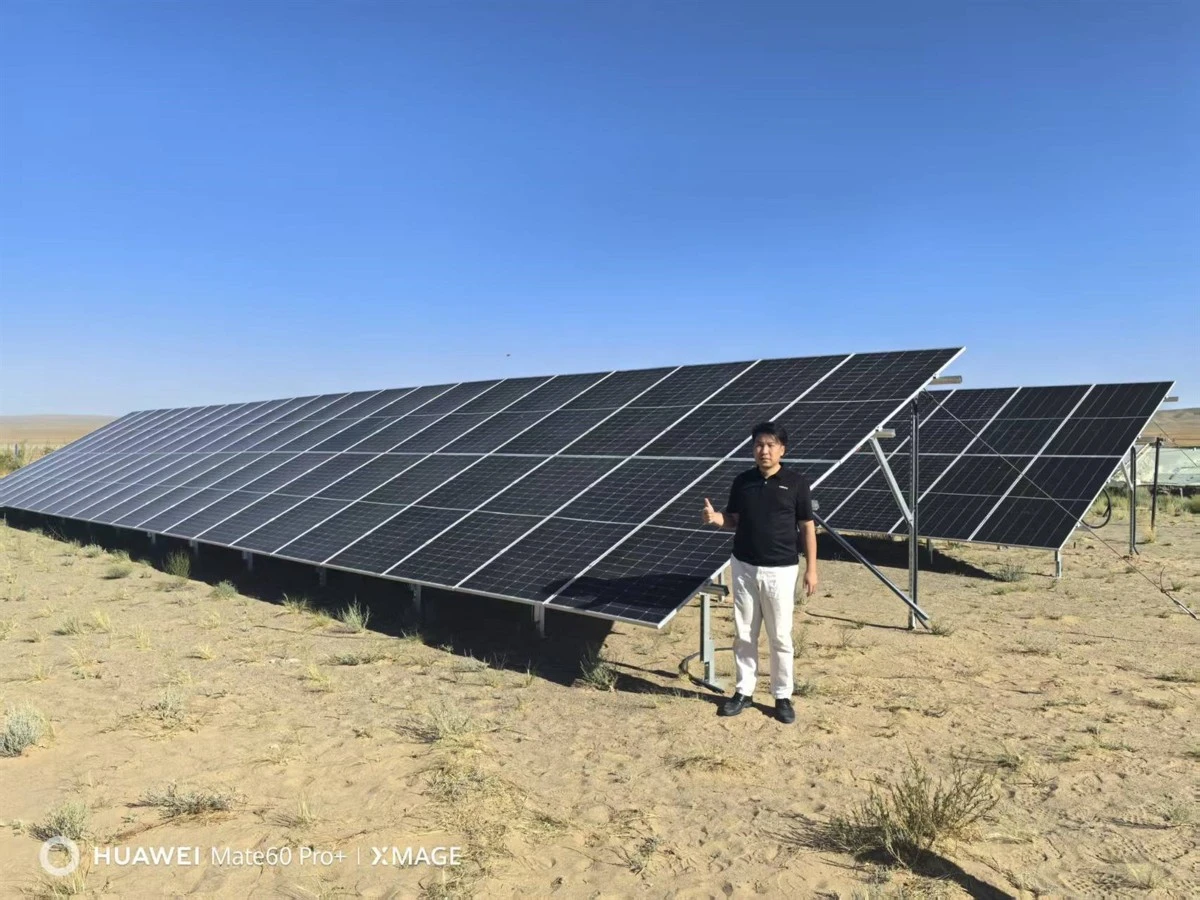
To solve this permanently, the client partnered with MECC to design and install a fully off-grid solar energy storage system with the following specification:
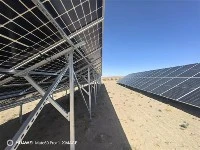
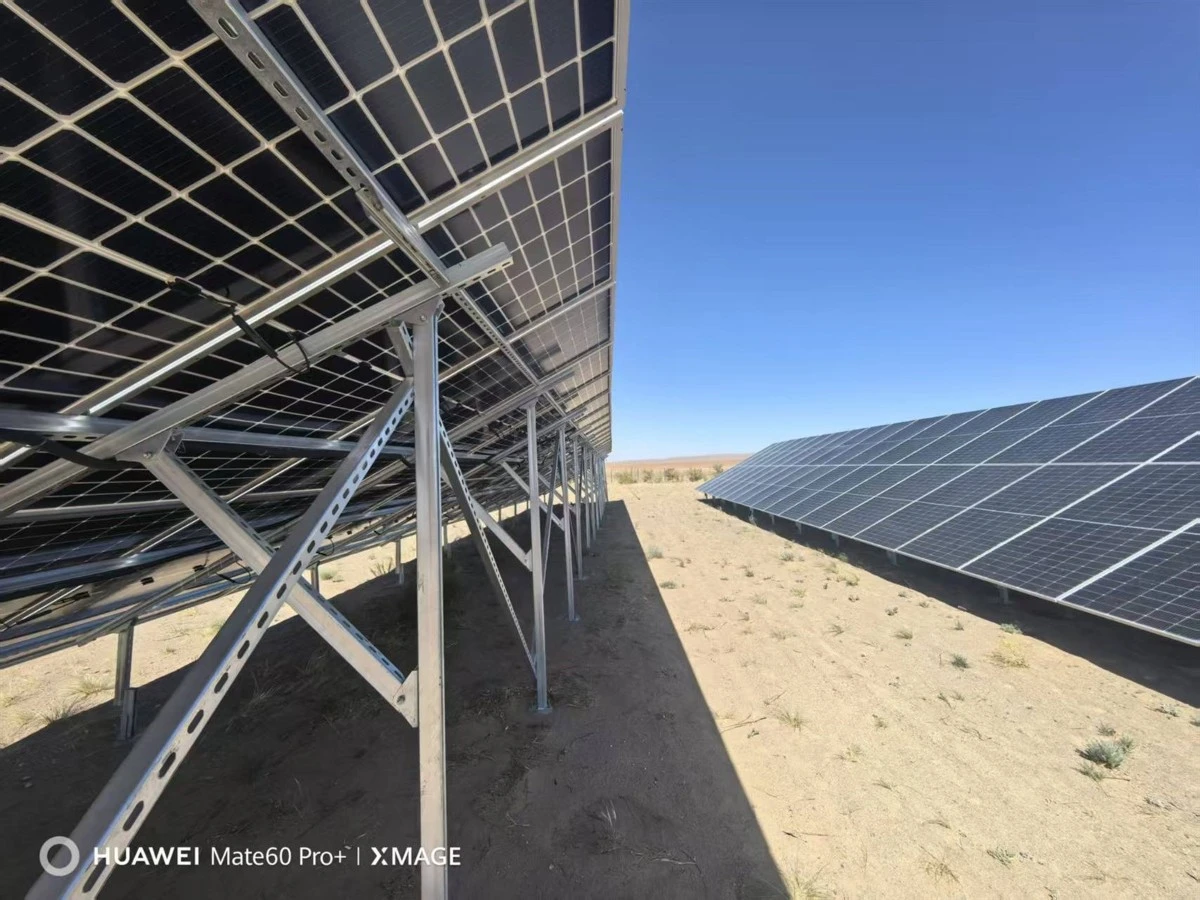
Solar PV array: 50 kWp
Hybrid inverter: 50 kW
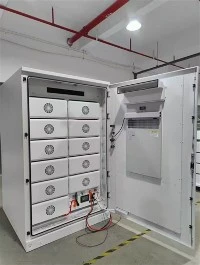
Integrated battery storage cabinet: 112 kWh
Maximum system output: 50 kW peak
The system was commissioned in June 2026 and has been running autonomously ever since - with zero grid connection and zero dependence on daily diesel consumption.

Power Generation Performance: The Data Speaks
Four months of continuous monitoring data (June–September 2026) from the smart monitoring platform tell the story better than any promise could.
Daily Generation: A Typical Day in the Gobi
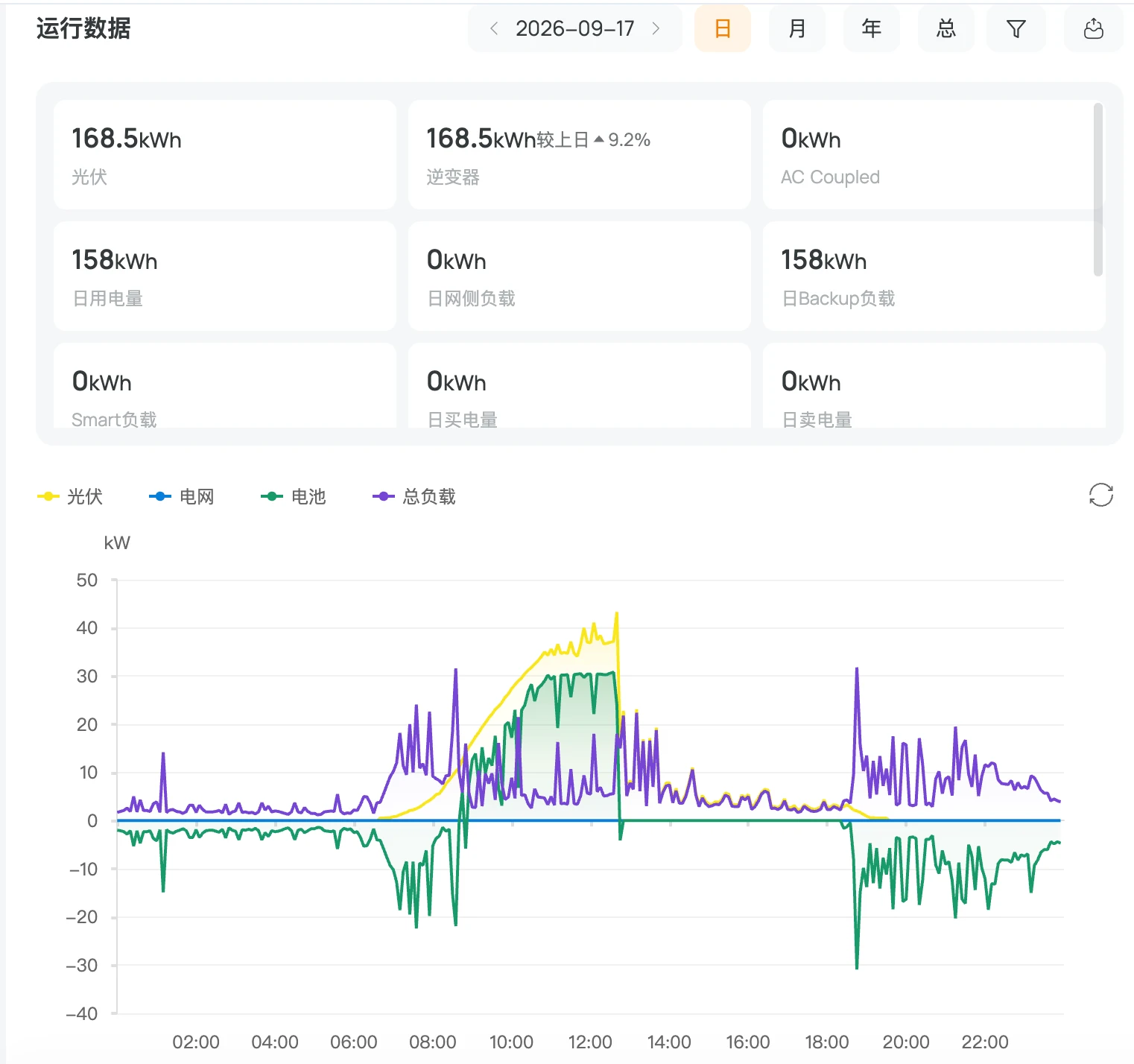
On a representative day (September 17, 2026), the system delivered: PV generation of 168.5 kWh (up 9.2% from the previous day); total load served of 158 kWh, delivered entirely through the backup/off-grid output; peak PV output of about 43 kW, approaching the 50 kW inverter's rated capacity; and grid purchases of 0 kWh - the system is fully self-sufficient.
The daily curve shows a textbook off-grid profile: PV output ramps up from sunrise, carries the entire camp load through the morning, charges the battery bank through midday, and the battery seamlessly takes over at sunset to power the camp all night.
Monthly Generation: Consistent Output Through the Season
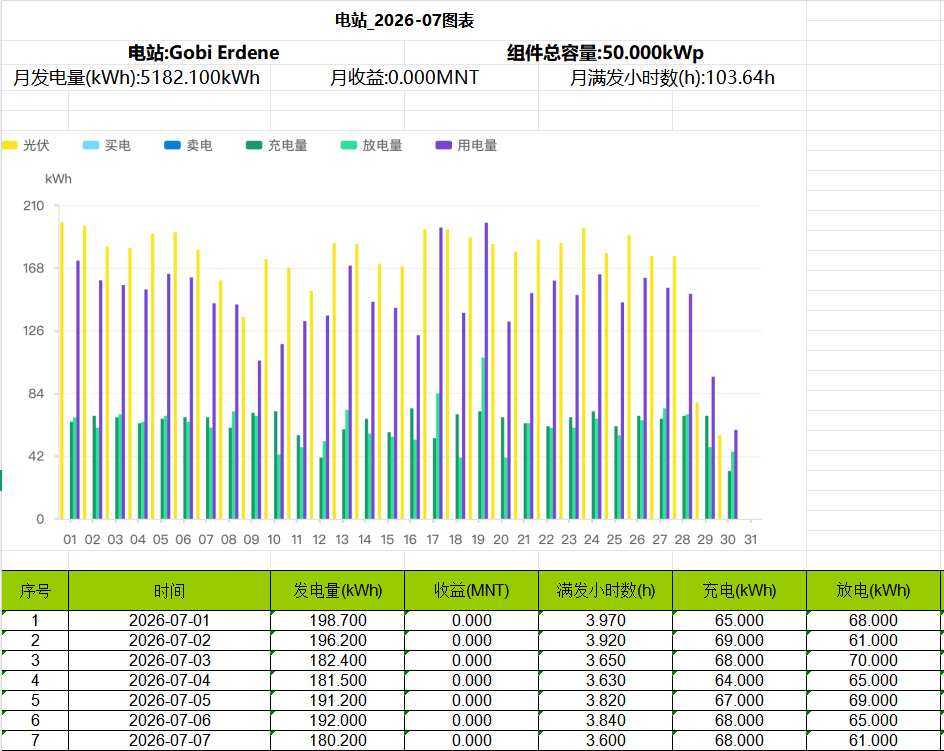
June delivered 4,460.4 kWh across 89.21 full-sun hours, with the battery charging 1,378 kWh and discharging 1,385 kWh. July pushed higher to 5,182.1 kWh (103.64 full-sun hours; 1,927 kWh charged and 1,869 kWh discharged). August recorded 2,830.6 kWh from mid-month monitoring onward (56.61 full-sun hours; 1,342 kWh charged and 1,326 kWh discharged). September reached 5,162.5 kWh (103.25 full-sun hours; 2,648 kWh charged and 2,593 kWh discharged).
Even in July - when Gobi dust storms and occasional heavy cloud can cut solar yield - the system still produced over 5,100 kWh, averaging 167 kWh per day. That is the consistency a camp needs to operate without interruption.



Four-Month Totals: 17,635 kWh of Clean Energy
From June through September 2026, the system generated a cumulative 17,635.6 kWh - an average of roughly 150 kWh every single day - and cycled 7,295 kWh through the battery (charged) and 7,173 kWh back out (discharged) to power the camp around the clock.

What the Client Saves: Over 72 Million MNT in Three Months
With no access to the power grid, the customer previously relied on diesel generators for power supply, incurring substantial time and economic costs. After installing our photovoltaic system, diesel fuel costs have been cut by more than 80%.
Previously, the project's daily expenditure on diesel fuel stood at approximately 1,000,000₮. Thanks to this significant 80% reduction, total savings reached 72 million tugriks within just three months.

The Real Alternative: Diesel Costs 4–5x More
For an off-grid site, the true baseline isn't the grid - it's the diesel generator. At Mongolia's diesel price of about 3,390 MNT/liter and a typical generator fuel consumption of 0.6–0.8 L/kWh, diesel-generated electricity costs well over 2,000 MNT/kWh in fuel alone, before maintenance, oil changes, and fuel transport. Measured against diesel, the same 17,635 kWh would have cost the client 72 million MNT or more - meaning the real savings are roughly four times higher than the grid-tariff comparison, and the system pays for itself dramatically faster.
On top of the money: displacing 17.6 MWh of diesel generation avoids an estimated 12+ tonnes of CO2 emissions in a single season.

The Challenge We Solved: Battery Expansion to Capture Every Ray
No project is complete without honest engineering. As summer irradiance peaked, the client ran into a common off-grid problem:
The 112 kWh battery bank was fully charged by mid-morning on strong sun days. With nowhere to send the surplus, the inverter had to curtail PV output in the afternoon - wasted solar energy at exactly the time the sun was at its best.
The daily charts showed it clearly: PV output plateauing at the curtailment limit around midday while the camp's afternoon loads could have absorbed far more solar.
MECC's engineering team responded with a battery capacity expansion. By adding storage capacity to the system, the battery bank can now absorb the full midday solar surplus and carry it deep into the evening - and the results are visible in the data:
September battery charging reached 2,648 kWh - up 92% from June's 1,378 kWh.
September battery discharge reached 2,593 kWh - up 87% from June's 1,385 kWh.
September generation hit 5,162.5 kWh with 103.25 full-sun hours, nearly matching the best month of the summer.
PV curtailment dropped dramatically - more of every sunny day's harvest now reaches the camp's loads instead of being wasted.
The upgrade transformed the system's energy utilization rate and, most importantly, meant the camp's entire electricity demand is now fully covered by solar + storage - with zero load restrictions.
Results & Impact: What This Project Delivered
Complete energy independence. A camp that once lived at the mercy of diesel logistics now runs 24/7 on Mongolia's most abundant resource: sunshine. Zero grid connection, zero daily fuel dependency.
Massive, measurable cost savings. 72 million MNT saved in four months against grid-equivalent tariffs - and an estimated 72 million MNT avoided versus diesel. Over a 25-year system life, the cumulative savings will reach into the thousands of millions of MNT.
Reliable, high-quality power. A 50 kW peak capacity covering everything from lighting and kitchen equipment to workshop machinery, with seamless day-to-night battery handover and no downtime.
A green footprint in the Gobi. Over 12 tonnes of CO2 avoided in the first season alone - and far less truck traffic hauling diesel across fragile desert roads.
A proven template for Mongolia. With world-class solar irradiance and vast areas beyond grid reach, Mongolia's off-grid camps, mines, tourist gers, and border stations are ideal candidates for this architecture: 50kW PV + 50kW hybrid inverter + battery storage, scalable to any size.
"The system runs itself - we stopped worrying about fuel deliveries and power outages entirely. The expansion MECC proposed solved the midday energy waste completely. We are very satisfied." - Camp operator, Gobi Erdene
Why MECC?
As a manufacturer specializing in hybrid inverters, battery storage cabinets, and complete off-grid solar solutions, MECC doesn't just ship equipment - we engineer systems around your actual load profile, monitor performance remotely, and optimize capacity as your needs grow. This South Gobi project is one more proof point: real data, real savings, real satisfaction.
Planning an off-grid or diesel-replacement project in Mongolia or other countries? Contact MECC for a tailored system design and savings estimate.
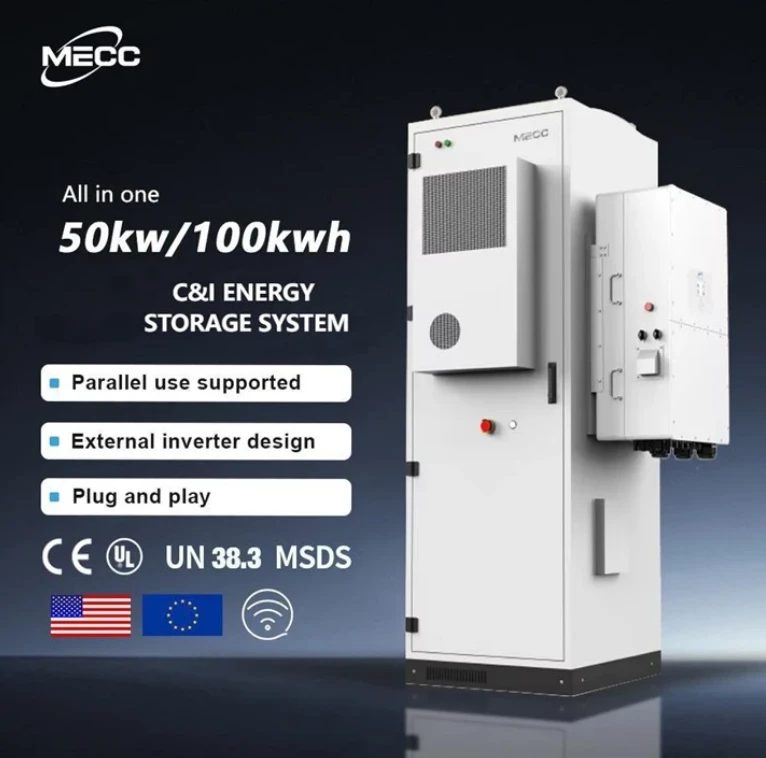
MECC 50KW 112KWH BESS Battery Energy Storage System
The MECC 50kw 112kWh Battery Energy Storage Cabinet is a high-capacity energy storage solution designed for industrial and commercial applications. Featuring 358V, 314Ah lithium iron phosphate (LiFePO4) battery, it ensures long-lasting, safe, and efficient energy storage.
High-efficiency 50kW/112kWh Industrial and Commercial Energy Storage System (C&I ESS). Features LiFePO4 battery, peak shaving, and smart EMS. Reduce operational costs and ensure power backup. Inquire for custom BESS solutions.
Designed with a compact footprint of less than 1.2 square meters, this 112kWh cabinet features a pre-integrated all-in-one design, reducing on-site installation time by 40% compared to modular rack systems.