



Every commercial battery storage proposal carries a headline number: a ten-year performance guarantee. It sounds definitive, but it's a contract about battery degradation - and the details decide whether it's worth anything. Two warranties that both say "10 years" can differ enormously in capacity retention, throughput limits, and exclusions. For buyers evaluating C&I battery storage, understanding what's actually guaranteed is one of the highest-leverage things you can do.

What degradation actually means
Batteries lose capability in two ways: capacity fade (less energy stored) and power fade (less power delivered), both driven by rising internal resistance. Degradation follows a curve - gradual at first, then accelerating past a "knee" point. It's caused by cycle life consumption (every charge and discharge), calendar aging (time, even unused), temperature, C-rate, depth of discharge, and the state of charge (SOC) band the system operates within. A good guarantee is really a promise about how fast these factors will erode performance under defined conditions.
How storage warranties are structured
Most ESS warranties combine two dimensions:
Time-based: a number of years (e.g., 10).
Throughput-based: a total energy cycled (measured in MWh).
Whichever limit is reached first ends the coverage. Many warranties also specify capacity retention - a percentage of original capacity the system should still deliver at a given year or throughput. A typical promise might be at least 70% retention at year 10 or after a defined throughput - but the specifics vary widely.
What a "10-year performance guarantee" covers
At minimum, a performance guarantee should define:
Capacity retention at specified intervals.
Power capability retained over time.
The baseline used for comparison (nameplate versus usable capacity).
What remedies apply if performance falls short.
Whether augmentation (adding capacity) is offered to restore performance.
If a document lacks these, it's marketing rather than a guarantee.
The fine print that decides value
The details that matter most:
Baseline definition: Is retention calculated against nameplate or available energy? The difference can be significant.
Test conditions: Capacity verification depends on temperature, C-rate, and discharge depth. A guarantee measured under ideal conditions may be unreachable in your climate.
Throughput caps: If you cycle more than the limit, coverage may void - common in aggressive TOU arbitrage or demand response duty.
Exclusions: temperature excursions, water ingress, unauthorized changes, and force majeure are typically excluded.
Who pays for testing: Capacity tests cost money; know who bears it.
Transferability: A warranty that doesn't transfer limits resale value.
Chemistry and design influence degradation
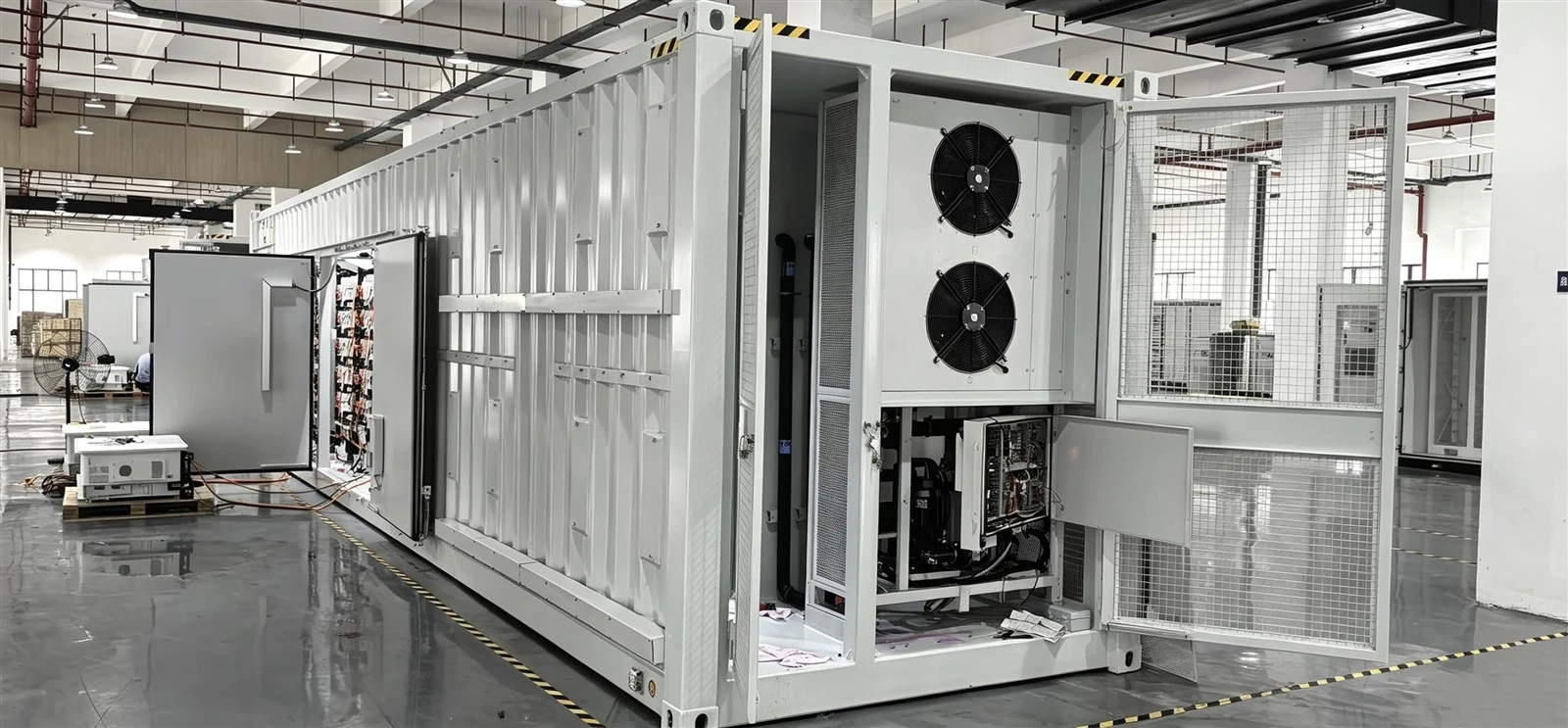
Hardware choices shape how well a system ages. LFP (lithium iron phosphate) chemistry generally offers longer cycle life and better thermal stability than NMC. Liquid-cooled battery storage holds tighter temperature control than air-cooled designs, reducing thermal stress - the single biggest degradation accelerant. Some designs use over-provisioning, installing extra capacity so the system still meets its guarantee at end of life.
Your role: operating within warranty
Warranties are conditional. To keep coverage valid, you typically must:
Operate within specified temperature, C-rate, and SOC limits.
Maintain and log service per the manufacturer's schedule.
Keep firmware current and avoid unauthorized modifications.
Preserve BMS and EMS data for verification.
Your battery storage maintenance program isn't just about uptime - it's evidence.
Verifying capacity and state of health
Proving a shortfall requires measurement. This means capacity or reference tests, tracked SOH (state of health) trends from the BMS, and sometimes third-party verification. Continuous monitoring makes claims straightforward; its absence makes them a dispute.
When things go wrong
If performance falls below the guarantee, remedies typically include repair, augmentation, module replacement, or financial compensation - depending on the contract. Understanding the remedy before you sign is essential, because the remedy defines the guarantee's real value.
Impact on economics
Degradation must be modeled, not ignored. Capacity fade raises effective commercial energy storage cost per kWh, worsens LCOS (levelized cost of storage), and extends commercial battery storage payback if not planned for. A realistic model includes degradation, any augmentation cost, and residual value - factors that show up in battery storage ROI over ten to twenty years. A strong warranty is partly a financial hedge against these risks.
What to ask a supplier
Ask a prospective commercial energy storage manufacturer or commercial energy storage supplier:
What capacity retention is guaranteed, at what year and throughput?
Under what test conditions is it verified, and who pays?
Does the guarantee account for your climate and duty cycle?
What are the throughput caps and exclusions?
Is augmentation available, at what cost?
Is the warranty transferable?
How does monitoring (BMS/EMS) support claims?
Confirm as well that certifications (UL 9540, IEC 62619) and the maintenance program align with warranty conditions, so coverage stays intact through commercial energy storage installation and beyond.

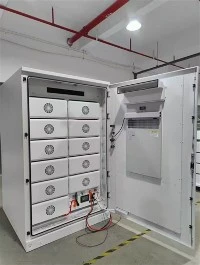
125KW 241kWh Battery Energy Storage System Cabinet
The BESS 125KW 241kWh Lithium Battery Energy Storage Cabinet is a high-power, large-capacity integrated energy storage solution engineered for medium-to-large commercial, industrial, and utility-scale applications. It integrates a 125kW high-performance bidirectional inverter, a 241kWh lithium iron phosphate (LiFePO4) battery bank, and a full-featured intelligent energy management system (EMS) into a modular cabinet design. This system enables efficient renewable energy storage, peak shaving, load shifting, grid frequency regulation, and emergency backup power supply. Ideal for large factories, shopping malls, industrial parks, utility-scale solar/wind farms, and microgrids, it enhances energy independence, reduces high grid demand charges, and supports the stable integration of high-penetration renewable energy into the grid.