



One commercial battery storage site can be managed with a phone call. Twenty cannot. The moment a portfolio spans multiple buildings, cities, or countries, remote monitoring stops being a convenience and becomes the operating system of the fleet. Remote monitoring platforms let operators watch every battery energy storage system (BESS) from a single dashboard - catching faults before they become outages, verifying savings, and dispatching energy where it earns most.
Why remote monitoring matters at scale
Distributed storage assets rarely have staff on site. Without monitoring, a fault can go unnoticed for days, silently costing peak shaving savings or availability. At fleet scale, the economics compound: an undetected issue multiplied across dozens of systems is a material loss. Monitoring converts a scattered set of assets into a coordinated, observable network - essential for owners of C&I battery storage portfolios, whether in microgrid or standalone applications.
What actually gets monitored
A capable platform tracks several categories of data:
Battery health: state of charge (SOC), state of health (SOH), cell temperatures, imbalance, and capacity trends.
System performance: power, energy throughput, availability, and round-trip efficiency.
Grid and tariff context: peak demand, dispatch status, and event participation.
Safety systems: fire suppression status and gas detection readings.
Environment: ambient temperature, humidity, and enclosure conditions.
Each dataset answers a different question - is the asset safe, healthy, productive, and profitable?
The technology stack
Data flows from sensors through the BMS (battery management system) and PCS (power conversion system) into an EMS (energy management system) or gateway, then to the cloud. Protocols like Modbus or MQTT carry telemetry; APIs expose it to other systems. Whether processing happens at the edge or in the cloud affects latency and bandwidth, but the architectural principle is constant: field data must move securely and reliably to where decisions are made.
What a good dashboard shows
An effective dashboard balances overview and detail. At the top: a portfolio view - availability, current output, alarms, and savings across all sites. Below: drill-down into individual assets for cell-level detail and dispatch history. Key KPIs and historical trends reveal performance against the modeled baseline, so underperformance becomes visible rather than assumed.
Alarms and alerting
Alerts are the difference between monitoring and vigilance. Good systems use tiered thresholds, escalation paths, and notification routing so the right person is woken for the right reason. Anomaly detection - flagging unusual patterns rather than fixed limits - catches emerging issues earlier, especially in fleets where conditions vary site to site.
Analytics and predictive maintenance
Trending SOH and efficiency over time supports predictive maintenance: scheduling service based on condition rather than calendar. This feeds directly into battery storage maintenance planning, reducing truck rolls and preventing failures. It also produces the documentation needed for warranty claims - connecting monitoring to the guarantees you negotiated.
Fleet-level value: dispatch and aggregation
Monitoring isn't just passive observation. A fleet platform coordinates dispatch across sites, optimizing for TOU arbitrage, demand charge reduction, and demand response participation simultaneously. It can aggregate assets into a VPP for grid services - the same way V2G fleets aggregate vehicles. For portfolios spanning commercial solar plus storage and EV charging, central orchestration is where the incremental value lives.
Cybersecurity and data governance
Connected assets introduce risk, and monitoring platforms must be secured. This means alignment with IEC 62443, network segmentation, encrypted communications, and rigorous access control - all the principles of storage cybersecurity. Equally important for owners: clarify data ownership. Who holds the telemetry, can you export it, and what happens if you change vendors? Lock-in through data is a real commercial risk.
Integration with O&M and service
A good platform integrates with service operations: remote diagnostics, automated service tickets, spare-parts planning, and warranty tracking. When a fault appears, the platform should tell you what it is, what it means, and what to do - not just illuminate a red light.
Impact on economics
Monitoring protects performance, and performance is the investment. By sustaining availability and catching degradation early, it defends commercial energy storage cost per kWh, LCOS (levelized cost of storage), battery storage ROI, and commercial battery storage payback. Reducing unnecessary site visits lowers O&M cost, and faster fault resolution protects the availability that underpins the whole business case.
Choosing the right partner
Ask a prospective commercial energy storage manufacturer or commercial energy storage supplier whether monitoring is included, what data you can access and export, how alerts are handled, whether dispatch optimization is part of the platform, and how the system is secured. Confirm the platform integrates with your battery storage maintenance program and supports compliance documentation for UL 9540 and IEC 62619. A dashboard you can't act on is decoration.

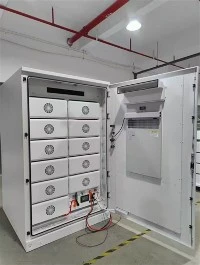
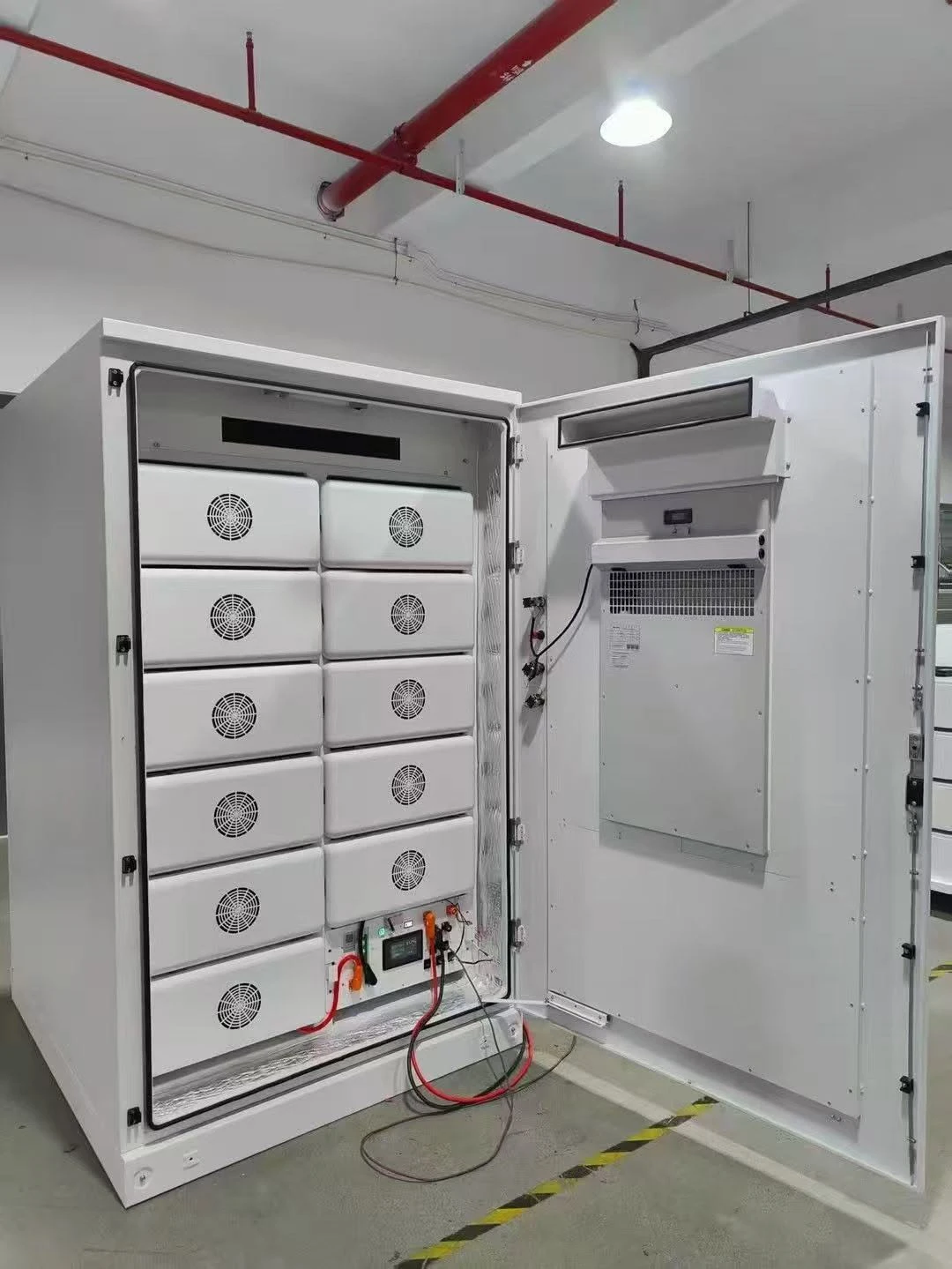
125KW 241kWh Battery Energy Storage System Cabinet
The BESS 125KW 241kWh Lithium Battery Energy Storage Cabinet is a high-power, large-capacity integrated energy storage solution engineered for medium-to-large commercial, industrial, and utility-scale applications. It integrates a 125kW high-performance bidirectional inverter, a 241kWh lithium iron phosphate (LiFePO4) battery bank, and a full-featured intelligent energy management system (EMS) into a modular cabinet design. This system enables efficient renewable energy storage, peak shaving, load shifting, grid frequency regulation, and emergency backup power supply. Ideal for large factories, shopping malls, industrial parks, utility-scale solar/wind farms, and microgrids, it enhances energy independence, reduces high grid demand charges, and supports the stable integration of high-penetration renewable energy into the grid.