


1. Project Overview
This customized technical solution is developed for commercial and industrial scenarios, adopting an integrated design of high-efficiency photovoltaic power generation, large-capacity energy storage units and intelligent hybrid grid inverter technology. The system supports multiple core functions, including efficient on-site PV consumption, peak-valley tariff arbitrage, peak shaving and valley filling, and emergency backup power supply. It effectively reduces overall power consumption costs for commercial and industrial users, improves power supply stability, and enhances independent energy control capability.
Designed based on an average daily effective sunshine duration of 5 hours, the system achieves a daily power generation of approximately 208kWh and a daily energy storage capacity of 80kWh. It fully meets the power demand of small and medium-sized commercial scenarios such as industrial plants, office buildings and commercial complexes. Supporting flexible switching among grid-tied, off-grid and hybrid operating modes, the system features high reliability, superior safety and outstanding economic benefits.

2. System Design Principles
2.1 High Efficiency
All core equipment adopts mainstream high-efficiency products in the industry. The conversion efficiency of PV modules, inverters and battery charge-discharge efficiency all reach leading industry standards. Combined with optimized electrical topology design, the system minimizes overall energy loss, maximizes PV power utilization and extends the cycle life of energy storage units.
2.2 Safety
A full-link multi-level safety protection mechanism is built throughout the system. The DC side is equipped with reverse connection prevention, over-voltage and over-current protection; the AC side integrates lightning protection and short-circuit protection. The battery system supports over-temperature, over-charge, over-discharge and insulation monitoring protection. All equipment adopts high-grade enclosure protection, adapting to complex and variable operating environments of commercial and industrial scenarios to ensure long-term stable and safe operation.
2.3 Reliability
The system adopts mature and stable technical routes. PV modules adopt double-sided double-glass encapsulation with excellent weather resistance and mechanical load resistance. The energy storage system uses lithium iron phosphate batteries with superior thermal stability and long cycle life. The inverter applies intelligent air-cooling heat dissipation design, ensuring full-power operation without derating under high-temperature conditions and guaranteeing reliable system output throughout the full lifecycle.
2.4 Economy
The system configuration balances initial investment and long-term O&M costs. Optimized series-parallel design reduces cable and accessory costs, while high-efficiency equipment selection minimizes power generation loss. Cooperated with intelligent energy scheduling strategies, the project can recover initial investment within 3–5 years, delivering sustainable and favorable long-term economic returns.
3. Overall System Configuration
The entire system consists of four core subsystems: PV power generation subsystem, energy storage subsystem, intelligent inverter subsystem, and auxiliary installation supporting subsystem. The detailed configuration is as follows:
3.1 PV Power Generation Subsystem
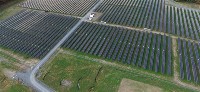
Adopting 650W high-efficiency N-type monocrystalline double-sided double-glass PV modules, with a total quantity of 64 pieces. The array is arranged in a layout of 16 modules per string × 4 parallel strings, forming a total installed capacity of 41.6kW. The power matching ratio perfectly adapts to the inverter rated power, enabling the system to operate within the optimal efficiency range.
3.2 Energy Storage Subsystem
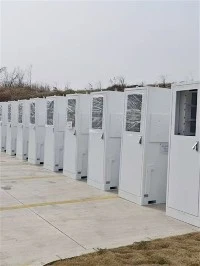
Equipped with high-voltage rack-mounted lithium iron phosphate battery modules. Each module has a capacity of 16kWh, and 5 modules are connected in series to form a total system capacity of 80kWh with a rated system voltage of 819.2V. Featuring high energy density, long cycle life and excellent safety performance, the battery system supports fast charge-discharge and deep-cycle operation.
3.3 Intelligent Inverter Subsystem
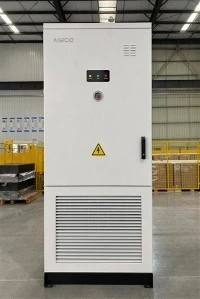
Deploying a 40kW three-phase hybrid grid-tied inverter with multiple independent MPPT tracking channels. It supports coordinated control of PV input, battery charge-discharge, municipal power interaction and load power supply, with a maximum conversion efficiency of over 98%. The device realizes seamless switching between grid-tied and off-grid modes to meet multi-scenario operational requirements for commercial and industrial applications.
3.4 Auxiliary Installation Subsystem
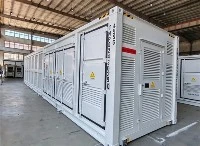
The complete supporting system includes dedicated PV DC/AC cables, grid-connected cabinets, mounting brackets, grounding systems and intelligent monitoring equipment. Equipped with a cloud monitoring platform, the system supports real-time data collection, remote operation and fault early warning, ensuring standardized installation and long-term stable system operation.
4. Core Equipment Parameters and Selection Verification
4.1 PV Module Selection and Array Design
The system adopts high-efficiency N-type monocrystalline double-sided double-glass 650W PV modules. Under standard test conditions (STC), the core parameters are as follows: peak power 650W, open-circuit voltage 49.73V, operating voltage 41.56V, short-circuit current 16.56A, operating current 15.65A, with a high conversion efficiency of 24.1%.
The module adopts a 132-cell design, with dimensions of 2382×1134×30mm, a weight of 32.3kg and a maximum system voltage of 1500V DC, suitable for rooftop and ground-mounted commercial installation scenarios. With a power temperature coefficient of -0.29%/℃, open-circuit voltage temperature coefficient of -0.25%/℃ and short-circuit current temperature coefficient of +0.048%/℃, the module delivers excellent low-temperature performance and weak-light response, maintaining high power generation efficiency under cloudy, dawn and dusk conditions.
The PV array adopts a layout of 16 modules per string with 4 parallel MPPT channels, fully matching the inverter channel configuration. This design effectively reduces series mismatch loss, improves MPPT tracking accuracy, adapts to multi-orientation and partially shaded installation environments, and maximizes overall PV power output.
4.2 Energy Storage Inverter Selection and Adaptability Analysis
As the core system control unit, the 40kW three-phase hybrid inverter integrates PV MPPT tracking, battery charge-discharge management, grid interaction control, load power supply and grid/off-grid switching functions. The core technical parameters are as follows:
The AC side features a rated output power of 40kW and a maximum apparent power of 44kVA, with a rated voltage of 380V/400V three-phase output. It supports unbalanced load adaptation with THDi<3%, delivering superior power quality. The PV input side is equipped with 4 independent MPPT channels, with a maximum input current of 40A and a maximum short-circuit current of 50A per channel. The full-load MPPT voltage range is 500V–850V, the startup voltage is 195V, and the maximum DC voltage is 1100V, fully compatible with high-power PV array designs.
The battery side supports 3-channel battery access with a battery voltage range of 200V–900V (250V–800V for full-load operation) and a maximum charge-discharge current of 55A×3. It supports mainstream high-voltage battery communication protocols to realize refined battery management and protection.
The inverter integrates comprehensive protection functions including DC reverse connection protection, battery reverse connection protection, insulation monitoring, AC/DC lightning protection, short-circuit protection, ground fault detection and anti-islanding protection. It supports UPS uninterrupted power supply and black-start functions, achieving seamless grid/off-grid switching within 10ms to guarantee continuous power supply for critical loads.
Adopting intelligent air-cooling heat dissipation, the inverter operates without derating at an ambient temperature of 50℃, with a wide working temperature range of -30℃~60℃ and an IP66 protection rating for outdoor commercial deployment. It supports WIFI/LAN remote monitoring to realize real-time data viewing and remote system control.

4.3 Energy Storage Battery System Selection
The 80kWh high-voltage rack-mounted lithium iron phosphate energy storage system adopts a modular design, with 5 sets of 16kWh battery modules connected in series. The system rated voltage is 819.2V, the working voltage range is 672V–928V, and the available energy is 73.73kWh, featuring high energy density and excellent charge-discharge performance.
The system has a rated DC power of 80kW, a maximum continuous charge-discharge current of 100A, and a peak discharge current of 125A (2min@25℃), meeting high-power charge-discharge operational demands. The battery achieves a cycle life of ≥8000 cycles (25℃, 0.5C/0.5C, 90% DOD) for long-term reliable operation.
The working temperature range is 0℃~55℃ for charging and -20℃~55℃ for discharging, adapting to wide-temperature commercial operating environments. It operates stably under 5%~85% RH humidity and an altitude of ≤3500m, with an IP20 enclosure protection rating suitable for indoor and outdoor rack installation.
The built-in BMS supports CAN2.0/RS485 communication, realizing real-time monitoring of cell voltage, temperature and current. It provides multi-layer protection including over-charge, over-discharge, over-current, over-temperature and insulation monitoring, and is compatible with mainstream inverter protocols to achieve coordinated control between battery and inverter, ensuring safe and stable battery operation.

5. System Electrical Design and Adaptability Verification
5.1 PV Array Parameter Matching Verification
Each PV string consists of 16 modules. Under STC, the string open-circuit voltage reaches 795.68V, and the string operating voltage is 664.96V, falling within the inverter's full-load MPPT voltage range of 500V–850V, ensuring maximum power tracking under full operating conditions.
Considering temperature coefficient fluctuation, the string open-circuit voltage drops to 706.56V under extreme high temperature (70℃) and rises to 925.28V under extreme low temperature (-40℃). Both values are within the inverter's 195V–1100V operating range, avoiding over-voltage risks and meeting safe operation standards.
In terms of current matching, the single-string operating current is 15.65A, and the total current of 2 strings connected to each MPPT channel is approximately 31.3A, which is far below the inverter's maximum current limit, eliminating over-current hazards and ensuring electrical safety.
5.2 System Electrical Topology Design
The system adopts a classic commercial PV-ESS topology: PV array + energy storage battery + hybrid inverter + municipal grid + local load. The PV array connects to the inverter MPPT ports via DC cables, the battery system connects to the inverter battery ports, and the inverter AC side connects to the municipal grid and on-site loads through a grid-connected cabinet. The topology supports flexible multi-path energy flow:
PV Priority On-Site Consumption: Daytime PV power supplies local loads preferentially, and surplus power is stored in batteries to maximize local clean energy consumption and reduce grid reverse power loss.
Peak-Valley Arbitrage: The system automatically charges during grid off-peak low-price periods and discharges during peak high-price periods, reducing high-cost grid power purchase and achieving stable economic benefits.
Emergency Off-Grid Power Supply: In case of grid failure, the system switches to off-grid mode within 10ms, with PV and storage jointly supplying power to critical loads to ensure uninterrupted production and operation.
Peak Shaving and Valley Filling: Based on user load curves, the system intelligently discharges during peak power consumption and charges during off-peak periods, smoothing grid load fluctuations, reducing demand charges and improving overall grid stability.
6. System Functions and Operating Modes
The system supports intelligent automatic mode switching according to grid status, solar irradiance, load demand and tariff policies, covering five core operating modes:
6.1 Grid-Tied Self-Consumption Mode
As the default operating mode, PV power supplies on-site loads first, with surplus energy stored in batteries. When PV generation is insufficient, the battery supplements power supply to minimize grid electricity purchase and maximize local PV consumption rate.
6.2 Peak-Valley Arbitrage Mode
Embedded with regional time-of-use tariff strategies, the system automatically performs low-price charging and high-price discharging, fully leveraging peak-valley price differences to reduce comprehensive power costs and improve project economic returns.
6.3 Off-Grid Emergency Mode
When the municipal grid fails, the system rapidly switches to off-grid operation, providing stable AC power for key loads. Equipped with black-start capability, the system can automatically restart without grid support, ensuring rapid recovery of off-grid power supply.
6.4 Peak Shaving and Valley Filling Mode
The system formulates optimized charge-discharge strategies based on historical load data, effectively cutting peak power demand to reduce demand charges and smooth grid load. It also supports grid demand response to acquire additional auxiliary service benefits.
6.5 Intelligent Monitoring and O&M Mode
Matched with a cloud intelligent monitoring platform, the system realizes real-time collection of power generation, charge-discharge volume, operating status and fault data. Users can remotely view and control the system via mobile and PC terminals. Automatic fault early warning reduces manual O&M costs and improves long-term operational reliability.

7. System Safety and Protection Design
A three-dimensional safety protection system covering equipment level, system level and installation level is built to ensure full-lifecycle safe and stable operation:
7.1 Equipment-Level Protection
PV modules adopt double-glass encapsulation with excellent insulation and flame retardancy. The inverter integrates multi-layer electrical protection and Class C lightning protection to resist over-voltage impact. The lithium iron phosphate battery system features excellent thermal stability, with BMS realizing full-cycle monitoring and protection of cell status, effectively avoiding thermal runaway risks.
7.2 System-Level Protection
The DC side adopts flame-retardant weather-resistant dedicated cables, equipped with DC circuit breakers and fuses for rapid fault isolation. The AC side is equipped with grid-connected cabinets integrating surge protection and power quality monitoring to ensure grid-connected compliance. A complete grounding system eliminates electric shock risks and strengthens lightning protection performance.
7.3 Installation-Level Protection
PV brackets adopt hot-dip galvanized steel with high corrosion resistance and structural strength. Cables are laid through pipes or bridge frames with waterproof, fireproof and anti-rodent treatment. Strict insulation testing, grounding resistance testing and pre-grid-connection detection are implemented after installation to eliminate potential safety hazards.
8. Installation and Construction Plan
The project construction is implemented in six standardized stages in strict accordance with industry specifications:
Pre-construction Preparation: Complete on-site survey, confirm installation conditions and grid access conditions, formulate construction plans and safety preplans, go through approval procedures, and prepare equipment and materials.
Foundation Construction: Complete bracket and equipment foundation construction and grounding system laying to meet structural and electrical specification requirements.
Equipment Installation: Install and calibrate PV brackets and modules, and complete the fixed installation of inverters, battery cabinets and grid-connected cabinets to ensure stable placement and unobstructed heat dissipation.
Electrical Wiring: Complete DC and AC cable laying and connection, strictly control polarity and phase sequence, and do a good job in waterproof and insulation protection.
Commissioning and Grid Connection: Conduct electrical performance testing, parameter configuration and platform access debugging, complete grid-connection application and acceptance to realize official grid-tied operation.
Acceptance and Delivery: Complete overall project acceptance, deliver equipment manuals and warranty services, and provide professional operational training for users.
9. System Benefit Analysis
9.1 Direct Electricity Cost Savings
The system achieves an annual power generation of approximately 75,000kWh, directly replacing high-cost municipal power purchase. Combined with peak-valley arbitrage benefits, it saves about RMB 60,000 in electricity fees annually (calculated at a commercial electricity price of 0.8 RMB/kWh). With a service life of over 25 years, the project delivers prominent long-term economic benefits.
9.2 Demand Charge Reduction
Through peak shaving and valley filling, the system effectively reduces user peak power demand, lowers monthly demand charge expenditure, and avoids floating premium risks caused by grid peak load, further optimizing comprehensive energy costs.
9.3 Emergency Power Guarantee Value
The off-grid emergency power supply function avoids production shutdown losses caused by sudden grid power outages, guarantees continuous operation of core production and office equipment, and provides reliable power safety support for high-reliability commercial and industrial scenarios.
9.4 Low Operation and Maintenance Cost
Core equipment supports long-term warranty, and the intelligent monitoring platform realizes remote fault diagnosis and early warning, greatly reducing on-site manual O&M investment and ensuring long-term stable and low-cost system operation.
10. Conclusion and Warranty Service
This 40kW/80kWh commercial PV-ESS integrated system adopts mature technical routes and high-quality industry-standard equipment. Through refined system matching design and multi-dimensional safety optimization, the system achieves high efficiency, high safety, high reliability and high economy. It perfectly adapts to the energy consumption characteristics of commercial and industrial scenarios, effectively reducing user energy costs, improving power supply autonomy and stability, and has high practical application value and popularization prospects. The project provides complete after-sales warranty and full-lifecycle technical support to ensure stable, efficient and long-term operational benefits for users.