


1. Project Overview
This project is customized for a commercial and industrial plant in Spain, adopting an integrated hybrid PV-energy storage system with core functions of on-site self-consumption, peak-valley energy storage and surplus power grid connection. The overall system is composed of 48 pieces of 720W dual-glass bifacial PV modules, a 50kW three-phase hybrid inverter with 4 independent MPPT channels, and a 51.2kWh rack-mounted high-voltage lithium iron phosphate battery pack. The system achieves an average daily PV power generation of 172kWh and a daily energy storage capacity of 50kWh.
Benefiting from abundant solar resources and significant peak-valley tariff differences in Spain, the system implements refined energy scheduling throughout the day. During daytime with sufficient solar irradiance, PV power supplies the plant's local loads preferentially, and the surplus power is stored in the energy storage battery system. During nighttime peak tariff periods, the stored electricity is discharged to offset high-price grid power consumption, and the remaining power can be fed into the local public grid. The system effectively reduces the comprehensive power consumption cost of the enterprise by leveraging peak-valley electricity price spreads. Adopting a fully modular design, the equipment supports rapid on-site installation and flexible capacity expansion to meet the growing power demand of enterprises in the later stage.
2. Core Equipment Basic Parameters
2.1 720W Bifacial PV Module
Under standard test conditions (STC), the core parameters are as follows: rated peak power 720W, open-circuit voltage (Voc) 50.26V, maximum power voltage (Vmp) 42.24V. The open-circuit voltage temperature coefficient is -0.24%/℃, and the module supports a wide operating temperature range of -40℃~+85℃, adapting to complex outdoor climatic conditions in local areas.

2.3 50kW Three-Phase Hybrid Inverter
Equipped with 4 independent MPPT PV access channels, the inverter features an MPPT operating voltage range of 200V~850V and a battery DC adaptive voltage range of 420V~580V, which perfectly matches the 512V high-voltage battery cluster configured in this solution. It supports CAN communication to realize real-time data interaction and coordinated control with the energy storage BMS system, ensuring intelligent and safe system operation.

3. PV Array Series-Parallel Design and Voltage Verification
3.1 Series Quantity Selection and Extreme Voltage Verification
The minimum winter temperature in mountainous areas of northern Spain is about -5℃, and low temperature will cause a rise in PV module open-circuit voltage. The design strictly follows the safety standard: the extreme low-temperature open-circuit voltage shall not exceed the inverter's maximum MPPT voltage of 850V, and the normal-temperature operating voltage shall be higher than the MPPT startup voltage of 200V.
In this solution, 12 modules are connected in series to form a single PV branch. Under normal temperature conditions, the single-string open-circuit voltage is 12 × 50.26V = 603.12V, and the single-string operating voltage is 12 × 42.24V = 506.88V. Under the extreme low temperature of -5℃ (temperature difference ΔT=30℃), the calculated low-temperature open-circuit voltage is 603.12 × [1-0.24%×(-30)] = 646.54V.
All voltage parameters are within the inverter's safe and efficient operating range. The low-temperature extreme voltage is far below the 850V upper limit, and the normal-temperature working voltage stably falls within the 200V~850V MPPT interval, enabling the inverter to continuously track the maximum power point of the PV array.
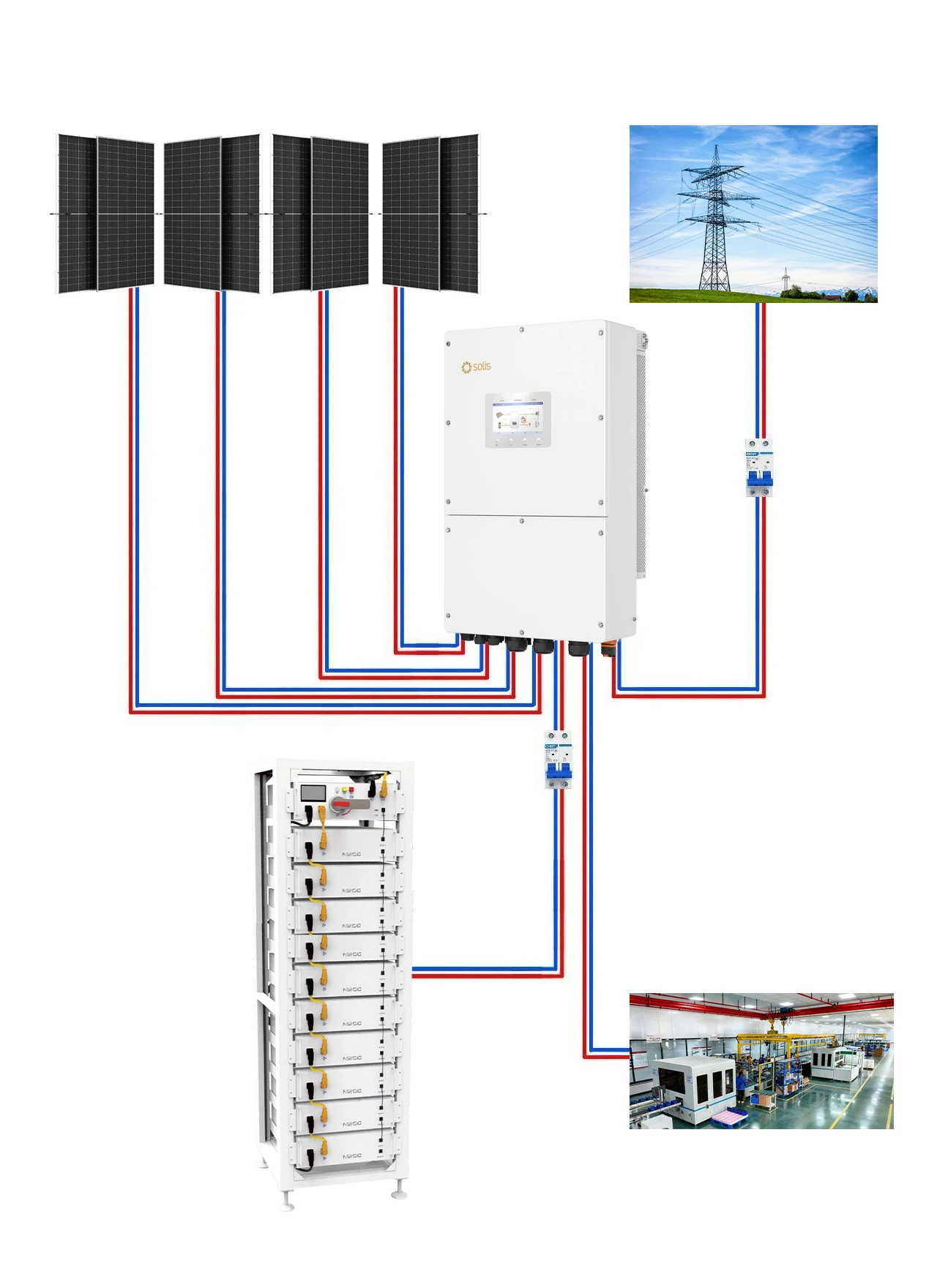
3.2 PV Branch Layout Design
A total of 48 PV modules are deployed in the system, configured as 4 independent branches with 12 modules in series per branch. Corresponding to the inverter's 4 built-in MPPT channels, a one-to-one independent access scheme is adopted. Each PV branch operates independently without mutual interference, effectively avoiding power generation attenuation caused by local roof shading and inconsistent installation orientations, and maximizing the overall power generation efficiency of the array.
The total installed PV capacity is 34.56kW (48 × 720W), which is lower than the inverter's rated AC power of 50kW. This design reserves sufficient power expansion margin, eliminates PV power redundancy and waste, and supports subsequent system capacity upgrade.
4. Energy Storage Battery Wiring Scheme
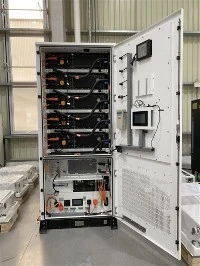
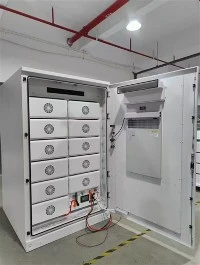
The project is equipped with 10 sets of 51.2V/5.12kWh battery modules. According to the inverter's adaptive battery voltage range of 420V~580V, all modules adopt a full series connection mode. The overall rated voltage of the battery cluster is 10 × 51.2V = 512V, which accurately matches the inverter's DC energy storage voltage interval and meets the equipment access standards.
The total configured battery capacity is 51.2kWh. To balance daily energy storage demand and long-term battery service life, the system operates with a 90% depth of discharge (DOD) and limits the daily charging upper limit SOC to 95%. The actual daily effective energy storage is about 46kWh, which is close to the design target of 50kWh, effectively avoiding long-term full-charge operation and reducing battery aging attenuation.

5. Power Generation, Energy Storage Operation and Load Matching Verification
Spain enjoys superior solar irradiation resources, with an average annual effective sunshine duration of 5.0 hours. With a 34.56kW PV installed capacity, the theoretical average daily power generation is 34.56kW × 5.0h = 172.8kWh, which is highly consistent with the project's design daily power generation of 172kWh.
The system operates according to the optimal energy scheduling logic: PV power supplies on-site plant loads preferentially in the daytime; when PV output exceeds the load power consumption, the surplus power charges the energy storage battery, with the daily stored energy controlled within 50kWh; during nighttime peak tariff periods, the battery discharges to supply loads and reduce high-price grid electricity costs; when both PV generation and stored power have surplus capacity, the residual electricity is fed into the local public grid to create additional grid-connected benefits.
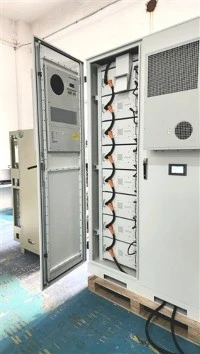
After the battery modules are connected in series, they are integrated with a unified BMS management system, which is linked to the inverter via the CAN2.0 bus. The inverter monitors real-time battery parameters including voltage, SOC and temperature to realize intelligent charge-discharge control. The battery system adopts indoor rack-mounted installation in the power distribution room, with a stable operating environment temperature of 0~35℃, and the battery cycle life reaches no less than 8000 times, ensuring long-term stable operation.
6. System Operating Modes
6.1 PV On-Site Self-Consumption Mode
Solar PV power directly supplies the plant's production and office loads during the daytime, minimizing the purchase of municipal grid electricity and reducing basic power consumption costs.
6.2 Energy Storage Charging Mode
When real-time PV output is greater than the on-site load power consumption, the excess clean power is automatically stored in the high-voltage battery cluster to realize full local consumption of PV resources.
6.3 Energy Storage Discharging Mode
During nighttime without solar irradiation and grid peak tariff periods, the energy storage battery discharges to bear the plant's load power demand, effectively cutting peak electricity expenses and optimizing enterprise energy consumption structure.
6.4 Grid-Tied & Emergency Off-Grid Mode
When PV and energy storage systems have residual power, the surplus electricity is connected to the public grid to obtain grid-connected power benefits. In case of municipal grid failure and power outage, the inverter automatically switches to off-grid operation mode to provide uninterrupted emergency power supply for core important loads, ensuring continuous and stable plant operation.
7. Solution Summary
PV System Configuration & Safety: The system adopts 48 pieces of 720W PV modules, divided into 4 independent MPPT branches with 12 modules in series per branch. The extreme low-temperature open-circuit voltage is 646.54V, and the normal-temperature operating voltage is 506.88V, which fully complies with the inverter's MPPT safe operating voltage range, ensuring long-term safe and efficient power generation.
Energy Storage System Matching: 10 battery modules are connected in series to form a 512V high-voltage battery cluster, which accurately adapts to the inverter's DC energy storage voltage range. The effective usable capacity fully meets the daily energy storage demand of nearly 50kWh, realizing efficient peak-valley energy regulation.
Operating Condition Adaptability: The 34.56kW PV array achieves an average daily power generation of 172kWh, matching the local solar resource characteristics of Spain. Relying on the local obvious peak-valley tariff difference, the system realizes multiple benefits including PV self-consumption, peak power cost reduction and grid-connected surplus power revenue, and supports emergency backup power supply to improve enterprise power supply reliability.
Subsequent Expansion Capability: Both PV branches and battery modules adopt standardized modular design. Subsequent system capacity expansion can be realized by adding PV series branches and parallel battery modules, which flexibly adapts to the long-term power consumption growth of industrial plants and has excellent scalability.