




SOC
SOC, also known as State of Charge, refers to the state of charge or remaining charge of a battery. It represents the ratio of the remaining dischargeable capacity of the battery after a period of use or long-term storage to its fully charged state, often expressed as a percentage. Its value range is 0~1. When SOC=0, it indicates that the battery is fully discharged, and when SOC=1, it indicates that the battery is fully charged.
SOC is an important parameter that reflects the usage status of a battery and is one of the most important parameters in a battery management system (BMS), because the SOC of a battery cannot be directly measured and can only be estimated through parameters such as battery terminal voltage, charge and discharge current, and internal resistance. These parameters are also affected by various uncertain factors such as battery aging, environmental temperature changes, and vehicle driving status, so accurate SOC estimation has become an urgent problem to be solved in the development of electric vehicles.
In the field of electric vehicles, accurate estimation of SOC is of great significance for improving battery utilization, preventing overcharging and overdischarging, extending battery life, and ensuring the safety and reliability of electric vehicles. Therefore, the battery management system (BMS) of electric vehicles usually includes SOC estimation function to achieve real-time monitoring and management of battery status.
In addition, the concept of SOC is widely used in other types of battery systems, such as energy storage systems, portable electronic devices, etc., which are important parameters used to describe the remaining battery capacity.

SOH
SOH, also known as State of Health, refers to the health status of a battery and is used to describe the degree of aging or deterioration of the battery. It is an important parameter used in battery management systems (BMS) to evaluate battery performance.
The definition of SOH can be expressed as the percentage of the current maximum capacity of a battery to its original capacity. With the use of batteries and the passage of time, a series of physical and chemical changes will occur inside the battery, such as a decrease in active substances, an increase in internal resistance, etc. These changes will gradually reduce the capacity and performance of the battery. Therefore, by measuring the current maximum capacity of the battery and comparing it with the original capacity, the SOH value of the battery can be obtained to evaluate its health status.
Accurate assessment of SOH is crucial for electric vehicles, energy storage systems, and other battery systems that require long-term operation and reliability. It can help users understand the remaining life of batteries, predict when batteries need to be replaced, and optimize battery usage and maintenance strategies. In addition, the evaluation of SOH can provide important feedback for battery manufacturers to improve battery design and manufacturing processes, enhance battery durability and reliability.
It should be noted that the evaluation method of SOH may vary depending on different battery types and application scenarios. Common evaluation methods include capacity testing, internal resistance testing, voltage curve analysis, incremental capacity analysis (ICA), and differential voltage analysis (DVA). These methods each have their own advantages and disadvantages, and it is necessary to choose the appropriate evaluation method based on the specific situation.

DOD
DOD, also known as Depth of Discharge, refers to the percentage of the capacity released by a battery during use compared to its rated capacity. This parameter is used to describe the degree to which the battery is consumed during use.
The depth of discharge has a significant impact on the performance and lifespan of batteries. Generally speaking, the greater the discharge depth of a battery, the shorter its cycle life. Because each deep discharge will cause certain damage to the internal structure and chemical substances of the battery, this damage will gradually accumulate, ultimately leading to a decrease in battery performance and a shortened lifespan.
Therefore, when using batteries, deep discharge should be avoided as much as possible to extend the battery's lifespan. At the same time, it is also necessary to pay attention to the charging status of the battery and avoid overcharging and overdischarging, which can have adverse effects on the battery.
DOD is an important monitoring parameter in fields such as electric vehicles and energy storage systems. By monitoring the DOD of the battery in real-time, the usage status of the battery can be understood, the remaining life of the battery can be predicted, and corresponding measures can be taken to optimize the battery's usage and maintenance strategies. In addition, in the battery management system (BMS), charging and discharging strategies are adjusted based on the battery's DOD to protect the battery and extend its lifespan.
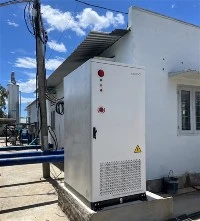
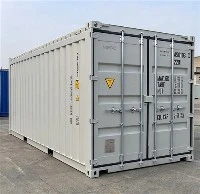
What MECC Lithium Battery Looks Like
We have high quality LiFePO4 battery with A grade battery cell and long life circle in our procucts


SOE
SOE, also known as State of Energy, is a parameter that describes the current remaining energy of a battery system or energy storage system. Unlike SOC (State of Charge), SOC mainly focuses on the proportion of remaining battery capacity to its total capacity, while SOE focuses more on the actual available energy of the system, considering the impact of factors such as battery efficiency, temperature, and aging on the actual available energy.
In application scenarios such as electric vehicles and energy storage stations, SOE is an important parameter that can help users or systems more accurately understand the energy status of the current battery system or energy storage system, and make more reasonable charging, discharging, or usage decisions. For example, in electric vehicles, by monitoring SOE, the vehicle's range can be estimated to avoid vehicle breakdowns due to insufficient battery during driving; In energy storage power plants, by monitoring SOE, the charging and discharging plan of the energy storage system can be arranged reasonably, improving the utilization and economy of the energy storage system.
It should be noted that estimating SOE is more complex than SOC because it requires consideration of more factors such as battery efficiency, temperature, aging, etc. Therefore, in practical applications, more complex algorithms and models are needed to estimate SOE. Meanwhile, due to the different characteristics and usage environments of different battery systems or energy storage systems, their SOE estimation methods and accuracy may also vary.
In summary, SOE is an important parameter that describes the current remaining energy of a battery system or energy storage system, and is of great significance for improving the utilization and economy of the system. With the continuous development of electric vehicles and energy storage technology, the estimation methods and applications of SOE will also be continuously improved and expanded.
OCV
OCV (Open Circuit Voltage) refers to the terminal voltage of a battery in an open circuit state (i.e., when the battery is not discharging or charging). In battery technology, OCV is an important parameter that reflects the electromotive force or voltage level of the battery in a specific state.
For rechargeable batteries, OCV will change with the state of charge (SOC) and the health status of the battery (such as battery aging, increased internal resistance, etc.). During the charging process, as the battery level increases, the OCV will gradually rise; During the discharge process, as the battery level decreases, the OCV will gradually decrease.
The measurement of OCV is crucial for battery management systems (BMS) as it can help the system understand the current state of the battery, enabling accurate power estimation, charging control, discharging control, and fault diagnosis. For example, in electric vehicles, BMS monitors the OCV of the battery in real time and adjusts the charging strategy based on changes in OCV to ensure that the battery can be charged safely and efficiently.
In addition, OCV can also be used to evaluate the health status of batteries. As the battery is used and aged, its internal resistance gradually increases, resulting in a decrease in the range of OCV variation during charging and discharging. By monitoring the trend of OCV changes, the remaining capacity and aging degree of the battery can be determined, providing a basis for battery maintenance and replacement.
It should be noted that the measurement of OCV requires ensuring that the battery is in an open circuit state, that is, there is no current passing between the positive and negative electrodes of the battery. Therefore, in practical applications, it is usually necessary to measure OCV after the battery has stopped charging and discharging for a period of time to ensure the accuracy of the measurement results.
ACR & DCR
Alternating Current Resistance (ACR) and Direct Current Resistance (DCR) are two important parameters in battery performance evaluation, which respectively reflect the internal resistance characteristics of batteries in AC and DC circuits.
ACR: refers to the internal resistance of a battery in an AC circuit, reflecting the degree of obstruction of the battery to AC current. Usually, a sine wave current signal with a specific frequency (such as 1kHz) is used for measurement, and the internal resistance of the battery can be approximated as the Ohmic resistance, which is the sum of the resistance of various parts inside the battery. The measurement results of ACR are influenced by various factors such as the internal structure of the battery, electrolyte, electrode materials, etc.
DC internal resistance DCR: refers to the internal resistance of a battery in a DC circuit, reflecting the relationship between the voltage and current ratio of the battery at a constant current. The measurement of DCR typically involves applying a constant DC current across the battery terminals and measuring the resulting voltage drop. DCR not only includes ohmic resistance, but also electrochemical reaction resistance and diffusion resistance, so it can more comprehensively reflect the internal impedance characteristics of the battery.
OVP
OVP (Over Voltage Protection) refers to battery overvoltage protection. When the battery voltage exceeds a certain safety threshold, specific circuit design and protection mechanisms are used to cut off or limit the power supply, thereby protecting the battery and subsequent circuits from damage. Its principle is similar to overvoltage protection in power systems, but focuses more on the specific application scenario of batteries.
With the popularization of electronic products and the continuous development of battery technology, the safety of batteries, as a key component for energy storage and supply, is increasingly valued. Overvoltage of batteries can not only cause damage to the battery itself, but also lead to serious consequences such as fires and explosions. Therefore, battery OVP has become an important means to ensure battery safety and extend battery life.
OCP
OCP (Over Current Protection) is a circuit protection mechanism used to prevent the current in a circuit from exceeding a predetermined value, thereby avoiding dangerous situations such as equipment damage or fire. Overcurrent protection is widely used in various fields such as power systems, electronic equipment, and motor drives.
The working principle of OCP overcurrent protection is based on current detection and comparison. When the current in the circuit exceeds the preset threshold, the overcurrent protection device will quickly respond by cutting off the power, reducing the voltage, or adjusting the circuit parameters to limit the current and protect the safety of the circuit and equipment.
OTP
OTP (Over Temperature Protection) is an important safety protection mechanism in charging devices, aimed at preventing damage or safety accidents caused by excessive temperature during the charging process.
The OTP over temperature protection mechanism monitors the temperature of the charging device and takes corresponding measures when the temperature exceeds a preset safety threshold, such as reducing charging power, stopping charging, or cutting off power, to prevent the device from overheating. This mechanism is usually integrated into the control chip or power management module of the charger, monitoring the device temperature in real-time through temperature sensors and comparing it with preset thresholds.
During the charging process, the temperature of the device gradually increases due to the heat generated by the current passing through the resistor and the heat released by the internal chemical reactions of the battery. If the temperature is too high and not controlled in a timely manner, it may lead to serious consequences such as battery damage, circuit aging, and even fire. Therefore, charging over temperature protection OTP is of great significance for ensuring charging safety and extending equipment service life.