


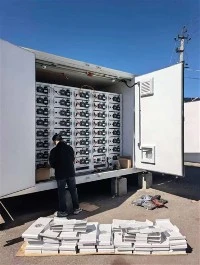
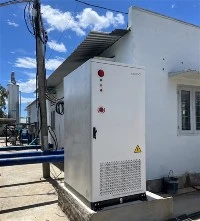
Based on existing photovoltaic power generation projects on the market and different application scenarios, solar photovoltaic power generation systems can be roughly divided into four types: grid connected power generation systems, off grid power generation systems, parallel off grid energy storage systems, and multi energy hybrid microgrid systems.

The difference between off grid and grid connected
The main difference between the two lies in whether they rely on external power grids. The photovoltaic grid connected system relies on the power grid and adopts the working mode of "self use, surplus electricity grid connection" or "full grid connection", which does not operate in the event of a power outage; And the off grid system does not rely on the power grid, relying on the working mode of "storing while using" or "storing before using", and is not affected by power outages.
01
Grid connected power generation system
Composed of photovoltaic modules, grid connected inverters, loads, bidirectional meters, grid connected cabinets, and the power grid.

The principle is to convert the direct current generated by photovoltaic modules into alternating current through an inverter, and then supply it to the load and connect it to the power grid. In this way, while meeting the household load, excess electricity can also be sold into the grid.
Characteristic:
1. Connect to the power grid and upload some or all of the electricity to the grid.
2. When the power grid is shut down, photovoltaic power generation also stops. Because inverters are equipped with anti islanding measures, which means that power grid companies require that in the event of a power outage, photovoltaic power must also be immediately cut off, mainly for safety reasons.
3. At night, residents still rely on mains electricity.
4. There is no energy storage device.
02
Off grid power generation system
The opposite of grid connected power generation system is off grid power generation system, which consists of photovoltaic modules, off grid inverters, batteries, loads, etc. In more advanced solutions, inverters and batteries have been integrated into one device, such as the UFox series off grid energy storage integrated machine from Youneng Electric. Off grid power generation systems can operate independently without relying on the power grid and are generally used in remote areas, areas without electricity, islands, communication base stations, and street lamps.


When there is light, convert solar energy into electrical energy, supply power to the load through an off grid inverter, or charge the battery. Alternatively, in the absence of photovoltaics, batteries can be charged through the power grid; When there is no light or a power outage in the grid, the battery's electricity can be supplied to the AC load through an inverter.
Characteristic:
1. An independent system that does not rely on the power grid. That is to say, regardless of whether there is mains power or not, as long as there is sufficient sunlight, the off grid system can work independently and provide electricity independently.
2. There must be an energy storage device, which means a battery is necessary, otherwise it cannot work at night or on rainy days.
3. It is possible to not connect to the photovoltaic system.
03
Off grid energy storage system
Composed of photovoltaic modules, off grid hybrid inverters, batteries, loads, etc. There are also advanced solutions now that integrate parallel and off grid hybrid inverters and battery systems, such as the UHome series parallel and off grid energy storage integrated machine from Youneng. Off grid energy storage systems are widely used in scenarios such as frequent power outages or photovoltaic self use where surplus electricity cannot be connected to the grid, where self use electricity prices are higher than on grid electricity prices, and peak electricity prices are higher than valley electricity prices.

When there is light during the day, the load is given priority power supply through a hybrid inverter, and excess electricity is stored in the battery; At night, the battery supplies power to the load through an off grid hybrid inverter. At the same time, the charging and discharging time can be set to achieve peak to valley adjustment of electricity prices. When the power grid is cut off, the system will automatically switch to off grid mode to ensure the power supply needs of users.
Characteristic:
1. It has the advantages of both off grid and grid connected systems, and can be connected to the grid to sell electricity, while also operating normally in the event of a power outage.
2. In the absence of a power grid, there must be a battery to operate.
3. It can be used as an off grid system without connecting to photovoltaics, for peak shaving and valley filling of electricity prices or emergency backup power.
04
Microgrid system
A distribution network consisting of distributed power sources (photovoltaic/wind/diesel), loads, energy storage systems, and control devices. Distributed energy can be converted into electricity on-site and then supplied to local loads nearby.

A microgrid system is an autonomous system that can control, protect, and manage itself. It can not only be connected to the external power grid, but also operate in isolation, greatly solving the problem of distributed power grid connection and promoting the large-scale integration of distributed power and renewable energy. It is an efficient supply of multiple forms of energy to loads and an intelligent grid system that realizes an active distribution network.
Summary
The above is an introduction to four types of solar photovoltaic power generation systems, each with its own applicable scenarios, providing multiple choices for green electricity consumption for households, industrial and commercial users. As a science and technology innovation enterprise focusing on the research and development of power energy storage equipment in all application scenarios, Youneng Electric has products and solutions related to household grid connected energy storage systems, off grid energy storage systems, discrete industrial and commercial energy storage, and portable energy storage systems, covering your energy storage needs in all scenarios.