


From development to completion of construction, and throughout the entire lifecycle of a photovoltaic power station, it is a very complex process, not to mention the material side, equipment suppliers, and so on. Today, Qiang Ge will first introduce the business models of these four types of photovoltaic power stations, which are DBT mode, DBO mode, EPC mode, and O&M mode. These are common project implementation and operation modes, and each mode assumes different roles and responsibilities at different stages of the project.
1. What is DBT mode (Design Build Transformer)
DBT mode, also known as the "design build transfer" mode, refers to a contractor or consortium responsible for the design, construction, and commissioning of a project. After the project is completed and meets the predetermined conditions, it is handed over to the owner or government department.
Process and Characteristics
Design: The contractor conducts a detailed design of the project based on the owner's requirements and the specific circumstances of the project.
Build: The contractor is responsible for the actual construction of the project, including equipment procurement, construction, installation, and commissioning.
Transfer: After the project is completed and accepted, the contractor hands over the project to the owner or government, and the owner takes over the operation and maintenance of the project.
Advantages and Challenges
Advantage: The project is managed by a single contractor, reducing the management burden on the owner and ensuring the coherence and consistency of the project.
Challenge: Contractors need to have strong comprehensive capabilities, including full process management of design, construction, and commissioning; The operation of the project after handover needs to be fully considered to ensure stability in the later stage.

2. What is DBO pattern (Design Build Operate)
The DBO model, also known as the "design build operate" model, adds an operational phase to the project based on the DBT model. The contractor is not only responsible for the design and construction of the project, but also for the operation of the project for a period of time before handing over the project to the owner.
Process and Characteristics
Design: The contractor is responsible for the design of the project to ensure compliance with the owner's requirements.
Build: The contractor is responsible for the construction and commissioning of the project.
Operate: After the project is completed, the contractor continues to be responsible for the operation and management of the project, usually for several years, to ensure stable operation and achieve design goals.
Handover: After the operation period ends, the project is handed over to the owner or government.
Advantages and Challenges
Advantage: The contractor is responsible for the long-term operation of the project, ensuring that the project reaches its optimal operational state; Owners do not need to invest too much effort in managing the project in the initial stage.
Challenge: Contractors need to have the ability to manage long-term operations and take on more risks; The contract terms need to be clear, especially regarding the responsibilities and profit distribution during the operation period.

3. What is the EPC model (Engineering, Procurement, and Construction)? What are the "Big E" and "Small E"?
The EPC mode, also known as the Big E, usually refers to the * * EPC general contracting (Engineering, Procurement, and Construction) * * mode of photovoltaic projects. In this mode, the EPC contractor (usually a large engineering company) is responsible for the engineering design, equipment procurement, construction, and final project delivery of the entire project. In the Big E mode, the EPC contractor bears most of the responsibilities in project implementation, including but not limited to the following:
Engineering: Fully responsible for the preliminary and detailed design of the project, ensuring that the design scheme meets project requirements and industry standards.
Procurement: Responsible for the procurement of all equipment, ensuring that the quality and specifications of the purchased equipment meet the design requirements, and delivering them to the construction site on time.
Construction: Responsible for organizing the construction team to carry out on-site construction, including infrastructure construction, equipment installation, commissioning, and grid connection acceptance.
Project management: Responsible for the overall progress, quality, safety, and cost control of the project, coordinating resources from all parties, and ensuring timely delivery of the project.

Small E (Sub EPC/Professional Subcontracting)
Small E refers to the sub EPC contracting or professional subcontracting in photovoltaic projects. In this mode, the entire photovoltaic project is divided into multiple independent professional engineering packages, each of which is managed by different contractors (small E). For example, there may be a company specializing in the installation of photovoltaic modules, another company responsible for the installation of inverters, and another company responsible for cable laying and wiring.
In the small E mode, the scope of responsibilities of each contractor is relatively specific and limited, usually only responsible for a specific part or stage of the project. Small E contractors generally include:
Sub engineering design: responsible for detailed design of specific professional parts.
Equipment installation: According to the requirements of the general contractor (Big E), complete the installation and commissioning of specific parts of the equipment.
Professional construction: Perform specific construction tasks such as cable laying, equipment wiring, infrastructure construction, etc.
Advantages and Challenges
Advantages: The EPC model simplifies the management work of the owner, with the contractor fully responsible for all aspects of the project, ensuring overall coordination and quality of the project.
Challenge: Contractors need to take on significant responsibilities, including project quality, schedule, and cost control; The complexity and scale of the project may pose management and execution challenges.

4. What is O&M mode (Operation and Maintenance)
The O&M mode, also known as the "operation and maintenance" mode, refers to the daily operation and maintenance of the power station by a professional O&M company or original contractor after the project is completed and put into operation, to ensure the long-term stable operation of the power station.
Process and Characteristics
Operation: The O&M company is responsible for monitoring the operation status of the photovoltaic power station, ensuring that the system operates efficiently according to design standards, and managing power generation and output.
Maintenance: O&M company conducts regular equipment inspections, maintenance, and repairs to prevent and handle equipment failures and extend the service life of equipment.
Advantages and Challenges
Advantages: A professional O&M team can improve the power generation efficiency of photovoltaic power plants, reduce downtime, and extend the service life of the power plants; Owners do not need to directly participate in daily management.
Challenge: The cost and management contracts of O&M need to be clearly defined, especially regarding the requirements for long-term service quality and response speed; Flexible maintenance plans need to be developed based on the specific situation of the power station.
MECC Mono Solar Panels:

MECC410W-B

MECC550W-BI

MECC550W-MO

MECC580W-B

MECC590W
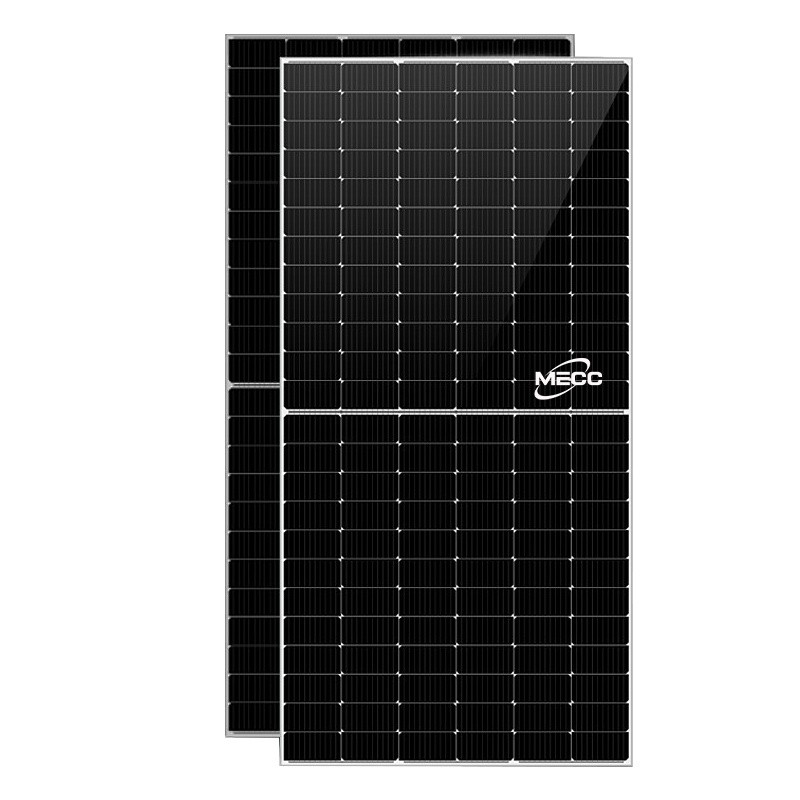
MECC600W-BI