


Content Menu
● Environmental protection and energy conservation
● What is the power generation efficiency of balcony solar energy system?
● Power generation efficiency under ideal conditions
● Actual power generation efficiency in use
● Installation angle and shading situation
● Component quality and system losses
● FAQ
>> 1. How much electricity can a balcony solar system generate?
>> 2. Is it difficult to install a balcony solar system by myself?
>> 3. What types of solar panels are suitable for balcony installation?
>> 4. How long does a balcony solar system usually last?
>> 5. Can a balcony solar system work in cloudy weather?
Balcony solar systems come with a multitude of advantages. Firstly, they are space-efficient as they are designed to be installed on balconies, making them suitable for those who don't have a large roof area or garden. This allows even urban residents in apartments to harness solar energy. Secondly, they are relatively easy to install and don't require major construction work, thus reducing installation costs and time. In terms of energy savings, balcony solar systems can generate a significant amount of electricity to power household appliances, reducing reliance on the grid and consequently lowering electricity bills. Environmentally, they contribute to reducing carbon emissions and promoting clean energy use, which is beneficial for sustainable development. Moreover, some balcony solar systems are aesthetically pleasing, enhancing the look of the balcony while serving a practical purpose. They also offer a certain degree of energy independence, giving users more control over their energy supply and protecting against potential power outages or rising energy prices.
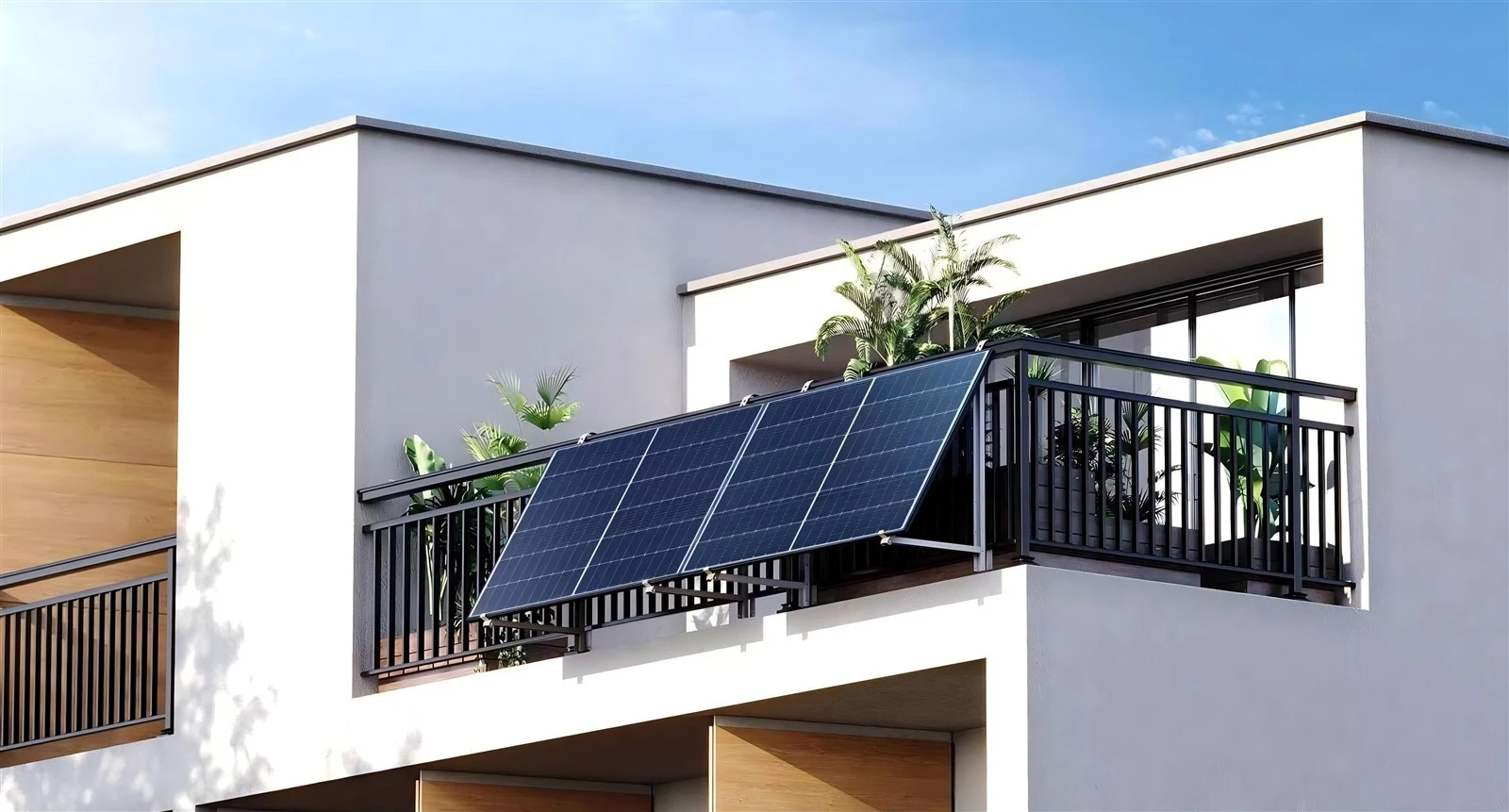
Environmental protection and energy conservation:
Solar energy belongs to clean and renewable energy sources. Balcony solar energy systems convert sunlight into electrical energy, which does not produce carbon emissions or other pollutants during the power generation process. This helps reduce dependence on fossil fuels and is of great significance for environmental protection and sustainable development.
Cost saving: Utilizing solar energy to generate electricity for household use can significantly reduce electricity bills. Although the initial installation of the system requires some investment, solar energy is free and has abundant resources, which can save a lot of expenses in the long run.
In general, the installation of balcony solar energy systems is relatively simple, without the need for large-scale renovation or complex construction. Generally, with the help of a simple installation bracket, it can be directly installed on the balcony. Some plug and play systems do not require professional installation skills and can be installed and used by individuals.
Space saving: It is specifically designed for small outdoor spaces such as balconies, which can effectively utilize limited space. For people living in apartments or with limited installation space, balcony solar systems can provide power generation solutions without occupying additional indoor or outdoor space.
Flexible and adaptable:
Users can choose different specifications of systems based on their own needs and budget. When necessary, the number of solar panels can be increased or decreased at any time to meet different electricity demands, residential types, and usage scenarios.
Strong durability: Solar panels are durable and can generally withstand harsh weather conditions such as wind, snow, and rain. Under reasonable maintenance, the service life of balcony solar energy systems can reach 25 to 30 years, providing stable electricity for a long time.
Intelligent management:
Many balcony solar energy systems have intelligent control functions. Users can monitor and manage the power generation status, battery status and power consumption of the system in real time through mobile phone applications or the Internet, and can also remotely control its operation, which is convenient and fast.
Enhancing property value: Installing a balcony solar system can increase the value of the house. In the eyes of some homebuyers, energy-efficient and environmentally friendly home facilities are very attractive and can increase the competitiveness of the house in the real estate market.

What is the power generation efficiency of balcony solar energy system?
The power generation efficiency of balcony solar energy systems is influenced by various factors. Under ideal conditions, its efficiency can reach a certain level, but in practical use, it may fluctuate due to various factors. The following is a specific analysis:
Power generation efficiency under ideal conditions
Regions with sufficient sunlight: In areas with abundant sunlight resources, such as the Qinghai Tibet Plateau and the northwest region of China, if the balcony solar energy system is facing due south and installed at an appropriate angle, the solar panel can approach its theoretical conversion efficiency under clear weather conditions. Currently, high-quality monocrystalline silicon solar panels on the market have a theoretical conversion efficiency of around 23%, while polycrystalline silicon solar panels have a theoretical conversion efficiency of around 19.4%. Taking a 600W balcony solar energy system as an example, with a daily effective light duration of 5 hours, it can generate approximately 3 kWh of electricity per day (600W x 5h x 70% comprehensive efficiency coefficient ≈ 3kWh).
Using efficient components and equipment: High quality solar panels, efficient micro inverters, and other components can effectively improve power generation efficiency. For example, using monocrystalline silicon solar panels with advanced technology, which have high photoelectric conversion efficiency, fast electron migration speed, and can more effectively convert solar energy into electrical energy; Paired with high-performance micro inverters, each photovoltaic module can be independently controlled for maximum power point tracking (MPPT), reducing energy loss and improving overall system efficiency.
Actual power generation efficiency in use
Geographical location and orientation: There are significant differences in the intensity and duration of light in different geographical locations. If the balcony is located in a low latitude area or in a well lit direction, such as facing south or west, it can receive more sunlight and have relatively high power generation efficiency; However, balconies located in high latitude areas or with more obstruction, such as facing north or being obstructed by surrounding buildings and trees, will have insufficient sunlight exposure time and intensity, resulting in a significant decrease in power generation efficiency.
Seasonal and weather changes: Seasonal changes can affect the solar altitude angle and sunshine duration. In summer, when the solar altitude angle is large and the sunshine duration is long, the power generation efficiency is relatively high; In winter, the opposite is true. In addition, cloudy, rainy, snowy and other weather conditions can weaken the intensity of sunlight, leading to a decrease in power generation efficiency. For example, on cloudy days, the power generation efficiency may only be 30% -50% of that on sunny days, and on rainy and snowy days, the power generation efficiency may be even lower.
Installation angle and shading situation:
The installation angle of solar panels has a significant impact on the amount of solar radiation received. Generally, the tilt angle needs to be adjusted according to the local latitude and season to ensure that sunlight shines vertically or almost vertically on the solar panel, thereby obtaining maximum energy output. If the installation angle is not reasonable, such as too vertical or horizontal, it will reduce the amount of solar radiation received and lower the power generation efficiency. In addition, buildings, clotheslines, and other objects around the balcony may obstruct the solar panels, and even partial obstruction can significantly reduce power generation efficiency due to the "short board effect".
Component quality and system losses:
The quality and performance of solar panels directly affect power generation efficiency. High quality solar panels have high conversion efficiency, low attenuation rate, and can maintain good power generation effect for a long time; Poor quality solar panels may have issues such as low conversion efficiency and susceptibility to hot spot effects, which can affect power generation efficiency. At the same time, components such as inverters and cables in the system also generate energy losses, such as the conversion efficiency of inverters and the resistance of cables, which can reduce the final power generation efficiency.

1.How much electricity can a balcony solar system generate?
The electricity generation depends on factors like panel efficiency, sunlight exposure, and local climate. Generally, a small scale balcony system can produce several kilowatt hours per day, which is sufficient for powering some household appliances.
2.Is it difficult to install a balcony solar system by myself?
While some DIY friendly kits are available, professional installation is recommended. Installation involves electrical connections and ensuring proper panel alignment, and professionals can ensure safety and optimal performance.
3.What types of solar panels are suitable for balcony installation?
Monocrystalline and polycrystalline solar panels are common choices. Monocrystalline panels are more efficient and space saving, while polycrystalline panels are more cost effective. Thin film solar panels are also an option for their flexibility and light weight.
4.How long does a balcony solar system usually last?
With proper maintenance, a high quality solar system can last 20 - 25 years. The solar panels themselves often have a 20 - year warranty, and the inverter may need replacement after 10 - 15 years.
5.Can a balcony solar system work in cloudy weather?
Yes, solar panels can still generate electricity in cloudy conditions, although the efficiency is reduced. They convert diffused sunlight into electricity, but the output will be lower compared to sunny days.