


As an important part of China's new power system, industrial and commercial energy storage has developed rapidly in the context of the national "dual carbon" target and the overall industry trend.
Cost and policy are the two main factors driving the potential explosion of the domestic industrial and commercial market. Due to the increasing peak valley price difference in some regions of China, limited grid access capacity, and the decrease in battery cell costs, various factors have led to a high enthusiasm for investing in the construction of industrial and commercial energy storage in various regions.
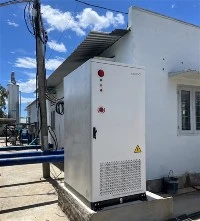
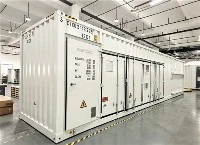
This article brings you a new product introduction and solution for industrial and commercial energy storage outdoor integrated cabinets.
1 Industrial and commercial energy storage application scenarios
Industrial and commercial energy storage has a wide range of application scenarios, such as industrial parks, commercial buildings, electric vehicle charging stations, hospitals, schools, villa areas, etc. The main functions it aims to achieve are as follows:
(1) Peak shaving and valley filling: By storing electricity during periods of lower electricity costs and releasing it during peak periods, businesses can reduce energy costs. This helps optimize the electricity tariff structure and reduce the expenditure on peak electricity prices.
(2) Backup power supply: For applications that require continuous power supply, such as data centers, hospitals, and manufacturing plants, energy storage systems can provide backup power to cope with power outages or emergency situations.
(3) Load balancing: Energy storage systems can be used to balance electricity demand at different time periods, reduce peak electricity consumption, and lower electricity bills.
(4) Electricity market participation: Industrial and commercial energy storage systems can participate in the electricity market, purchasing low-cost electricity based on fluctuations in electricity prices and selling high priced electricity during peak hours to generate revenue.
(5) Electric vehicle charging infrastructure: Energy storage systems can be used to manage the charging load of electric vehicles, ensure efficient charging, and reduce the impact on the power network.
Of course, the application scenarios mentioned above do not cover all, and there will be more new application scenarios emerging in the future. However, it is not difficult to see that there are still many applications of industrial and commercial energy storage systems.
2 Five highlights, integrated in one
2.1 Modular design, flexible expansion, convenient operation and maintenance
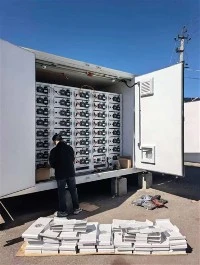
The industrial and commercial storage outdoor integrated cabinet is a system solution composed of a hybrid inverter combined with high-voltage energy storage batteries. The system battery pack does not require on-site assembly and is easy to install, which can meet the efficient installation and deployment requirements of the project site. The maximum capacity of a single cabinet is 30kW/60kWh, but there are different power ranges for customers to choose from to meet their needs for different backup power systems. Overall, it can cover different application scenarios of 2-6 hours, which can be extended to 30kW/180kWh to achieve parallel operation of 3 clusters of batteries.

2.2 Ultimate safety design to ensure electrical safety
The industrial and commercial storage outdoor integrated cabinet ensures personal and property safety through multiple safety designs, as follows:
(1) Aerosol+Perfluorohexane Fire Protection System, precise single package, achieves fast and accurate fire extinguishing, ensuring user safety.


(2) Breathable pressure relief valve, precise pressure opening for explosion relief, avoiding injury to people and objects.
(3) 20mm thick insulation layer to prevent condensation when there is a large temperature difference between the inside and outside, and equipped with air conditioning dehumidification to double prevent condensation.
(4) Both AC and DC sides are equipped with lightning protection.
(5) Wall mounted industrial air conditioning, easy to maintain, adjustable in temperature, and precise control of battery cell temperature.

2.3 UPS level switching time
When the mains power is normal: Relay groups 1 and 2 are closed to maintain the grid connected output and off grid output in the same circuit. Relay group 3 is disconnected.
During a power outage: Relay groups 1 and 2 are disconnected to isolate the photovoltaic system from the grid circuit and prevent islanding. Relay group 3 is closed to maintain off grid output.
UPS level switching refers to a switching time of less than 10ms, even if the power grid suddenly interrupts, the power supply will not be interrupted.
2.4 Supports 100% unbalanced load and 110% long-term overload
Unbalanced output: In some countries or regions, the occurrence of three-phase imbalance is caused by the different power inputs of downstream electrical loads of distribution transformers, which not only affects power generation equipment, but sometimes even affects users' electricity bills. The industrial and commercial storage outdoor integrated cabinet supports three-phase 100% unbalanced output and can be used off grid without the need for additional equipment, meeting the requirements of single-phase load applications such as air conditioning, lighting, and other equipment.

Unbalanced charging: In addition to supporting 100% unbalanced output, the industrial and commercial storage outdoor integrated cabinet can also support unbalanced charging function. The three-phase balanced inverter is coupled into the system at the AC point and can distribute power according to the load's power. When the load can meet the electricity demand, the excess generated power can be used to charge the battery system, making the system's electricity consumption perfectly distributed, improving self use rate, and avoiding photovoltaic waste.

2.5 Built in EMS, supports multiple communication methods and remote upgrades
The industrial and commercial storage outdoor integrated cabinet is equipped with EMS and supports multiple operating modes, such as:
(1) Spontaneous self use mode: Excess power is used to charge the battery during the day; When there is no solar power generation at night, the battery supplies power to the load, which can increase the self use rate and save electricity costs.
(2) Economic model: During the day when electricity prices are at their highest, the battery first supplies power to the load, and the remaining electricity is sold to the grid. When electricity prices are at a low point, set the time for the power grid to charge the battery.
(3) Backup mode: When the power grid loses power, the inverter quickly switches to off grid mode, and the battery can discharge to supply power to the load, ensuring that the backup load does not lose power; After the power grid is restored, the inverter switches to grid connected mode.
(4) Delayed charging mode: Delayed charging mode can prevent the battery from being fully charged quickly and avoid wasting energy when the photovoltaic energy exceeds the limit power value. It is usually suitable for areas with limited grid connected power output.
(5) Peak shaving and valley filling mode: mainly suitable for industrial and commercial scenarios. When the total power consumption of the load exceeds the power consumption index in a short period of time, the excess power can be reduced by discharging the battery.
The above different operating modes allow users to flexibly choose and configure remote applications according to their own needs, thereby achieving maximum economic benefits.