


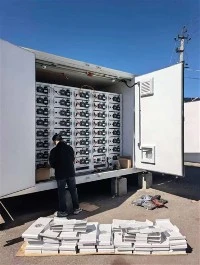
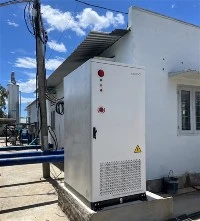
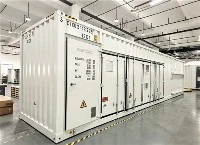
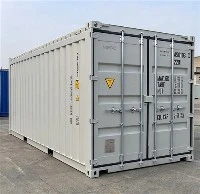
Container energy storage, as a high-density energy storage scenario, safety protection is of utmost importance. The global technological roadmap has shifted from "passive fire extinguishing" to "active prevention", constructing a full chain safety system of "prevention monitoring response control" through multi-layer protection of battery level monitoring, cabin level isolation, and cluster level linkage, reducing the risk of accidents to less than 10 times per hour, and building a solid safety barrier for large-scale applications.
1 Cell level prevention: blocking the source of thermal runaway
China's "precise temperature measurement+early warning" technology. A certain container energy storage system has three fiber optic grating sensors (temperature measurement accuracy ± 0.5 ℃) embedded in each battery module, with a sampling frequency of 1kHz, which can capture abnormal temperature fluctuations of battery cells at 0.5 ℃. Combined with AI algorithms (trained on 500000 sets of fault data), it can predict the risk of thermal runaway 1 hour in advance with an accuracy rate of 95%. When the temperature of a certain battery cell exceeds 45 ℃, the system automatically reduces its charging and discharging rate (from 1C to 0.5C) and starts directional heat dissipation, reducing the probability of thermal runaway triggering by 90%.
South Korea's "flame retardant battery cells+structural optimization" plan. Using lithium manganese iron phosphate (LMFP) battery cells (thermal runaway temperature 600 ℃, 300 ℃ higher than ternary lithium), with 20% flame retardant (phosphate ester) added to the electrolyte, only smoke and no open flame were observed during needle puncture testing. The electric core is arranged with "honeycomb spacing" (the gap is 5mm) and filled with air gel thermal insulation material (thermal conductivity 0.018W/(m ・ K)). When the heat of a single electric core is out of control, the heat will not be transmitted to the adjacent modules within 2 hours. The test of a 1MWh container shows that this design limits the fault range to one module (accounting for 5%).

2 Cabin level isolation: a physical barrier for fault propagation
The design of "negative pressure cabin+directional pressure relief" in Europe. The container adopts a "fully enclosed negative pressure design" (the pressure inside the cabin is 10Pa lower than the outside) to prevent smoke leakage; There is an explosion-proof pressure relief channel at the top (with a burst pressure of 0.2MPa), and the high-temperature gas (800 ℃) generated by thermal runaway is discharged to a high altitude (10m above the ground) through a preset pipeline to avoid damaging surrounding equipment. Install a "suction type fire detector" (sensitivity 0.01% obs/m) in the cabin, which alarms 30 seconds earlier than traditional point detectors to save time for response.
The "inert gas fire extinguishing+reignition prevention and control" system in the United States. The cabin is equipped with a high-pressure nitrogen fire extinguishing device (concentration 30%), which fills the cabin within 10 seconds after the fire is confirmed, suffocates and extinguishes the fire while cooling down (nitrogen expands and absorbs heat to lower the temperature below 100 ℃). Maintain positive nitrogen pressure (0.1MPa) for 30 minutes after extinguishing the fire to prevent reignition. The fire extinguishing test of a 2MWh container shows that the system can extinguish core level fires within 30 seconds, and the secondary damage rate to battery modules is less than 10%.

3 Cluster level linkage: risk management at the system level
China's "firewall+partition isolation" cluster design. The energy storage cluster is divided into independent fire zones with a capacity of 200MWh, equipped with firewalls with a 3-hour fire resistance limit (capable of withstanding high temperatures up to 800 ℃) and an independent fire protection pipeline network. When a fire occurs in a certain area, the central control system immediately cuts off the electrical connection between the area and other areas, and starts the area sprinkler (flow rate 10L/min · m ²) to prevent the spread of the fire. The drill of a 1GWh cluster in Qinghai showed that this partition isolation controlled the impact range of the fire within one partition (accounting for 5%).
Specialized protection technology for desert environments in the Middle East. For high-temperature sand and dust environments, the container adopts a "double-layer shell+sand barrier filtration": the outer layer is insulated steel plate (reflecting 70% solar radiation), the inner layer is stainless steel (corrosion-resistant), and the interlayer is filled with insulation cotton (thickness 10cm); Install HEPA grade sand barriers at the air inlet, with a filtration efficiency of 99.97%, to prevent sand and dust from blocking the heat dissipation channels. The temperature control system adopts a composite mode of "liquid cooling+windproof sand fan", which can still control the temperature inside the cabin within 35 ℃ in an environment of 50 ℃, reducing the temperature by 10 ℃ compared to traditional air cooling and reducing the occurrence of faults caused by high temperatures.
The safety protection system for container energy storage is evolving towards "digital twin+AI decision-making". In the future, by constructing a digital model of the cabin (real-time mapping of temperature, pressure, and gas concentration), AI systems can simulate the diffusion paths of different faults, formulate optimal response strategies in advance, and achieve full process safety control of "accurate warning before faults, intelligent disposal during faults, and rapid recovery after faults", so as to unify high-density energy storage and absolute safety from contradictions.