


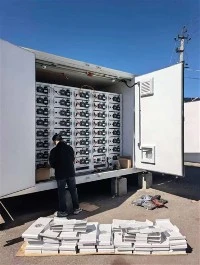
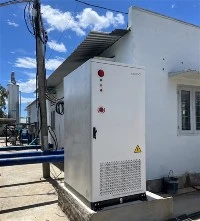
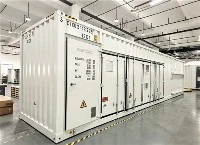
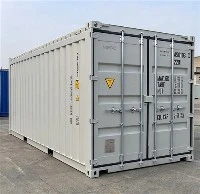
With the characteristics of standardized design, high integration and flexible deployment, the rack type lithium battery has gradually expanded from core scenarios such as data center and communication base station to diversified fields such as edge computing nodes, rail transit, emergency power supply, etc. Its powerful scene adaptation capability, derived from deep response and customized optimization to different application requirements, has become a key link in distributed energy storage systems.
1 Edge computing node: the "energy heart" of micro data center
With the popularization of 5G and Internet of Things technology, edge computing nodes are increasingly deployed in urban buildings and industrial parks. These micro data centers have small spaces (usually only 1-2 square meters), but require 24-hour uninterrupted operation, placing strict requirements on the volume, weight, and reliability of energy storage equipment. Rack mounted lithium batteries are perfectly suited for this scenario with their compact design.
The 2U rack type lithium battery customized by a brand for edge computing nodes is only 88mm thick, weighs less than 15kg, and has an energy storage capacity of 2kWh. It can be directly installed in the standard server cabinet. Adopting a wide temperature design (-20 ℃ -60 ℃), it can still work stably in outdoor cabinets without air conditioning in summer, with a discharge efficiency of over 90%. Its fast charging and discharging capability (1C charging/2C discharging) can instantly respond to the computing power fluctuations of edge nodes, ensuring uninterrupted data processing. In the edge computing network of a smart park in Shanghai, this kind of lithium battery provides backup power for 50 nodes, and has been operating without failure for a year, ensuring the transmission of real-time data such as security monitoring and environmental monitoring in the park.

2 Rail transit: safety guarantee for on-board energy storage
In the field of rail transit such as subways and light rails, onboard energy storage systems face challenges such as severe vibrations, frequent charging and discharging, and limited space. Rack mounted lithium batteries have become a new choice for energy storage in rail transit through enhanced structural design and safety redundancy.
For vibration environments, the battery module is fixed with shock-absorbing brackets, and cushioning materials are filled between the battery cells. After a sweep frequency vibration test of 10-500Hz, the structural integrity rate reaches 100%. In terms of charging and discharging cycles, the rack mounted lithium battery using lithium titanate negative electrode material has a cycle life of over 20000 times, and can be continuously used for more than 10 years with 5 charges and discharges per day, perfectly matching the operating frequency of rail transit.
The 19 inch rack mounted energy storage system tested on a certain subway line is installed in the equipment compartment at the bottom of the train, with a capacity of 10kWh, for recovering braking energy and emergency power supply. Trial operation data shows that the system reduces train energy consumption by 15% and can support low-speed train travel to the next station in emergency situations, greatly improving operational safety. Its modular design also facilitates maintenance, reducing the replacement time for a single module to 30 minutes without affecting normal train scheduling.

3 Emergency power supply: a "power backup" for rapid response
Rapid deployment of emergency power sources is crucial in emergency scenarios such as disaster relief and outdoor operations. The portability and high power output capability of rack mounted lithium batteries make them an ideal solution for emergency energy storage.
The rack mounted lithium battery with a lightweight aluminum alloy shell, with a capacity of 20kWh and a total weight controlled within 300kg, can be quickly transferred by forklift or lifting equipment. The equipped diesel generator linkage module can achieve a hybrid power supply mode of "lithium battery as the main and diesel as the auxiliary". At the earthquake rescue site, the system first uses lithium batteries to quickly start the power supply, and then automatically switches after the generator stabilizes, reducing noise and carbon emissions.
The rack mounted lithium battery energy storage vehicle configured by a certain emergency management department is equipped with a 50kWh energy storage system and multiple output interfaces, which can simultaneously supply power to communication base stations, medical equipment, and lighting systems. In the post typhoon reconstruction, the energy storage vehicle provided stable power for the disaster area for 72 consecutive hours, and its solar charging function can also use outdoor lighting to supplement power and extend the range.