


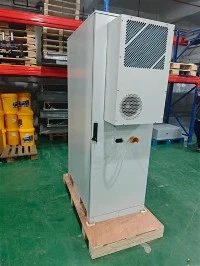
In scenarios such as data centers, communication base stations, and industrial controls that require extremely high space utilization and energy storage efficiency, rack mounted lithium batteries play an important role due to their modular design and high integration. In recent years, with breakthroughs in materials science and intelligent control technology, rack mounted lithium batteries have achieved significant improvements in core indicators such as energy density, cycle life, and safety performance, becoming an important carrier for technological innovation in the field of energy storage.
1 Material Innovation: Dual Breakthrough in Energy Density and Safety
The iteration of positive electrode materials is the key to improving the performance of rack mounted lithium batteries. Although traditional lithium iron phosphate materials have excellent safety, their energy density ceiling is obvious. The new generation of lithium manganese iron phosphate (LMFP) material introduces manganese element, which increases the energy density to over 200Wh/kg while maintaining the safety of lithium iron phosphate, which is 20% higher than traditional products. A certain brand's 19 inch rack mounted lithium battery based on LMFP material has increased its energy storage capacity from 5kWh to 6.2kWh in the same cabinet space, meeting the demand for high-density energy storage in data centers.
The innovation of negative electrode materials is also worth paying attention to. Silicon carbon composite negative electrode has become an important choice for improving energy density due to its theoretical specific capacity of 4200mAh/g (about 10 times that of graphite negative electrode). Through the collaborative design of nano silicon particles and carbon matrix, the problem of volume expansion of silicon materials (with an expansion rate of up to 300% during charge and discharge processes) has been solved. The rack mounted lithium battery equipped with silicon carbon composite negative electrode has a cycle life of over 3000 times. In the trial of communication base stations, its endurance has been improved by 40% compared to traditional batteries, and the degradation rate is slower.
The optimization of electrolytes further enhances battery safety. The new flame-retardant electrolyte uses phosphate ester solvents, which can quickly decompose and form a flame-retardant layer when the battery temperature rises abnormally, suppressing the spread of thermal runaway. Paired with ceramic coated membranes, it can maintain structural stability at high temperatures and prevent short circuits between positive and negative electrodes. Test data shows that rack mounted lithium batteries using this technology have no open flames or explosions during extreme tests such as needle punching and squeezing, and the probability of thermal runaway is reduced by more than 90%.

2 Structural Design: Deep Integration of Modularity and Integration
The modular design of rack mounted lithium batteries enables flexible deployment of "plug and play" technology. A single standard 19 inch rack unit can support a capacity configuration of 2-10kWh. Users can increase or decrease the number of units according to their needs, making it easy to expand or reduce the capacity of the energy storage system. A cloud computing data center upgraded its energy storage capacity from 50kWh to 100kWh within 2 hours by adding 10 rack mounted lithium battery units. The downtime was controlled within 15 minutes, far lower than the 4-hour of traditional battery systems.
The application of liquid cooling integrated technology has solved the heat dissipation problem of high-density energy storage. Traditional air-cooled systems are prone to local overheating when the power density of the cabinet exceeds 5kW. Liquid cooled rack mounted lithium batteries can control the temperature difference inside the cabinet within ± 2 ℃ by embedding microchannel cooling plates between battery modules and utilizing ethylene glycol aqueous solution circulation for heat dissipation. When operating at full load, the core temperature of the battery remains stable at around 35 ℃, which is 8-10 ℃ lower than that of the air-cooled system, resulting in a 3% -5% increase in power generation efficiency.
The optimization of space utilization is the core advantage of rack mounted design. By precisely calculating the arrangement of battery modules, the gap error is controlled within 0.5mm. One 42U standard cabinet can accommodate 16 battery modules, with an energy storage density of 150Wh/L, which is 40% higher than traditional battery cabinets of the same size. In the application of communication base stations, the same data center space can deploy 50% more energy storage capacity, effectively solving the pain point of "space shortage" in base stations.

3 Intelligent Management: The "Neural Center" Role of BMS System
The new generation battery management system (BMS) adopts a distributed architecture, with each battery module equipped with an independent monitoring unit and a sampling frequency increased to 1kHz, which can capture real-time voltage and current fluctuations of the battery cells. Through the Kalman filtering algorithm, the SOC (State of Charge) estimation accuracy reaches ± 1%, which is 50% higher than traditional centralized BMS, avoiding overcharging and overdischarging problems caused by power estimation deviation.
The predictive maintenance function of AI extends the battery life. BMS establishes a battery health (SOH) prediction model by analyzing over 100 parameters such as historical charge and discharge data and temperature curves, which can provide a 3-month early warning of battery performance degradation trends. After applying this technology in a financial data center, the battery replacement cycle has been extended from 3 years to 5 years, and the operation and maintenance costs have been reduced by 40%. At the same time, the system supports linkage with the Data Center Management Platform (DCIM) to automatically adjust charging and discharging strategies based on electricity load forecasting, achieving peak valley electricity price arbitrage and increasing annual revenue by 200000 yuan per cabinet.
The remote monitoring and OTA upgrade functions have improved operational efficiency. Operations personnel can view the real-time operation status of rack mounted lithium batteries at various sites across the country and remotely diagnose faults through a cloud platform. The system supports online upgrading of BMS firmware without the need for on-site disassembly. Through an OTA upgrade, a certain operator has increased the battery balancing efficiency of 500 base stations by 15%, saving over 1 million yuan in labor costs.