


Against the backdrop of accelerated global energy transition and digitalization, the rack mounted lithium battery market is showing a thriving development trend. Technological innovation, cost reduction, and continuous expansion of application fields are jointly driving the continuous expansion of the market size, and the market pattern is undergoing profound changes. Deeply understanding market trends is of great significance for industry participants to seize development opportunities and respond to potential challenges.

Technological innovation drives performance upgrade
Material innovation enhances battery performance
In the field of rack mounted lithium batteries, material innovation is a key factor driving performance improvement. In terms of positive electrode materials, high nickel ternary materials such as NCM811 and NCA have become a hot research and application topic due to their high energy density. By increasing the nickel content, the energy density of the battery can be significantly improved, thereby storing more electrical energy in the same volume and weight. However, the thermal stability of high nickel materials has always been a bottleneck restricting their large-scale application. To this end, researchers have effectively improved the thermal stability of high nickel ternary materials by developing new coating materials and optimizing crystal structures. For example, a certain enterprise adopts nanoscale coating technology to form a stable protective film on the surface of high nickel positive electrode material, which extends the cycle life of the battery by more than 20% in high temperature environments and greatly improves the reliability of rack mounted lithium batteries in complex environments.
Significant progress has also been made in the innovation of negative electrode materials. Silicon based negative electrode materials, with their ultra-high theoretical specific capacity (several times that of traditional graphite negative electrodes), are expected to become the mainstream of the next generation of high-performance lithium battery negative electrode materials. However, silicon-based materials suffer from serious volume expansion during the charging and discharging process, which can easily lead to electrode structure damage and affect battery life. At present, the problem of silicon volume expansion has been effectively alleviated through the preparation of silicon carbon negative electrode materials by combining silicon with carbon materials, as well as the use of nanostructure design methods. Partial silicon carbon negative electrode materials have been applied in rack mounted lithium batteries, increasing the energy density of the battery by 15% -20%, providing strong support for meeting the growing demand for high energy density.
Intelligent upgrade of battery management system
As the "brain" of rack mounted lithium batteries, the improvement of the intelligence level of battery management systems (BMS) is crucial for ensuring battery safety, extending service life, and improving performance. With the rapid development of technologies such as the Internet of Things, big data, and artificial intelligence, BMS is accelerating its upgrade towards intelligence. Intelligent BMS can collect real-time parameters such as battery voltage, current, temperature, etc., and accurately predict the health status (SOH) and remaining charge (SOC) of the battery through big data analysis and artificial intelligence algorithms. For example, using deep learning algorithms to train a large amount of battery operating data, establishing a battery model, and achieving accurate simulation of the internal state of the battery, potential fault hazards can be detected in advance, and corresponding measures can be taken in a timely manner to avoid safety accidents such as thermal runaway of the battery.
In addition, the intelligent BMS also has remote monitoring and intelligent operation and maintenance functions. Through IoT technology, users can remotely monitor the operating status of rack mounted lithium batteries and receive fault alarm information anytime and anywhere through mobile apps or computer terminals. At the same time, intelligent operation and maintenance systems based on big data analysis can develop personalized maintenance plans according to the actual operation of batteries, achieve preventive maintenance, reduce manual inspection costs, and improve system availability and maintenance efficiency. After adopting intelligent BMS in some large data centers and energy storage power plants, the maintenance cost of battery systems has been reduced by more than 30%, and the failure rate has significantly decreased.

Cost reduction drives market popularization
Scale effect reduces production costs
With the rapid growth of demand in the rack mounted lithium battery market, major production enterprises are expanding their production capacity and reducing production costs through economies of scale. During the production process, the cost of raw material procurement, equipment depreciation, labor costs, etc. can all be allocated as the output increases. A well-known lithium battery production enterprise has increased its annual production capacity from 5GWh to 20GWh by building a large-scale automated production line, reducing the production cost per unit product by about 20%. At the same time, large-scale production also promotes the optimization and standardization of production processes, improves product quality and production efficiency, and further reduces production costs.
In addition, the cooperation between upstream and downstream enterprises in the industrial chain continues to strengthen, and by integrating resources and optimizing supply chain management, overall costs have also been effectively reduced. Battery raw material suppliers sign long-term cooperation agreements with battery production enterprises to ensure stable supply and favorable prices of raw materials; Equipment manufacturers develop customized production equipment based on the needs of battery manufacturing enterprises, improve the production efficiency and reliability of equipment, and reduce equipment procurement costs. This collaborative development model of the industrial chain provides strong support for the continuous reduction of the cost of rack mounted lithium batteries.
Technological progress reduces manufacturing costs
Technological progress plays an important role in reducing the manufacturing cost of rack mounted lithium batteries. In terms of production technology, the application of new manufacturing processes continuously simplifies the production process, reduces production links, and thus lowers manufacturing costs. For example, the emergence of dry electrode technology has abandoned the complex solvent drying process in traditional wet electrode technology, not only improving production efficiency, but also reducing equipment investment and energy consumption, resulting in a 15% -20% reduction in the cost of electrode manufacturing process. At the same time, with the widespread application of intelligent manufacturing technology in lithium battery production, the automation level of the production process continues to improve, manual intervention is reduced, product consistency and quality are improved, waste rate is reduced, indirectly reducing production costs.
In terms of battery design, cost reduction can also be achieved by optimizing the battery structure, reducing the number of components and material usage. New battery structure designs such as CTP technology and blade battery technology have eliminated some structural components in traditional battery modules, improving the space utilization and energy density of battery packs while reducing manufacturing costs. The rack mounted lithium battery using CTP technology reduces the number of components by more than 40% and manufacturing costs by 10% -15% compared to traditional modular batteries.
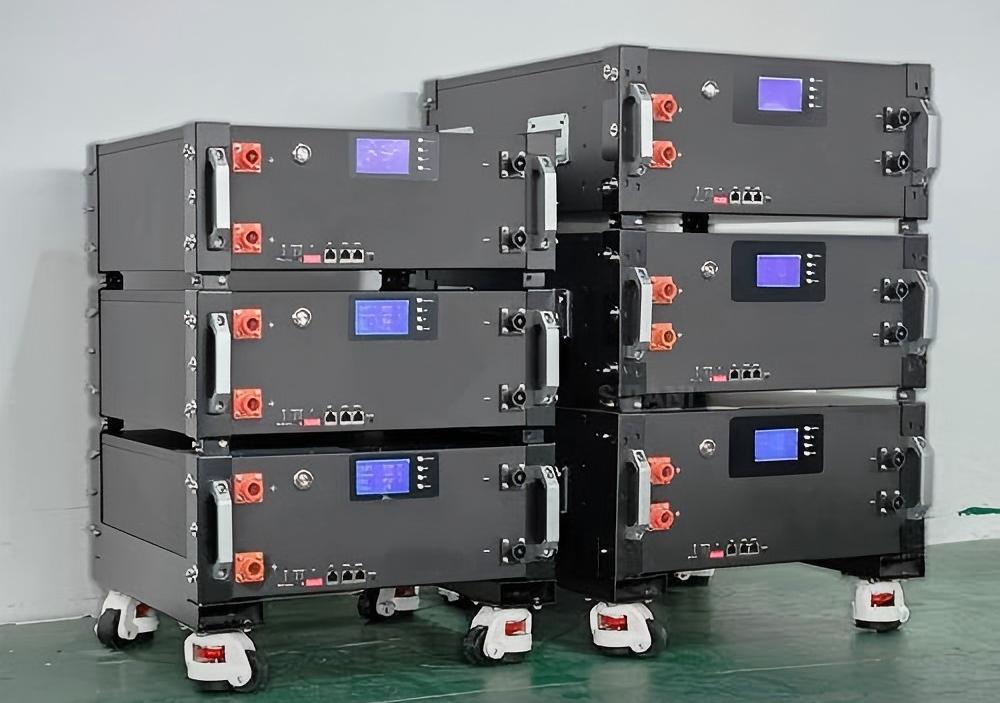
Application expansion opens up new growth opportunities
The demand for 5G communication and data centers has exploded
With the large-scale commercialization of 5G communication technology and the rapid construction of data centers, the demand for rack mounted lithium batteries is experiencing explosive growth. In 5G communication base stations, due to the high power consumption and large data transmission volume of 5G equipment, higher requirements have been put forward for the capacity and performance of backup power sources. Rack mounted lithium batteries have become the preferred backup power source for 5G base stations due to their high energy density, long cycle life, and fast charging and discharging characteristics. According to market research institutions' predictions, by 2026, the construction of global 5G base stations will drive a growth of over 50 billion yuan in the market size of rack mounted lithium batteries.
As the core location for storing and processing massive amounts of data, data centers have extremely high requirements for the stability and reliability of power supply. As the core component of the backup power system in data centers, rack mounted lithium batteries can not only ensure the continuous operation of key equipment in data centers during power outages, but also reduce the power consumption cost of data centers by participating in power peak shaving. With the acceleration of digital transformation, enterprises' demand for data storage and processing capabilities continues to increase, driving the continuous expansion of data center scale and leading to rapid growth in demand for rack mounted lithium batteries in the market. It is expected that the demand for rack mounted lithium batteries in the data center industry will maintain an annual growth rate of over 30% in the coming years.
Industry 4.0 and smart factory construction drive demand growth
Against the backdrop of Industry 4.0 and the construction of smart factories, the level of industrial automation continues to improve, and the demand for reliable and efficient energy storage systems is becoming increasingly urgent. Rack mounted lithium batteries are widely used in industrial automation production lines, industrial robots, intelligent warehousing and logistics equipment, and other fields. In industrial automation production lines, rack mounted lithium batteries can provide stable power support for equipment, ensuring the continuity and accuracy of the production process. At the same time, by integrating with industrial energy management systems, intelligent management and optimized utilization of energy can be achieved, reducing energy consumption costs for enterprises.
In smart factories, rack mounted lithium batteries can also serve as energy storage units for distributed energy systems, and can be used in conjunction with renewable energy generation equipment such as solar and wind power to achieve energy self-sufficiency and connect surplus electricity to the grid. A large automobile manufacturing enterprise has deployed a large-scale rack mounted lithium battery energy storage system and distributed photovoltaic power generation system in its smart factory construction, achieving a renewable energy utilization rate of over 30% and saving millions of dollars in electricity bills annually.