


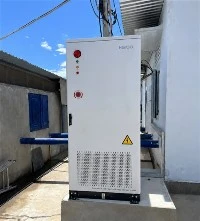
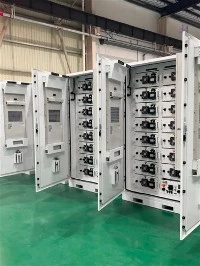
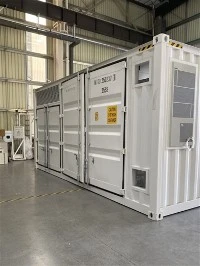
Project Overview
Different premises carry distinct energy requirements, and MECC delivers proven, tailored energy‑storage solutions for diverse operating conditions.
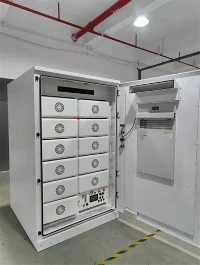
These field‑proven installations adopt the MECC 50 kW hybrid inverter paired with 51.2 V 100 Ah high‑voltage rack‑mount batteries to deliver flexible and reliable energy‑storage services for commercial and industrial sites.
From load management and backup power supply to energy‑cost optimisation, every deployed system reflects the growing global demand for smarter commercial‑industrial energy solutions.
While hybrid‑inverter plus rack‑battery configurations bring great flexibility for C&I retrofits, real‑world site deployments commonly face two critical practical challenges.

Core Technical & Operational Pain Points
Pain Point 1: Conflicting operating objectives between peak‑shaving arbitrage and backup‑power reserve
Most commercial and industrial customers expect the same storage hardware to achieve two goals simultaneously: cut electricity bills via peak‑valley arbitrage, and keep sufficient energy reserved for emergency backup. Many conventional hybrid systems use fixed charge‑discharge logics. Without intelligent dynamic adjustment, batteries may fully deplete stored energy for arbitrage during peak‑price hours. When sudden grid outages occur, there is no remaining capacity to support critical loads, which completely defeats the purpose of backup power. For factories, shopping malls and business buildings, this may lead to production suspension, business interruption and direct economic losses.
Pain Point 2: On‑site integration difficulties and inflexible capacity expansion for retrofitted projects
Numerous commercial‑industrial projects are energy‑system retrofits on existing buildings. Equipment room space is limited. Traditional energy‑storage products often require custom‑made cabinets and complex field wiring. When business expands and energy demand rises later, whole‑system re‑design is required to increase capacity, bringing high modification cost and long construction downtime. Mismatched communication protocols between third‑party inverters and rack‑mount batteries also frequently trigger poor current sharing, low operating efficiency and unstable system performance.

MECC Targeted Technical Solutions
Solution 1: Multi‑mode intelligent control logic to balance economic arbitrage and backup‑power reserve
MECC 50 kW hybrid inverter embeds advanced coordinated control algorithms. Users can set a configurable SOC reserve threshold for backup power. During normal grid‑connected operation, the system executes load management and peak‑valley arbitrage strategies to lower enterprise energy expenditure. When the battery state‑of‑charge drops to the pre‑set backup‑reserve limit, the inverter automatically stops discharging for arbitrage and preserves remaining energy for grid‑failure scenarios. Once grid outage is detected, the hybrid inverter completes rapid grid‑off switching and supplies power to key commercial‑industrial loads. This design realises dual‑value output: daily cost reduction and reliable emergency backup without hardware modification.
Solution 2: Standardised high‑voltage rack‑mount battery architecture for simple integration and step‑by‑step expansion
The 51.2 V 100 Ah high‑voltage rack‑mount battery features standard rack‑type modular design. It can be directly installed in the existing equipment cabinet of commercial or industrial buildings, saving valuable on‑site floor space. The built‑in smart BMS realises cell‑level monitoring, balance management and fault protection, and adopts standard communication protocols for seamless data interaction with MECC 50 kW hybrid inverter. Customers can start with a small initial capacity. As business grows, additional rack‑mount battery modules can be added in‑situ without replacing inverters or re‑designing power loops. This greatly reduces retrofitting investment and shortens project implementation cycles for EPC partners and end‑users.

Project Functions & Industry Impact
These real‑world C&I installations deliver tangible operational value for end customers. By deploying MECC's hybrid inverter and rack‑battery solution, commercial buildings and manufacturing facilities achieve effective load management, stable emergency backup power and measurable energy‑cost optimisation. Enterprises are protected from economic losses caused by unexpected grid failures while improving overall energy‑use efficiency.
From an industry perspective, this set of verified hybrid energy‑storage configuration provides a highly replicable reference for global small‑and‑medium‑sized commercial‑industrial retrofit projects. Its modular plug‑and‑play characteristics lower the technical threshold for C&I energy‑storage adoption. It accelerates the popularisation of intelligent distributed energy systems and supports global enterprises in advancing their low‑carbon transformation and ESG objectives.