


Project & Product Overview
From commercial buildings and manufacturing facilities to solar power stations and large‑scale utility projects, MECC's advanced energy‑storage solutions are engineered to maximise efficiency, enhance safety, and deliver dependable long‑duration power supply for diversified application scenarios.
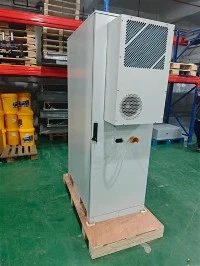
Smart PV‑Energy Storage Integrated Cabinet
- Battery capacity: 241kWh
- Inverter power: 100kW
- Passed UL 9540A fire test
- Built‑in fire‑protection system
- Internal air‑conditioning cooling system
- Integrated intelligent BMS and PCS
- High‑safety cabinet equipped with industrial‑grade cooling units
HV Battery High‑Voltage Rack‑Mounted Energy‑Storage System
- 314Ah cell, modular and expandable design
- Advanced LiFePO₄ battery technology
- Intelligent BMS protection system
- Flexible scalability for large‑scale energy‑storage projects
- High energy efficiency and long service life
- Designed for commercial, industrial and utility‑scale deployments
When deploying these two product lines across commercial‑industrial and utility‑grade sites worldwide, customers commonly face two core practical challenges.

Key Technical Pain Points
Pain Point 1: Fire‑safety risks and thermal management challenges under high‑load continuous operation
Commercial buildings, factories and utility solar stations often require energy‑storage equipment to run continuous high‑charge‑discharge cycles. Poor thermal dissipation will trigger uneven temperature rise inside cabinet units. Without validated fire‑safety design, thermal runaway risk increases. Many general‑purpose storage products lack authoritative large‑scale fire test certification such as UL 9540A. Once an abnormal condition occurs, it may bring property losses and project compliance obstacles, especially for North‑American market access requirements.
Pain Point 2: Difficult capacity expansion and complex system integration for large‑scale utility projects
For utility‑level energy‑storage construction, customers need to expand capacity step‑by‑step according to project phasing plans. Traditional non‑modular battery systems suffer complicated re‑configuration during capacity expansion. Mismatch among cells, BMS and power conversion devices may cause poor current sharing, low overall efficiency and extra on‑site debugging workload. Non‑standard hardware architecture also raises delivery cycles and integration costs for EPC contractors.

MECC Targeted Technical Solutions
Solution 1: Validated fire‑safety design plus independent industrial cooling for the Smart PV‑Energy Storage Integrated Cabinet
The 100kW/241kWh smart PV‑storage integrated cabinet has successfully passed stringent UL 9540A fire test, meeting critical fire‑safety access requirements for North‑American commercial projects. The cabinet integrates an autonomous fire‑suppression system together with an internal air‑conditioning industrial cooling unit. Real‑time temperature data from the intelligent BMS and PCS triggers dynamic adjustment of cooling power. It effectively controls internal temperature rise and reduces temperature difference among battery modules during heavy‑duty cyclic operation. The all‑in‑one integrated architecture completes core function verification in factory, minimising on‑site safety‑related debugging work for commercial building and small‑to‑medium industrial end‑users.
Solution 2: Modular high‑voltage rack‑mounted HV Battery system supporting flexible phased expansion for utility‑scale projects
Adopting 314Ah large‑capacity LiFePO₄ cells, the HV Battery high‑voltage rack‑mounted system applies fully modular hardware architecture. Each rack works as an independent standard unit. Customers can deploy a small initial scale and add racks later as project demand grows, without redesigning the whole power loop. The embedded intelligent BMS realises cell‑level monitoring, over‑charge / over‑discharge / over‑temperature protection and balanced management across racks. Thanks to standardised interfaces, the HV Battery system can be seamlessly combined with MECC PCS and EMS platforms. It lowers integration difficulty for large solar stations and utility projects, maintains high system efficiency and extends overall service life.
Functions and Industry Impact

125KW 241kWh Battery Energy Storage System Cabinet
The BESS 125KW 241kWh Lithium Battery Energy Storage Cabinet is a high-power, large-capacity integrated energy storage solution engineered for medium-to-large commercial, industrial, and utility-scale applications. It integrates a 125kW high-performance bidirectional inverter, a 241kWh lithium iron phosphate (LiFePO4) battery bank, and a full-featured intelligent energy management system (EMS) into a modular cabinet design. This system enables efficient renewable energy storage, peak shaving, load shifting, grid frequency regulation, and emergency backup power supply. Ideal for large factories, shopping malls, industrial parks, utility-scale solar/wind farms, and microgrids, it enhances energy independence, reduces high grid demand charges, and supports the stable integration of high-penetration renewable energy into the grid.