Two MECC‑AIO261 Energy‑Storage Systems Plus Combiner Cabinet|Full Project Case Study

Aug 21, 2026 Leave a message

Project Overview


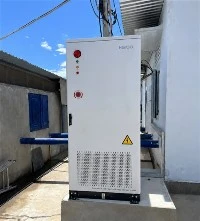
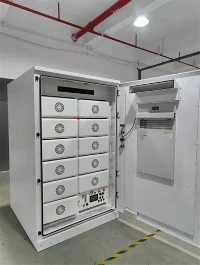
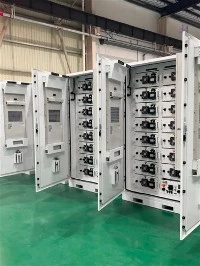
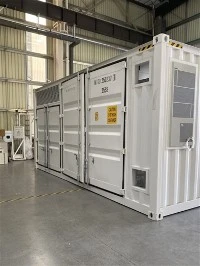
Complete external‑to‑internal display for two sets of MECC‑AIO261 energy‑storage systems together with one combiner cabinet.
 
 
From overall system architecture down to internal electrical component details, the photographic records fully demonstrate the rigorous engineering design behind MECC's commercial and industrial energy‑storage solutions.
 
 
System specifications: 250kW / 522kWh, liquid‑cooled design, deployed for photovoltaic‑plus‑energy‑storage power‑station application.
 
 
Reach out to MECC to learn more about our comprehensive commercial & industrial energy‑storage offerings.
 
While liquid‑cooled all‑in‑one cabinets bring high integration advantages for PV‑storage projects, real‑world field deployment still presents two major technical obstacles that may impair system output, service life and stable coordination with solar assets.


250


Core Practical Pain Points


Pain Point 1: Multi‑cabinet parallel thermal consistency and hidden liquid‑cooling reliability risks under volatile PV power fluctuation
 
This project deploys two independent MECC‑AIO261 liquid‑cooled all‑in‑one cabinets connected via a shared combiner cabinet. In PV‑storage scenarios, solar output fluctuates sharply with cloud movement, bringing frequent rapid charge‑discharge power swings for energy‑storage equipment. Even with liquid‑cooled hardware, without unified thermal coordination between two cabinets, temperature gaps may gradually build up between battery modules across different units. Divergent operating temperatures will cause inconsistent battery ageing, reduce usable system capacity and shorten cycle life over long‑term operation.
 
 
Moreover, liquid‑cooled systems face potential risks such as pipeline sealing ageing, coolant micro‑leakage and gas‑bubble accumulation inside cooling loops. If there is no real‑time leakage‑detection and inter‑cabinet thermal‑data linkage monitoring, minor fluid‑circuit faults cannot be caught early, which may evolve into safety hazards and unexpected system derating during high‑power PV‑storage operation.


Pain Point 2: Coordinated control difficulty between multiple‑unit storage and intermittent photovoltaic generation
 
When multiple all‑in‑one storage cabinets work alongside a PV power plant through a combiner cabinet, every cabinet carries its own local BMS and PCS controller. Without a unified scheduling layer, each cabinet may respond independently to volatile solar power. This can result in uneven power distribution among parallel cabinets, circulating current on the DC bus, and frequent mode switching between charging, standby and discharging states.
 
 
Poor coordination will lower photovoltaic self‑consumption efficiency: excess solar energy cannot be evenly absorbed by storage units, while evening peak demand still draws costly grid power. Many parallel‑cabinet PV‑storage installations suffer from this issue: individual cabinets perform well in standalone testing, yet overall system performance degrades once connected with real‑world fluctuating PV sources.


2502


MECC Targeted Technical Solutions


Solution 1: Cross‑unit linked liquid‑cooled thermal management with multi‑dimensional leakage‑risk monitoring
 
Although each MECC‑AIO261 cabinet has its independent liquid‑cooling loop, the whole system shares unified upper‑layer monitoring. Real‑time temperature data of battery modules, PCS power devices and coolant status from both cabinets are synchronously uploaded. The master control unit dynamically adjusts cooling power and coolant flow rate for each cabinet, minimising inter‑cabinet and intra‑cabinet temperature deviation, and keeping all battery clusters operating within the optimal temperature window.
 
 
Built‑in liquid‑leakage sensors, pressure sensors and exhaust‑valve mechanisms monitor the liquid‑cooling circuit continuously. Once tiny leakage, pressure abnormality or gas accumulation is detected, the system triggers early‑warning alerts and executes corresponding protective logic before performance deterioration occurs. This design mitigates common liquid‑cooling failure risks and preserves full designed service life even under frequent charge‑discharge fluctuations brought by intermittent PV generation.


Solution 2: Centralised scheduling via combiner‑cabinet plus EMS‑orchestrated parallel‑control algorithm for PV‑storage coordination
 
The dedicated combiner cabinet acts as central DC convergence and signal‑interaction hub for the two AIO261 cabinets. Under the instruction of MECC's energy‑management system, the master controller distributes charge‑discharge power set‑points for each cabinet according to real‑time PV output, grid conditions and battery‑status data. It actively suppresses DC‑bus circulating current and achieves balanced power sharing between parallel units.
 
 
When solar irradiation surges, the system assigns appropriate charging power to both cabinets to maximise capture of surplus photovoltaic energy. When cloud cover causes PV output to drop sharply, storage releases power smoothly to offset generation gaps. Intelligent anti‑chatter logic avoids unnecessary frequent mode transitions. This ensures the full 250 kW / 522 kWh system can make full use of PV resources and deliver expected peak‑shaving and load‑shifting performance in actual PV‑station working conditions.


Project Functions & Industry Impact
 
 
This dual‑cabinet MECC‑AIO261 liquid‑cooled ESS delivers solid practical value for photovoltaic‑storage integrated applications. It effectively improves local solar‑power self‑consumption ratio, realises peak‑valley arbitrage and peak‑load reduction, and delivers stable buffered power output for the PV station. The all‑in‑one cabinet‑level design shortens site construction and commissioning cycles; the combiner‑cabinet‑based parallel architecture provides a replicable path for further capacity expansion in future projects.
 
 
As a visually‑documented real‑world engineering reference, this deployment showcases MECC's complete‑chain engineering capability covering cabinet‑level hardware, liquid‑cooling reliability design, combiner‑system integration and multi‑unit parallel‑control algorithms. The case demonstrates how to resolve thermal consistency and multi‑unit coordination pain points for liquid‑cooled all‑in‑one products in PV‑storage scenarios. It offers proven experience for commercial‑industrial PV‑storage projects worldwide and accelerates the adoption of high‑reliability liquid‑cooled energy‑storage to support renewable‑energy penetration and corporate low‑carbon transition.


Related Products


Liquid Cooling 125KW 261kWh Lithium Battery Energy Storage Cabinet


The IP55 Protected All-in-One Solar Energy Storage Cabinet is a high-performance, integrated energy solution engineered for outdoor commercial, industrial, and utility-scale solar applications. It integrates a 125kW Power Conversion System (PCS), a 261kWh lithium iron phosphate (LiFePO4) battery bank, an advanced liquid cooling system, and a intelligent Battery Management System (BMS) into a single cabinet with IP55 weatherproof protection. Designed to withstand harsh outdoor environments while delivering efficient energy conversion and storage, it supports solar energy absorption, peak shaving, load shifting, grid auxiliary services, and emergency backup power. Ideal for utility-scale solar farms, industrial parks, large commercial complexes, and remote microgrids, it provides a reliable, space-saving, and low-maintenance solution for large-scale renewable energy integration.

page-1000-1000

Send Inquiry

whatsapp

Phone

E-mail

Inquiry