


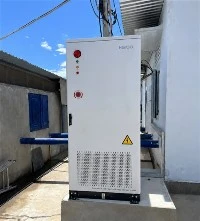
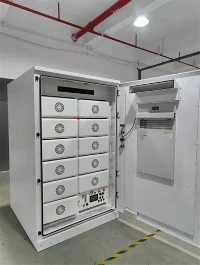
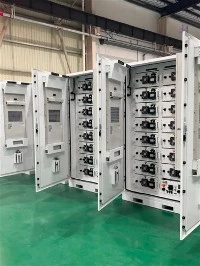
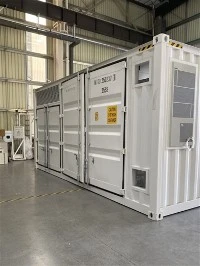
Project Overview
Worried about rising electricity bills, unstable grid power or insufficient backup‑power capacity? There is now a smarter solution.
Meet the Containerized Energy Storage System (CESS), an all‑in‑one plug‑and‑play unit built to satisfy commercial, industrial and utility‑scale energy requirements.
Why choose our container‑based energy‑storage solution
✔ Plug‑and‑play design - Pre‑integrated batteries, Battery Management System (BMS), PCS and HVAC units are fully assembled inside the container before delivery.
✔ Strong scalability - Single‑unit capacity ranges from 500 kWh up to several MWh. Multiple containers can run in parallel for larger‑size projects.
✔ Energy saving & backup power - Reduce regular electricity expenses and sustain critical loads throughout grid outages.
✔ Intelligent EMS platform - Support remote monitoring and AI‑driven charge‑discharge optimisation.
✔ High‑strength IP54 / IP55 protection rating - Reliable operation under harsh outdoor site conditions.
Typical Application Scenarios
• Factories and commercial buildings
• EV charging stations for hybrid and electric vehicles
• Microgrids and off‑grid sites
• Solar‑plus‑storage integrated power‑generation systems
Although container‑type ESS brings prominent advantages of pre‑assembly and fast deployment, real‑world engineering deployment still faces two typical challenges that may undermine asset return, operating stability and expandability.

Core Technical & Operational Pain Points
Pain Point 1: Imbalanced multi‑container parallel operation and environmental adaptability risks in diverse outdoor scenarios
Many projects require multiple container units to operate in parallel to reach target capacity for factories, EV charging hubs or microgrid sites. Even with individual IP54/IP55 outdoor‑grade hardware, differences in on‑site sunlight exposure, ventilation conditions and local ambient temperature create temperature gaps among separate containers. Without unified cross‑container thermal coordination, battery ageing speed diverges across different units, gradually lowering overall usable capacity.
Meanwhile, for mixed‑mode sites combining solar generation, EV fast‑charging load and off‑grid microgrid working status, simple hardware stacking cannot automatically handle dynamic power fluctuations. If each container works independently without upper‑layer orchestration, circulating current may occur among parallel units. In severe cases, partial containers will frequently trigger power derating protection, failing to deliver expected peak‑shaving and backup‑power performance.
Pain Point 2: Gap between "plug‑and‑play" hardware and intelligent multi‑objective scheduling for diversified business goals
Standard plug‑and‑play containers finish factory pre‑assembly, yet many products only provide basic local control functions. Enterprises expect one single system to fulfil multiple conflicting goals: peak‑valley arbitrage to cut energy cost, reserved backup capacity for unexpected blackouts, smoothing volatile solar power output and stabilising impulse load from EV chargers.
Conventional fixed‑logic control cannot balance these multi‑dimensional demands well. For instance, aggressive arbitrage discharging may fully deplete battery energy and leave no power for emergency backup; excessive standby energy reservation sacrifices economic benefits. Besides, for off‑grid microgrid projects, improper mode switching between grid‑tied and islanded state may cause transient voltage shocks for on‑site critical equipment. These issues cannot be solved purely by hardware integration inside the container.

MECC Targeted Technical Solutions
Solution 1: Unified cluster‑level coordination for parallel containers together with robust outdoor environmental adaptation
Every MECC CESS unit completes full‑factory integration of battery packs, BMS, PCS and HVAC thermal management system. The enclosure adopts IP54 / IP55 protection grade against dust, rain and moisture ingress, which removes demands for purpose‑built air‑conditioned equipment rooms at project sites.
When multiple containers run in parallel, the centralised EMS serves as cluster controller. It collects real‑time temperature, SOC and operating data from every single container, dynamically adjusts HVAC cooling or heating output for each unit, and narrows inter‑container temperature deviation. The system executes intelligent power allocation for parallel containers, actively suppressing circulating current on the AC/DC bus. Whether deployed at sunny high‑temperature industrial zones, humid coastal microgrid locations or open‑air EV charging stations, all containers stay within optimal operating boundaries, ensuring consistent battery degradation progress across the whole cluster.
Solution 2: AI‑empowered multi‑objective EMS to reconcile economic operation, backup readiness and multi‑source collaborative control
Built‑in AI‑driven energy‑management algorithm supports configurable working‑mode priorities according to customer business requirements. In normal grid‑connected mode, the system optimises charge‑discharge timing based on real‑time electricity price, PV generation forecast and load profile to maximise peak‑valley arbitrage revenue. Users can set a fixed SOC reserve threshold for emergency backup. Once battery state‑of‑charge reaches the reserved limit, the system pauses arbitrage‑oriented discharging and keeps adequate energy ready for potential grid failure.
When detecting mains power loss, seamless grid‑island switching logic activates immediately to supply power for critical loads such as factory production equipment, charging‑station control systems and microgrid‑end user facilities. While connected with solar arrays, the EMS dynamically matches storage charge power with intermittent PV output to raise solar self‑consumption ratio. Faced with sharp impulse load generated by EV chargers, the container cluster instantly releases buffered power to mitigate grid impact. All operational data can be accessed via remote monitoring platform for status checking, parameter modification and early‑fault warning, lowering on‑site O&M workload.
Project Functions & Industry Impact
MECC Containerized Energy Storage System delivers comprehensive value for commercial‑industrial clients, utility operators and public‑sector stakeholders. Benefiting from pre‑integrated plug‑and‑play design, on‑site construction and commissioning cycles are greatly shortened, reducing civil‑work investment and project implementation risks. It effectively curbs rising electricity expenditure through peak‑load management, provides reliable backup power against grid instability, improves local renewable‑energy absorption capacity and supports stable operation of EV charging infrastructure and remote off‑grid microgrids. Its flexible capacity range from 500 kWh to multi‑MWh can adapt to small‑size commercial premises as well as large‑scale industrial‑park and utility‑level projects.
From an industry perspective, this CESS solution offers a proven reference for outdoor‑deployed plug‑and‑play container‑storage projects worldwide. It demonstrates that true plug‑and‑play capability relies not merely on factory‑assembled hardware, but also on cluster‑level coordination and AI‑enabled multi‑objective scheduling. MECC's integrated approach addresses real‑world pain points of parallel‑unit operation and multi‑scenario‑mode switching. It lowers technical barriers for end‑users to adopt energy‑storage assets, accelerates global deployment of container‑type ESS, and supports enterprises and communities toward higher energy resilience and low‑carbon energy transition.
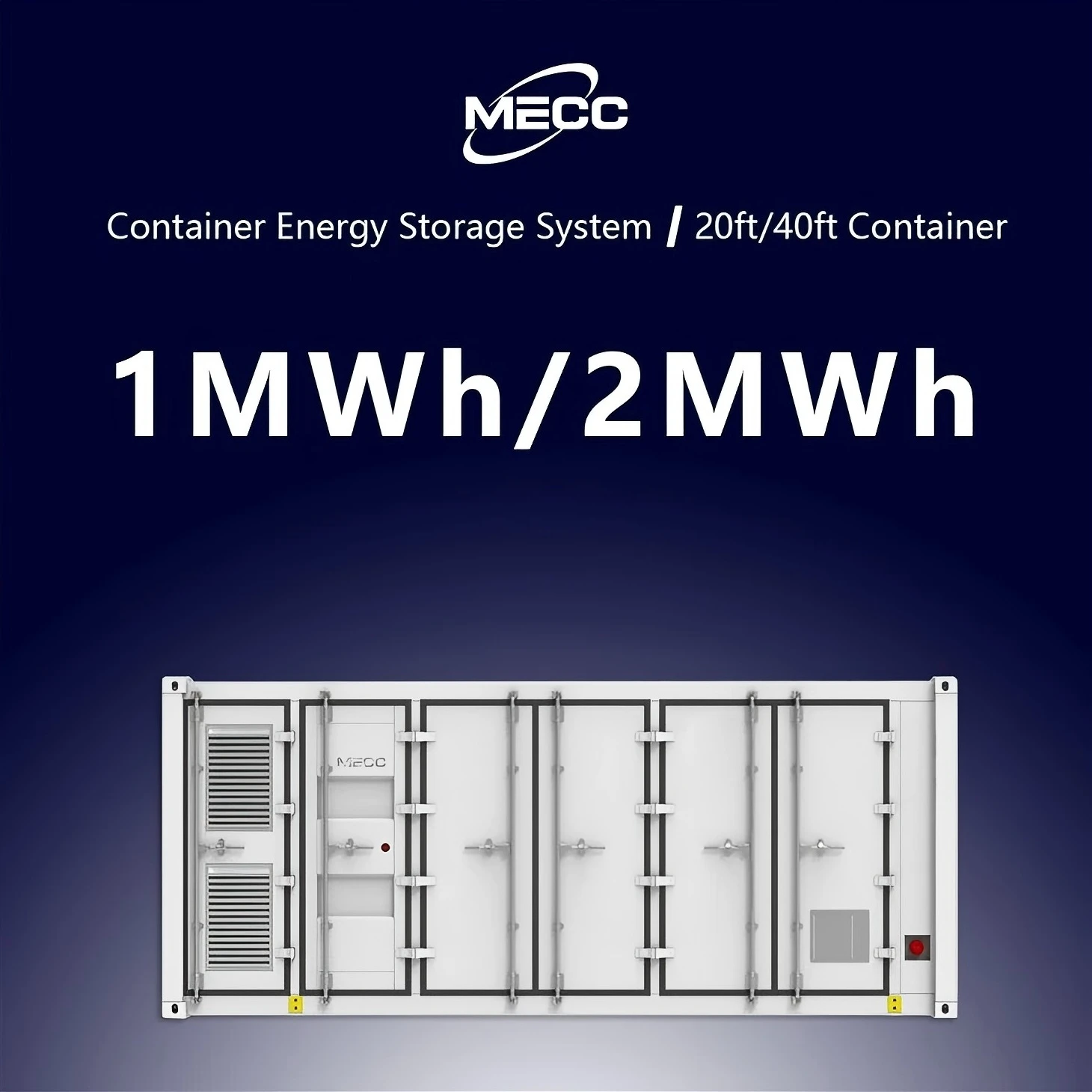
500KW/1MW 1MWh/2MWh Battery Energy Storage System Container
The 500kW/1MW 1MWh/2MWh Battery Energy Storage System Container is a turn‑key utility‑grade energy storage solution housed in standard 20ft or 40ft shipping containers, integrating bidirectional PCS, A‑grade LiFePO4 battery clusters, master BMS, liquid‑cooled thermal management, gas fire suppression, high‑voltage distribution and EMS energy management system with full factory pre‑assembly and pre‑commissioning. Requiring only foundation construction and high‑voltage cable connection for on‑site commissioning, it supports flexible power‑capacity configuration and multi‑container parallel expansion, delivering core capabilities of peak‑shaving and load shifting, renewable energy smoothing, frequency‑voltage grid support, islanded micro‑grid operation and large‑scale emergency backup. Featuring IP54 enclosure protection and comprehensive multi‑layer safety mechanisms, it adapts to diverse harsh outdoor environments, and is widely deployed for ground‑mounted PV power stations, industrial parks, mining operations, island microgrids and grid‑side auxiliary service projects to stabilize grid fluctuations, boost renewable energy utilization and reduce comprehensive energy costs.