


Ports are among the most electrically awkward facilities in the industrial world. Their loads are enormous and bursty - a container crane lifting 40 tonnes, a vessel plugging into shore power, a yard full of electrified equipment - but they sit at the edge of a grid that was never sized for them, and their duty cycles defy the smooth assumptions behind utility planning. That mismatch is exactly why port battery storage has moved from novelty to infrastructure: a BESS at a port absorbs the bursts, recycles the energy that cranes throw away, and lets terminals electrify without rebuilding their grid connection.
This guide breaks down the port load profile, the three roles storage plays, the marine-environment engineering that comes with it, and how the business case assembles.
The Port Load Profile: Big, Bursty, and Cyclic
Three load families dominate a modern terminal:
Cranes. Ship-to-shore (STS) cranes and rubber-tired gantries (RTGs) are extreme loads by any standard: multi-megawatt pickups and drops in rapid cycles, 24/7 in busy terminals. Two features matter for storage: the peaks (a crane lift can momentarily demand more than the whole terminal's average) and the regeneration (lowering a loaded spreader back down turns the crane motor into a generator, pushing energy back onto the DC bus and often onto the grid as distorted, spiky power).
Shore power (cold ironing). Berthed vessels connect to landside power instead of running diesel auxiliaries. A large container ship or cruise vessel can draw one to five-plus megawatts continuously at berth - a utility-scale load that appears when a ship docks and vanishes when it sails. Terminals facing shore-power mandates (EU regulations now require plug-in capability at major berths, with more jurisdictions following) must deliver that power and the frequency conversion between the grid's 50/60 Hz and the vessel's standard.
Yard electrification. Reefer stacks run continuously; electric yard tractors, automated guided vehicles, and electric drayage charging add large, growing, often coincident demand. The terminal that electrifies its equipment without a storage or grid plan typically discovers its connection capacity is the binding constraint.
Add it up and the port's defining electrical problem is clear: brief, enormous peaks separated by quiet periods, with a grid connection sized for neither.
Role One: Buffering Shore Power Connections
The cleanest storage application at a port is the berth buffer. Rather than upgrading the utility service to handle every possible simultaneous vessel connection, the terminal provisions a BESS that:
Shaves the berth peak - the battery co-supplies a vessel connection so the grid draw stays within existing capacity.
Bridges simultaneous berthing events that would otherwise exceed the service limit.
Simplifies frequency conversion, with the battery's PCS positioned to help shape and stabilize power for the shore-power converter system.
The economics rhyme with transformer deferral: the avoided utility upgrade is frequently worth more than the storage itself, and berth demand is predictable from the vessel schedule - the kind of forecast peak shaving battery storage economics thrive on.
Role Two: Crane Peaks and Regeneration Capture
Crane duty is where storage gets technically interesting. A BESS on the crane bus or terminal feeder delivers:
Peak shaving of lift cycles - the battery supplies the surge, so the grid sees a flatter, lower draw.
Regeneration capture - energy returned during load lowering, which without storage is often dissipated in braking resistors or fed back as power-quality pollution, gets absorbed into the battery and reused on the next lift. Terminals routinely see double-digit percentage energy recovery on crane duty - savings that compound across thousands of cycles per day.
Power quality - flicker and voltage fluctuation from rapid crane cycling degrade equipment and annoy the utility; a battery acting as a buffer cleans the feeder for everyone downstream.
Regeneration capture is the quiet differentiator here: it is a revenue stream almost no other industry offers, and it improves the storage business case on top of demand savings.
Role Three: Enabling Electrification
Every terminal decarbonization plan runs through electricity: RTG conversions, electric yard tractors, shore power mandates, drayage charging hubs. Each addition grows the peak. A port battery storage layer converts that growth from a grid-infrastructure problem into a controls problem - the battery absorbs the new demand spikes (including EV charging surges from truck charging), and the terminal defers a substation upgrade by years. Ports at grid edges with long interconnection queues find this particularly valuable: storage arrives in months; a new service takes years.
The Marine Environment: Engineering for Salt and Compliance
Everything discussed in corrosion protection applies double at a port:
Terminals sit in the C5-class environments described for coastal sites - salt spray, humidity, and for some equipment, direct spray exposure. Cabinet coatings, fasteners, and heat exchangers must be specified accordingly, and transport logistics through port areas add their own handling realities.
Codes and stakeholders multiply: port authority engineering standards, customs and security perimeters, marine electrical codes for shore-power interfaces, and the fire-code review that comes with storing large batteries inside a security-controlled, high-traffic zone.
Physical security is usually inherited from the port perimeter - an advantage most C&I sites lack.
The practical implication: supplier selection should weight marine references heavily. A vendor who has never delivered into a salt-fog, crane-adjacent, security-controlled environment will learn on your project.
The Business Case Assembles From Four Streams
Connection and infrastructure deferral - the largest single item at connection-constrained terminals; shore-power mandates convert this from "nice to have" to regulatory necessity.
Demand-charge and capacity savings - flatter terminal draw, lower billed peaks, possibly lower contracted capacity.
Regeneration recovery - crane-lowered energy reused instead of dissipated; measurable directly from the meter.
Emissions and compliance value - shore power reduces vessel at-berth emissions; some jurisdictions attach fees, subsidies, or clean-air credits. Plus operational continuity: a buffered terminal rides through voltage events that would otherwise interrupt quayside operations.
Port projects also benefit from public funding appetite - port electrification sits high on most clean-infrastructure grant agendas, which can meaningfully reshape the payback.
Sizing From the Duty Cycle
Port sizing follows the load, which means measuring rather than assuming:
Pull crane-level and feeder-level data: peak magnitudes, cycle rates, regen energy per cycle.
Model berth demand from the vessel schedule, including worst-case simultaneous berthing.
Characterize the yard equipment rollout plan year by year - the storage system that is right for today's terminal undershoots the one arriving in 2028.
Prefer modular, augmentable designs: port demand growth is a certainty, and the augmentation path should be planned at purchase.
The Bottom Line
Ports concentrate exactly what batteries are best at: enormous peaks, regenerative energy, predictable-but-bursty schedules, and a grid connection that will not grow as fast as the demand will. Storage at a port is simultaneously a shore power enabler, a crane peak-and-regen machine, and the bridge that lets yard electrification happen without a substation rebuild. Specify for salt, size for the vessel schedule and the crane duty cycle, plan the augmentation path - and the terminal's hardest electrical problem becomes its cheapest energy asset.
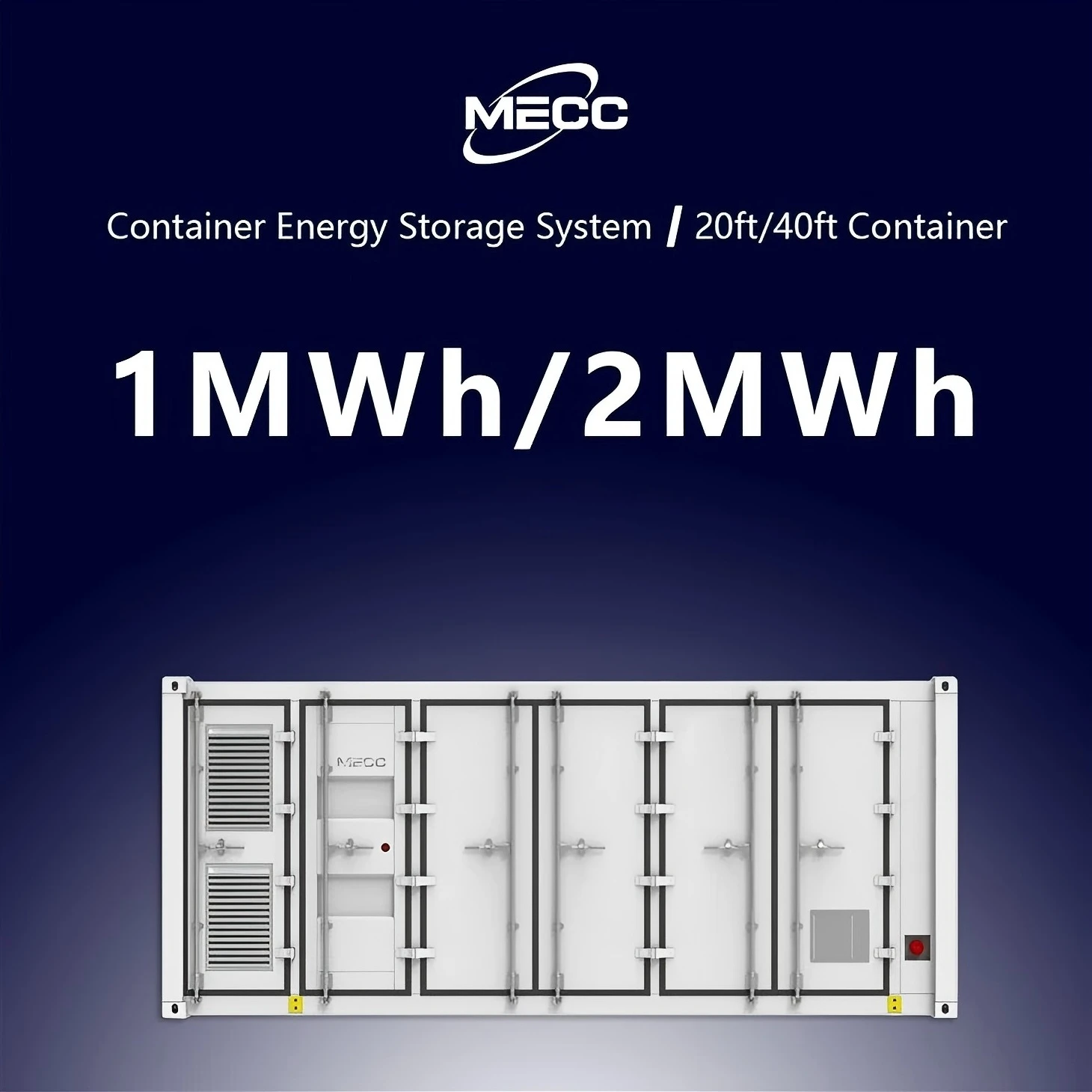
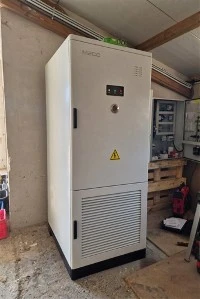
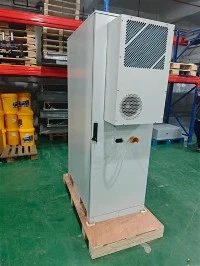
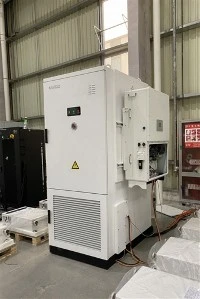
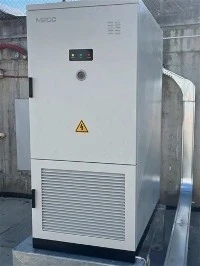
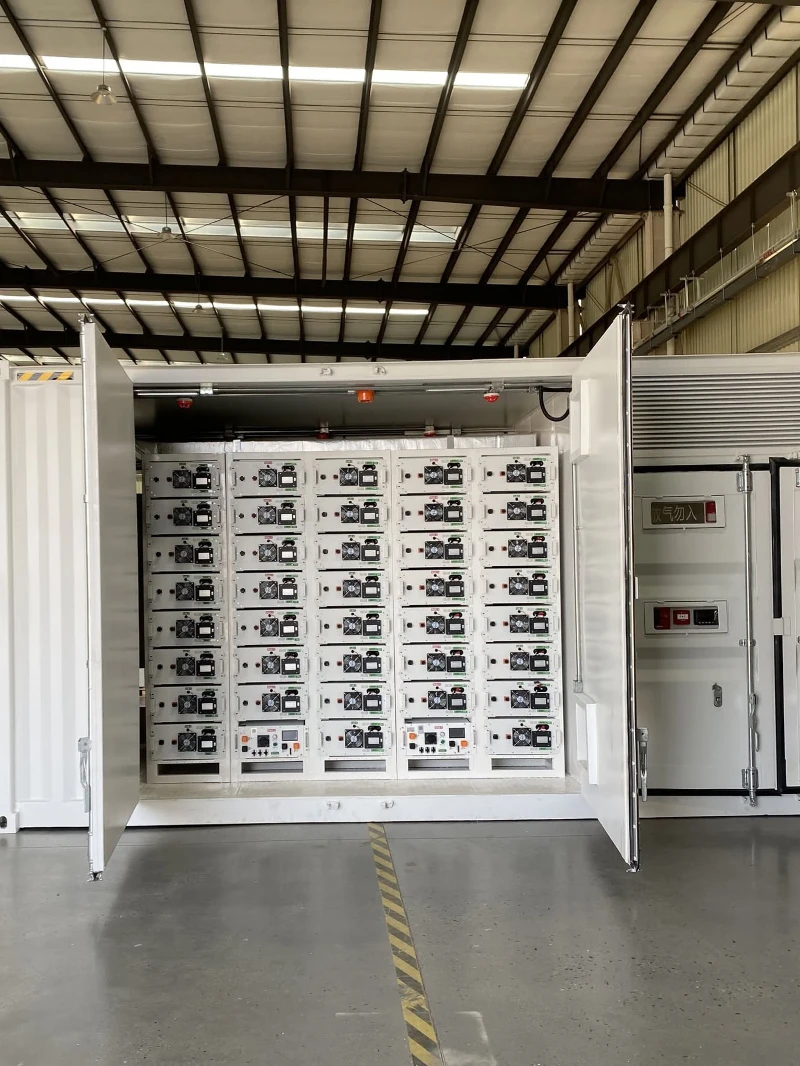
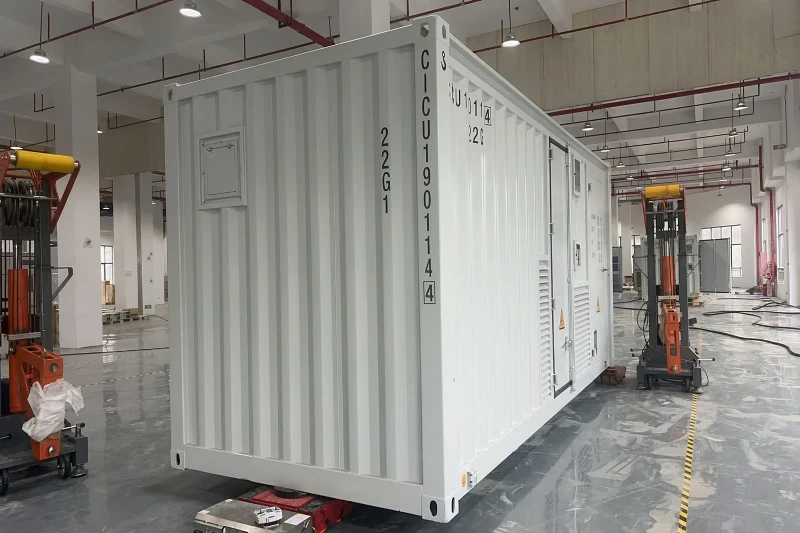
500KW/1MW 1MWh/2MWh Battery Energy Storage System Container
The 500kW/1MW 1MWh/2MWh Battery Energy Storage System Container is a turn‑key utility‑grade energy storage solution housed in standard 20ft or 40ft shipping containers, integrating bidirectional PCS, A‑grade LiFePO4 battery clusters, master BMS, liquid‑cooled thermal management, gas fire suppression, high‑voltage distribution and EMS energy management system with full factory pre‑assembly and pre‑commissioning. Requiring only foundation construction and high‑voltage cable connection for on‑site commissioning, it supports flexible power‑capacity configuration and multi‑container parallel expansion, delivering core capabilities of peak‑shaving and load shifting, renewable energy smoothing, frequency‑voltage grid support, islanded micro‑grid operation and large‑scale emergency backup. Featuring IP54 enclosure protection and comprehensive multi‑layer safety mechanisms, it adapts to diverse harsh outdoor environments, and is widely deployed for ground‑mounted PV power stations, industrial parks, mining operations, island microgrids and grid‑side auxiliary service projects to stabilize grid fluctuations, boost renewable energy utilization and reduce comprehensive energy costs.