


Most content libraries are organised by publication date, which is convenient for the publisher and useless for the reader. Someone evaluating C&I energy storage for the first time does not need the newest article; they need the one that answers the question they are holding right now. Someone three months into a project needs a different entry point entirely.
This page is the index to everything we have published on commercial and industrial storage, organised by the decision you are trying to make rather than by when we wrote it. Every entry below describes what the guide actually resolves, so you can pick the right one without opening five tabs.
If you want the single document that covers the whole subject end to end, start with our complete guide to commercial battery storage. Come back here when you need depth on a specific decision.
How to Use This Hub
The library is organised into six sections, and they follow the natural sequence of a project.
Understand the basics covers what the equipment is, how the components interact, and what the system can do. Read this if you are still building the internal case or briefing colleagues.
Choose the technology covers chemistry, cooling, voltage, enclosure and physical form. Read this when you have a rough size and need to know what to specify.
Size and model covers load analysis, duration, resilience requirements and financial modelling. Read this when someone asks "how big" and "what does it pay back".
Buy and contract covers RFQs, total cost of ownership, warranties and performance guarantees. Read this when you are talking to suppliers.
Apply it to your sector covers the industries where the engineering changes materially. Read this when a generic design does not quite fit.
Stay safe and compliant covers certifications, fire safety, installation codes and failure analysis. Read this before the authority having jurisdiction asks.
Section 1: Understand the Basics
Start here if the terminology is still unfamiliar. Our explainer on what every facility manager should know about C&I battery energy storage covers the fundamentals in operational language - what it does, what it needs from the site, and what it will not do.
For the architecture, the guide to C&I BESS definition, components and operation walks through the system layer by layer: cells, modules, racks, cabinets, power conversion, controls and balance of plant. It is the piece to read if you need to understand what you are actually buying rather than what the datasheet says.
The most common source of confusion is the control hierarchy, and the EMS versus BMS versus PCS explainer resolves it: which layer protects the cells, which decides the strategy, which executes, and what happens when they disagree. If you read only one technical article before a supplier meeting, read that one.
Section 2: Choose the Technology
Once the basics are clear, specification decisions begin, and four of them carry most of the consequence.
Cooling. The comparison of liquid cooling and air cooling for battery storage covers the trade-off honestly - liquid holds cell temperatures more evenly and suits high-ambient or high-C-rate duty, but adds pumps, coolant and a serviceability penalty. The article explains when each is the right answer rather than declaring a winner.
Voltage. Our guide to 2000V DC storage explains what the next voltage step offers and what it costs: reduced balance-of-plant losses and cabling, offset by insulation coordination, arc-flash and component availability questions. For most projects in 2026, 1500V remains the default; the article explains when the step is worth taking.
Enclosure. The IP rating guide for outdoor cabinets explains IP54 versus IP55 versus IP65 and, more usefully, why the system-level rating can differ from the cabinet rating and why condensation matters more than the number. For coastal and industrial atmospheres, the C4 versus C5 corrosion guide covers ISO 12944 classes, dry film thickness, fastener specification and the salt-spray numbers that actually mean something.
Form factor. The comparison of all-in-one commercial cabinets and modular systems addresses a choice that shapes installation cost, expandability and service access - and which is frequently decided by site access rather than by engineering preference.
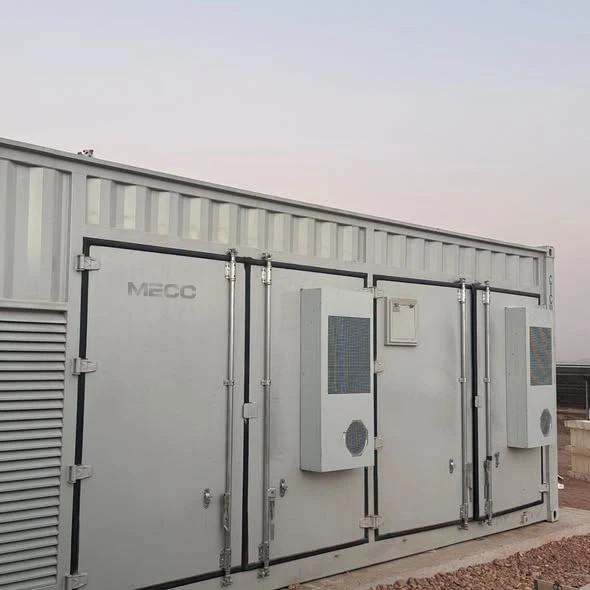
Two adjacent guides complete this section: transport, lifting and site logistics for containerised BESS, which covers the practical realities of getting a heavy cabinet onto a constrained site, and acoustic noise from commercial storage, which matters more often than buyers expect in mixed-use and residential-adjacent locations.
Section 3: Size and Model
Sizing is where projects succeed or fail, and the library approaches it from three directions.
The industrial load profile guide explains why a factory's requirement is a power problem rather than an energy problem, and how to size for welding spikes, motor starts and furnace swings. The multi-day autonomy article covers the opposite case: extended outages, critical load segmentation, and the four corrections that turn a naive autonomy calculation into a real one.
For the boundary question - where the system connects - the behind-the-meter versus front-of-meter guide explains what each configuration can capture and what it cannot, which is a regulatory question before it is an engineering one.
On the financial side, the TCO calculator methodology explains how to build a model that survives scrutiny: capital cost, balance of plant, augmentation, maintenance, degradation and end-of-life, with the assumptions that actually move the answer.
Section 4: Buy and Contract
This section exists because technical merit does not survive a badly written contract.
The commercial energy storage RFQ template sets out what to send suppliers so that proposals become comparable: load data, duty cycle, site conditions, commercial terms and the operating envelope you expect to be warranted.
The guide to performance guarantees versus product warranties draws the distinction that costs owners the most money when misunderstood. A warranty covers defects; a guarantee covers output. A system can satisfy the first entirely and still underdeliver against the second, and only the guarantee provides a remedy.
For the trust layer beneath both, our certifications and compliance resource centre collects the standards that suppliers should be able to evidence: UL 9540 and UL 9540A system certification, IEC 62619 for industrial cells, and NFPA 855 for installation.
Section 5: Apply It to Your Sector
Generic designs fail in specific industries, because the load shape and the operating constraint change the answer.
Cold storage warehouses need storage sized around refrigeration process constraints - pre-cooling, thermal mass and food safety limits - as much as around tariffs. Hospitals and healthcare campuses have layered resilience requirements and an existing generator backbone that storage must complement rather than replace. Ports and logistics hubs deal with shore power, crane regeneration and a corrosive marine atmosphere. Mining and remote sites are usually about diesel displacement and rotational reserve, not energy arbitrage. Manufacturing plants are a power quality problem wearing an energy problem's clothes. Commercial real estate projects turn on lease structure as much as physics. Agriculture and food processing sites have seasonal peaks and unusually flexible loads. EV fleet depots are constrained by interconnection capacity and charging deadlines.
Each guide in this section follows the same pattern: the load signature, the value streams that actually apply, the specification points that differ from the generic case, and a phased implementation path.
Section 6: Stay Safe and Compliant
Safety content is where marketing language is least useful and specificity matters most.
The UL 9540 and UL 9540A explainer covers what the certifications actually test and how fire authorities use the results. The fire suppression guide compares suppression technologies for storage containers and explains what each can and cannot stop. Thermal runaway prevention covers the engineering measures - cell selection, propagation barriers, charge inhibits at low temperature, detection - that reduce the probability and consequence of an event.
For a broader view of what goes wrong in practice, our taxonomy of BESS failure modes walks through the full spectrum by subsystem, from cells and BMS through power conversion, thermal management, connections and software. It is the article to read if your mental model of storage risk is "fire" and nothing else.
Six Reading Paths
If you would rather follow a route than browse sections, these sequences match common roles.
Facility manager, first project: what every facility manager should know → EMS, BMS and PCS → behind-the-meter versus front-of-meter → RFQ template → performance guarantee versus warranty.
Factory energy manager: industrial load profile → AI dispatch → C&I EMS requirements → TCO calculator → manufacturing sector guide.
EPC or integrator: C&I BESS definition and components → 2000V DC → IP rating → C4/C5 corrosion → transport and logistics → UL 9540 and NFPA 855.
Owner or developer: complete guide → behind-the-meter versus front-of-meter → sizing methods → TCO → guarantees → sector guide for your asset class.
Operations and maintenance: failure modes → thermal runaway prevention → fire suppression → noise → remote diagnostics and M&V.
First-time buyer, short on time: complete guide → RFQ template → warranty versus guarantee. Three documents, and you will be better prepared than most of the market.
Keeping This Current
The library is updated as standards, products and market conditions change, and the sequence above is reviewed when a new cluster is added. If you are looking for something that is not here, the glossary of commercial energy storage terms covers 150 definitions across the vocabulary of the industry, and it is usually the fastest way to translate a supplier's datasheet into plain language.
C&I energy storage is a broad field, but it is not an infinite one. Almost every project question reduces to a handful of decisions: how big, how fast, where it connects, what it must survive, and who carries the risk when it underperforms. The guides above address each of those in turn. Pick the one that matches the decision in front of you.
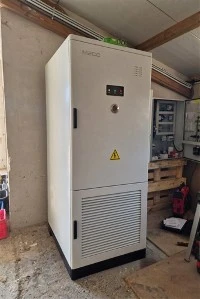
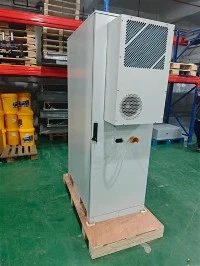
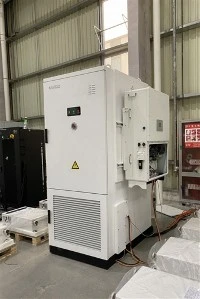
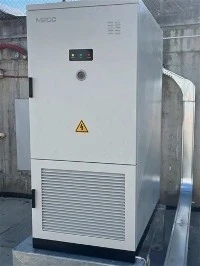
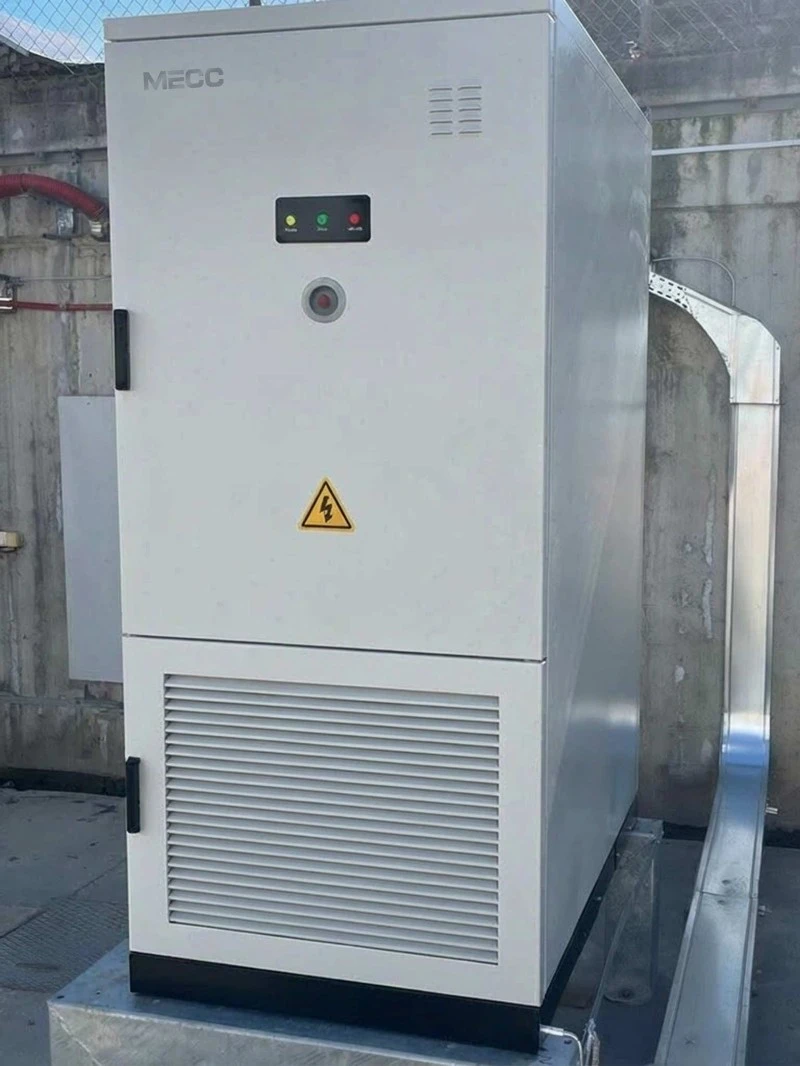
Liquid Cooling 125KW 261kWh Lithium Battery Energy Storage Cabinet
The IP55 Protected All-in-One Solar Energy Storage Cabinet is a high-performance, integrated energy solution engineered for outdoor commercial, industrial, and utility-scale solar applications. It integrates a 125kW Power Conversion System (PCS), a 261kWh lithium iron phosphate (LiFePO4) battery bank, an advanced liquid cooling system, and a intelligent Battery Management System (BMS) into a single cabinet with IP55 weatherproof protection. Designed to withstand harsh outdoor environments while delivering efficient energy conversion and storage, it supports solar energy absorption, peak shaving, load shifting, grid auxiliary services, and emergency backup power. Ideal for utility-scale solar farms, industrial parks, large commercial complexes, and remote microgrids, it provides a reliable, space-saving, and low-maintenance solution for large-scale renewable energy integration.
