


Hospitals are the most demanding electrical customers that exist - and the most regulated. Unlike a warehouse or a factory, a healthcare campus cannot choose between resilience options freely: emergency generators are not an operational preference but a legal requirement, engineered and tested under codes that predate modern batteries. That reality shapes everything about hospital battery storage projects: the battery does not replace the emergency power system - it works around, beneath, and alongside it, and that is precisely where the value is.
This guide explains where storage genuinely fits a healthcare campus, where code limits it, and how to build a project that survives both a CFO's review and the authorities having jurisdiction.
The Starting Point: Hospitals Already Have Mandated Backup
Any hospital-grade resilience discussion begins with what exists. Healthcare facilities operate legally required emergency power - generators sized, fueled, and tested under frameworks like NFPA 110 and NEC Article 700/708 (essentials differ by jurisdiction, but the architecture is universal): life-safety branch, critical branch, and equipment branch, with transfer switches and mandated transfer times.
So the honest framing of a storage project is never "should the hospital have backup?" It already does. The questions are:
What does the mandated system do poorly that a battery does well?
Where can a battery earn money on the non-essential load without touching life-safety systems?
Can storage improve the mandated system's performance without becoming part of its compliance burden?
Those three questions generate every worthwhile hospital battery storage use case below.
Use Case One: Bridging the Generator Gap
A standby generator takes seconds to start, stabilize, and accept load - and a modern hospital cannot let critical equipment ride through that gap on goodwill alone. Today that bridge is typically a bank of UPS units: batteries sized for minutes, idle 99.9% of the time, aging in place.
A campus-scale BESS reframes that role. Positioned to carry the transfer gap (and longer, where permitted), it delivers:
Seamless ride-through at building or campus scale, covering the generator-start interval with the same physics as a UPS but with capacity that works every day rather than waiting for failures.
Generator support: once the genset is running, the battery can absorb load steps, cover motor starts (imaging equipment, chillers, HVAC restart), and prevent the generator from stumbling on large step loads - a known failure mode in emergency power testing.
Black start coordination for campus microgrid operation, where the battery energizes the distribution system and manages the sequence that brings generators and loads online in order.
The caveat that defines this use case: the moment storage becomes part of the essential power path, it inherits essential-system regulation - listing, testing, and redundancy expectations. Many hospitals solve this deliberately: the battery bridges and supports, but the mandated transfer scheme remains the compliance backbone.
Use Case Two: Peak Shaving the Non-Essential Load
The economic engine of most hospital storage projects is unglamorous and effective: peak shaving on loads that code does not govern. Campus HVAC in non-critical zones, admin buildings, parking, kitchens, outpatient wings - often half or more of a large campus's demand sits outside the emergency branches.
A 24/7 facility with high, flat, year-round load is close to ideal for peak shaving battery storage economics: the battery works every day, demand charges are large, and the load forecast is exceptionally stable (hospitals do not have "slow weeks"). Add time-of-use arbitrage where retail spreads support it, and the savings case is among the most bankable in C&I storage.
The design rule that keeps this clean: dispatch optimization treats life-safety and critical branches as untouchable context, not as demand-shavable load. The EMS sees them; it never shaves them.
Use Case Three: Demand Response and Grid Services
Hospitals are increasingly attractive demand-response participants - with the battery doing the work. Historically, hospitals declined DR because curtailing HVAC or equipment in a clinical environment was unacceptable. A BESS changes the calculus: the battery delivers the committed curtailment while the hospital feels nothing. Aggregators prize campuses with round-the-clock load precisely because their DR capacity is dependable.
Where markets allow, the same asset can stack modest grid-service revenue on top - but for healthcare owners, DR participation through the battery (not through load curtailment) is the practical and defensible form.
Use Case Four: Absorbing Electrification Without a Service Upgrade
Healthcare campuses face growing electrical demand: building electrification (heat pumps replacing steam), EV fleets, new imaging suites, data-room expansion. The traditional answer - utility service and transformer upgrades - is slow and expensive. A battery that shaves the new peak can defer or downsize that upgrade: the transformer deferral pattern applied to a campus, often at a fraction of the infrastructure cost and timeline.
This use case pairs naturally with the peak-shaving asset: one battery, serving both the bill and the expansion plan.
Use Case Five: Making the Mandated System Cleaner and Cheaper
Generators bring obligations beyond fuel: emissions permits, run-hour limits, monthly testing (often under noise and emissions scrutiny near communities), and maintenance economics. A battery reduces generator burden in several ways:
Testing with battery support: smoother load acceptance during mandated tests.
Reduced non-emergency runtime where local rules allow battery substitution for some peak-shaving generator hours.
Fuel logistics: smaller emergency fuel margins may be defensible where the battery extends autonomy - though code minimums on on-site fuel typically remain binding.
These are compliance-adjacent savings; they require AHJ conversation early, but they are real and recurring.
Compliance: The Discipline That Shapes the Design
Healthcare storage projects succeed or stall on regulatory navigation:
Siting and fire code: the system must satisfy NFPA 855 spacing, UL 9540A test data, and the healthcare facility's own fire-marshal review - with campus constraints (tight footprints, adjacent occupied buildings) making the siting conversation more demanding than a typical C&I yard.
Essential-system boundaries: anything on the emergency or legally-required branches inherits NFPA 110-style requirements. The cleanest projects keep the battery on facility or non-essential infrastructure, supporting the mandated system without being part of it.
NFPA 99 risk assessments for systems serving patient-care-related equipment.
Power quality: imaging and clinical equipment are sensitive; PCS selection and islanding behavior must respect that - hospital power quality problems are visible immediately.
Engage the AHJ and facility's safety committee at concept stage. In healthcare, the approval path is part of the design.
The Economics, Honestly
Hospital storage economics rest on three dependable legs: large 24/7 demand charges (daily battery work), a stable load forecast (bankable savings), and deferral value from avoided infrastructure upgrades. Resilience value - avoided disruption to clinical operations - is enormous but usually treated as qualitative in the battery storage business case, since code-mandated generators already carry the compliance risk.
Financing structures matter here: healthcare systems often prefer third-party ownership or energy-as-a-service structures that keep capex off the clinical budget - the standard energy storage financing menu applies, with balance-sheet and mission considerations unique to nonprofit systems.
The Bottom Line
Hospital battery storage works when it respects the hierarchy: code-mandated generators remain the compliance backbone; the battery bridges their gap, supports their load steps, shaves the non-essential peak, participates in DR invisibly, absorbs electrification growth, and trims generator burden - every day, without touching a life-safety branch. Design with the AHJ from day one, keep the essential-power boundary clean, and the campus gains both a daily economic asset and a resilience layer the generators were never asked to provide.
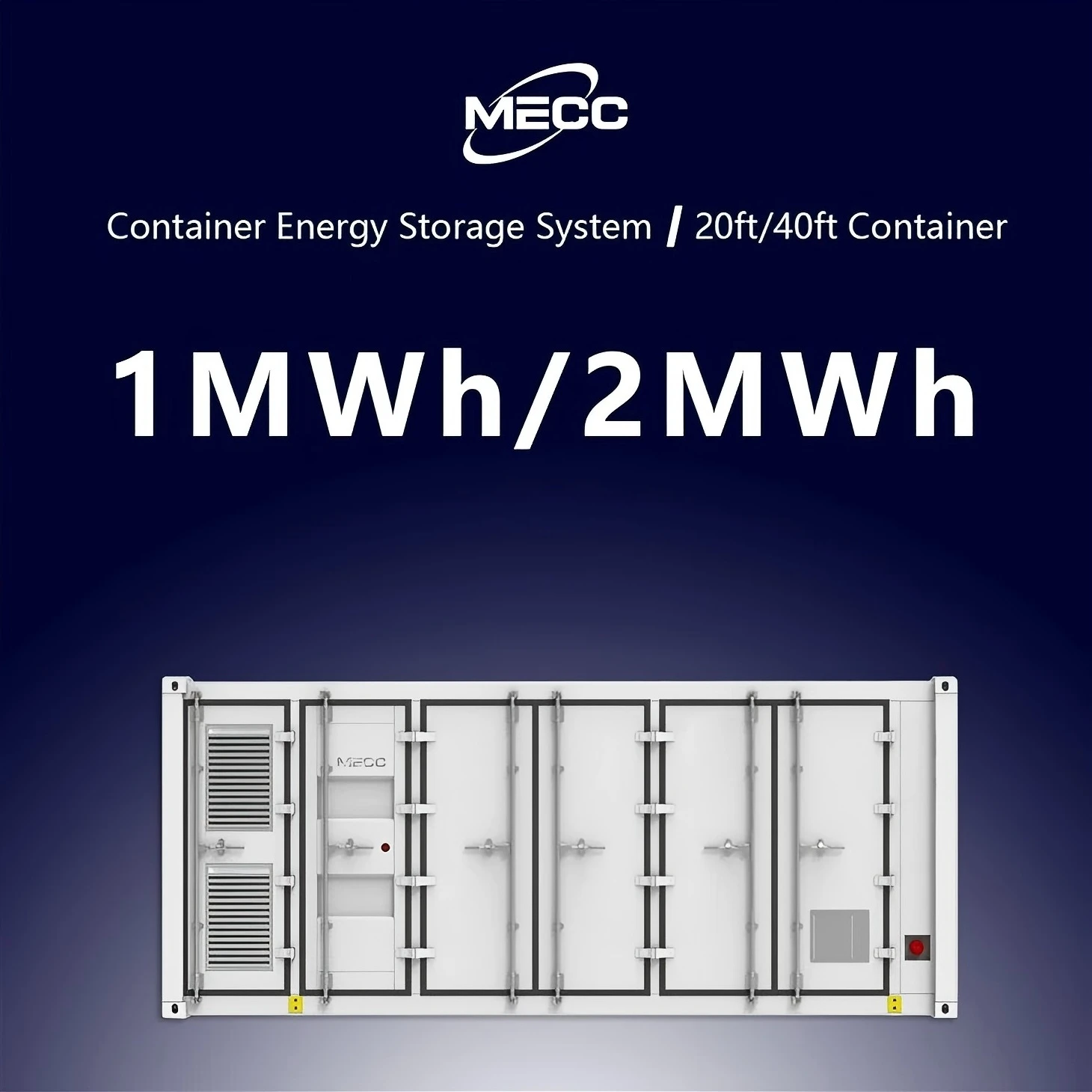
500KW/1MW 1MWh/2MWh Battery Energy Storage System Container
The 500kW/1MW 1MWh/2MWh Battery Energy Storage System Container is a turn‑key utility‑grade energy storage solution housed in standard 20ft or 40ft shipping containers, integrating bidirectional PCS, A‑grade LiFePO4 battery clusters, master BMS, liquid‑cooled thermal management, gas fire suppression, high‑voltage distribution and EMS energy management system with full factory pre‑assembly and pre‑commissioning. Requiring only foundation construction and high‑voltage cable connection for on‑site commissioning, it supports flexible power‑capacity configuration and multi‑container parallel expansion, delivering core capabilities of peak‑shaving and load shifting, renewable energy smoothing, frequency‑voltage grid support, islanded micro‑grid operation and large‑scale emergency backup. Featuring IP54 enclosure protection and comprehensive multi‑layer safety mechanisms, it adapts to diverse harsh outdoor environments, and is widely deployed for ground‑mounted PV power stations, industrial parks, mining operations, island microgrids and grid‑side auxiliary service projects to stabilize grid fluctuations, boost renewable energy utilization and reduce comprehensive energy costs.