


A mine's electricity bill is really a diesel bill, and diesel at a remote site is not priced like diesel at a highway station. It arrives by truck over roads that may be hundreds of kilometers long, sits in tank farms, and gets burned in generators that spend much of their life running well below their efficient load point. Every liter is expensive twice - once at delivery, once in the inefficiency of how it is burned.
That is why mining battery storage has become one of the most compelling hybrid applications in the C&I world. Not because batteries can run a mine - they cannot, for days on end - but because a battery lets the generators that do run a mine operate the way they were designed to: fewer of them, at higher load, with fewer hours and less fuel. This guide explains the mining load profile, the four roles storage plays in diesel hybridisation, and how to size and procure a system that survives a mine site.
The Mining Load Profile: Large, Lumpy, and Relentless
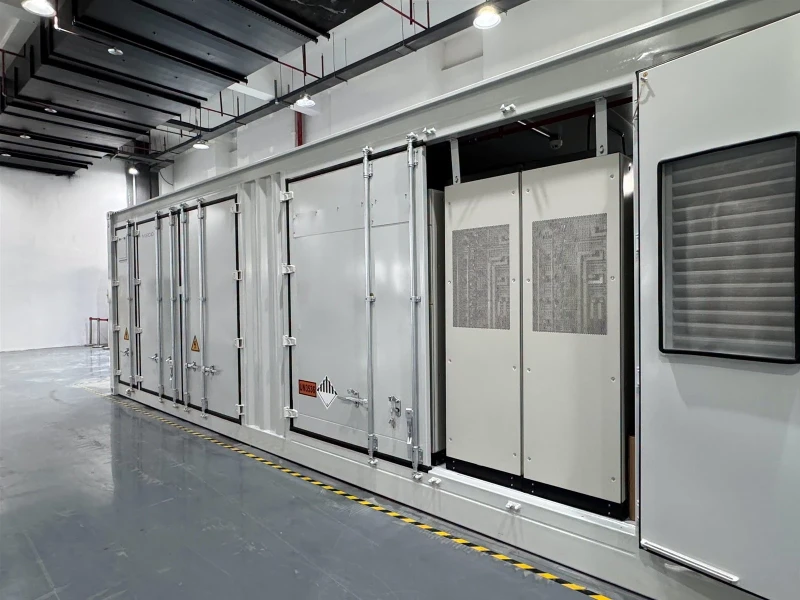
Mine electrical loads are dominated by a handful of very large machines:
Crushers, mills, and conveyors - multi-megawatt, near-continuous, with heavy starting torques.
Electric shovels and draglines - extremely peaky, cyclic, with punishing motor starts.
Pit dewatering pumps and ventilation - continuous, safety-critical, non-negotiable.
Site infrastructure - camps, workshops, offices, and increasingly electrified fleet charging.
Three characteristics shape every design decision: the peaks are enormous relative to average load (a shovel start can rival the rest of the site), the loads are cyclic (truck cycles, crusher surges), and the site is usually islanded or weakly connected - no utility to absorb a shock.
Meanwhile the generation fleet is diesel or gas, often several units, sized for peaks rather than efficiency. And that is the economic wound: generators running at 30–40% load burn far more fuel per kWh than at 75–85%, foul their cylinders (wet stacking), and need more maintenance per hour of operation.
What the Battery Actually Does
Four functions, each with a distinct financial return:
One: peak shaving that removes generators from the fleet. If the battery covers the peaks and motor starts, the site needs fewer running units - and may need fewer units, period. A mine that runs four gensets at part load can often run three at good load with a battery absorbing the swings. The saving is not just fuel: it is capital, maintenance, and overhaul intervals.
Two: spinning reserve replacement. Islanded systems must keep reserve online - generators spinning, burning fuel, doing nothing, ready to pick up load if another unit trips. This "spinning reserve" is pure waste, and a battery is better at it: instant response, no fuel. The battery can replace a significant share of the reserve requirement, which frequently means one fewer generator running around the clock. This single change often carries the largest fuel saving in the model.
Three: motor-start smoothing. Electric shovels and crushers draw starting current several times running current. Without storage, the site must keep generation headroom for those starts - or accept voltage dips that trip equipment. The battery absorbs inrush, letting generators stay at efficient output and the site avoid nuisance trips.
Four: renewable integration and engine optimization. Where solar is added - increasingly common at remote mines - the battery smooths PV variability, stores midday surplus for the evening, and lets generators run at steady high load or shut down entirely during sunny hours. The combination of solar diesel battery microgrid plus storage is frequently the cheapest electrification path available to a remote site before full grid connection.
Sizing the Hybrid
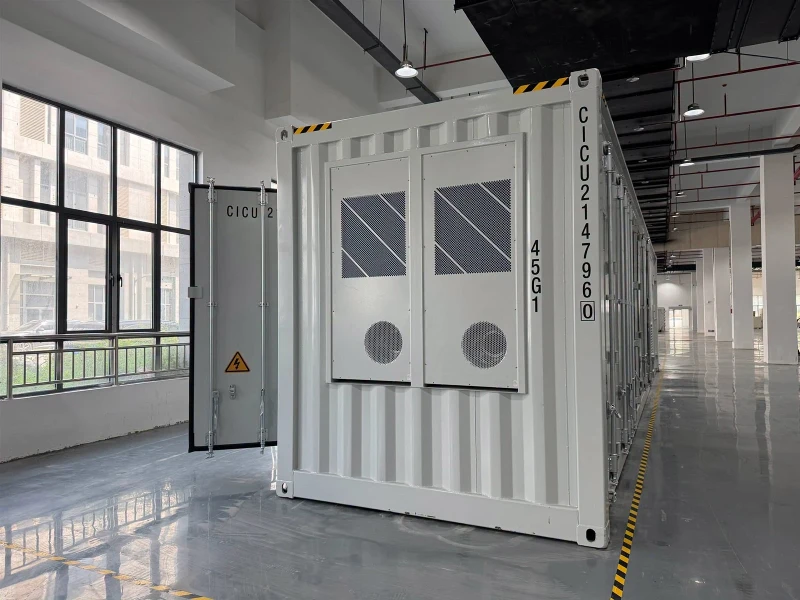
Mine sizing starts from measured data, not averages:
Peak and motor-start analysis - the battery's power rating is driven by the worst simultaneous events, not the daily mean.
Spinning reserve policy - how much reserve the site must hold, and how much the battery can credibly provide. This is a control-settings decision with huge fuel consequences; it deserves engineering, not a default.
Fuel-savings modeling - compare generator fuel curves at the actual dispatch profile with and without storage. A 15–30% fuel reduction is a realistic range for a well-designed hybrid, but the number comes from the load data, not a brochure.
Renewable fraction - if solar or wind is in scope, size storage for the evening transition and cloud smoothing, not just daily arbitrage.
Growth and fleet electrification - mines are electrifying haul trucks, drills, and light vehicles. The storage and generation plan should account for the load arriving in five years, or the system will be undersized on delivery.
Note the interaction with the mine plan: pit geometry, haul distances, and ore hardness change over a mine's life, and the electrical load changes with them. Modular, augmentable storage designs suit this reality better than a single fixed block.
The Mine Site Is a Hostile Place
Equipment specified for a temperate industrial park will suffer at a mine. Design for:
Dust - conductive, abrasive, and everywhere. Enclosure ingress ratings matter more than usual; a ventilated cabinet needs serious filtration, and filter service must be scheduled aggressively.
Heat and altitude - high ambient temperatures combined with altitude derate both generators and battery cooling; verify thermal performance at site conditions, not standard test conditions.
Vibration and terrain - foundations, transport, and structural design should assume less-than-ideal ground.
Service logistics - the nearest technician may be a flight away. Remote monitoring, module-level diagnostics, and a spare-parts strategy sized for the site's isolation are not optional extras; they are the difference between 98% and 85% availability.
The Economics, and the Politics
The business case rests on fuel. Diesel at a remote mine can cost several times the pump price once haulage, storage, and handling are included, and fuel is often the largest single operating cost after labor. A hybrid that cuts consumption 20% pays back quickly at those prices - and the calculation only improves as carbon pricing, emissions regulations, and corporate decarbonization targets add cost to every liter.
Two financing patterns dominate: owner-funded (mine operators with capital budgets and decarbonization mandates) and power-as-a-service, where an energy provider owns and operates the hybrid generation plant and sells kWh to the mine under a long-term contract. The LCOS comparison across diesel-only, hybrid, and solar-hybrid configurations is the language both sides understand - and the battery vs diesel generator math is the core of it.
The Bottom Line
Mining battery storage is not about replacing diesel generators - it is about making them run the way they should: fewer units, higher load, fewer hours, less fuel. The battery takes the peaks, holds the spinning reserve, smooths the motor starts, and makes solar usable. Size it from measured load and start events, specify it for dust, heat, and distance, and plan the expansion path for fleet electrification. At remote-site fuel prices, the arithmetic usually does the persuading.
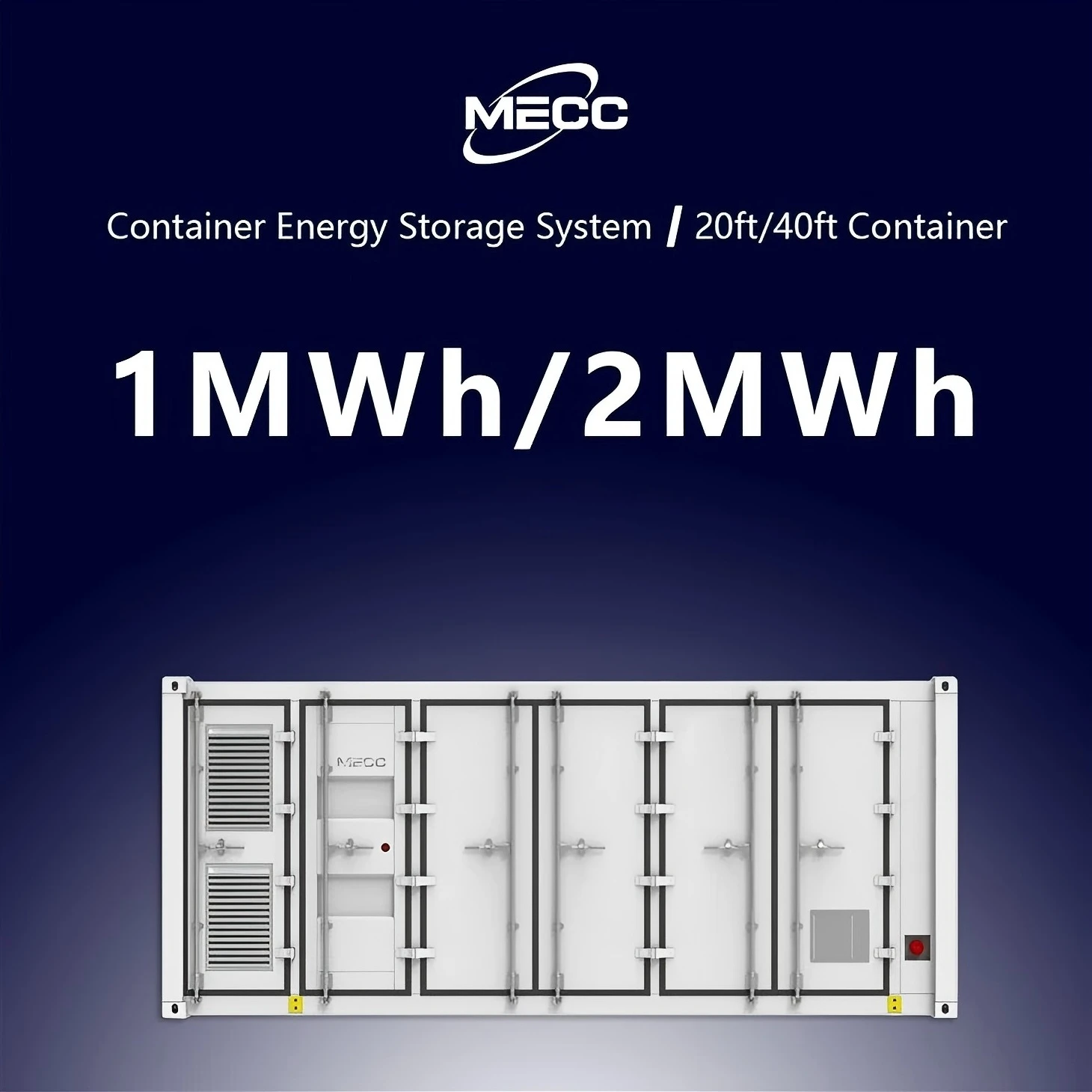
500KW/1MW 1MWh/2MWh Battery Energy Storage System Container
The 500kW/1MW 1MWh/2MWh Battery Energy Storage System Container is a turn‑key utility‑grade energy storage solution housed in standard 20ft or 40ft shipping containers, integrating bidirectional PCS, A‑grade LiFePO4 battery clusters, master BMS, liquid‑cooled thermal management, gas fire suppression, high‑voltage distribution and EMS energy management system with full factory pre‑assembly and pre‑commissioning. Requiring only foundation construction and high‑voltage cable connection for on‑site commissioning, it supports flexible power‑capacity configuration and multi‑container parallel expansion, delivering core capabilities of peak‑shaving and load shifting, renewable energy smoothing, frequency‑voltage grid support, islanded micro‑grid operation and large‑scale emergency backup. Featuring IP54 enclosure protection and comprehensive multi‑layer safety mechanisms, it adapts to diverse harsh outdoor environments, and is widely deployed for ground‑mounted PV power stations, industrial parks, mining operations, island microgrids and grid‑side auxiliary service projects to stabilize grid fluctuations, boost renewable energy utilization and reduce comprehensive energy costs.