


The core of optimizing cost-effectiveness for commercial & industrial (C&I) energy storage cabinets lies in precisely matching energy consumption demands, lowering the whole-life-cycle cost, and tapping diversified revenue streams. Below is a systematic configuration strategy and practical recommendations:

I. Clarify Core Objectives and Prioritize Configuration
First, define the primary purpose of energy storage deployment, which directly determines your system configuration:
1.Peak-valley arbitrage as the main goal: Prioritize depth of discharge and cycle life, with moderate requirements on charging/discharging power.
2.Demand management as the main goal: Require fast, high-power discharge for peak shaving. High priority on power (P), relatively lower demand on energy capacity (E).
3.Backup power & power reliability improvement: Focus on off-grid switching speed and backup duration; strict requirements on system response speed and battery rate performance.
4.Dynamic capacity expansion / transformer upgrade alternative: Deployed when transformer capacity is insufficient. Determine power and capacity based on required expansion power and continuous operation duration.
5.Mixed multi-scenario application: The most common use case. Balance the above multiple requirements for optimized performance.
II. Cost-Effectiveness Matching Strategies for Key Components
1. Battery Selection: Foundation of Energy Cost
Lithium Iron Phosphate (LFP) remains the mainstream technology. Featuring long cycle life (6,000+ cycles), high safety and drastically reduced costs, it delivers optimal whole-life-cycle economics.
Capacity Configuration Strategy
Calculate the optimal capacity accurately according to local peak-valley electricity price gaps and enterprise load curves. Generally, systems achieving 1–2 complete charge-discharge cycles per day deliver the best economic returns.
Avoid over-sizing. Leverage the Energy Management System (EMS) to analyze historical power consumption data and define an "economic capacity" that covers most peak loads without idle capacity waste.
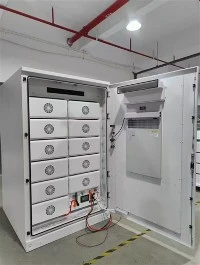
Reserve room for future expansion by adopting modular, stackable battery cabinet designs. Make phased upfront investments and add capacity flexibly as business grows.
2. PCS (Power Conversion System) Selection: Balance Between Power and Functions
Power Matching: PCS rated power must satisfy maximum discharge demand (e.g., instantaneous peak power for demand management). For peak-valley arbitrage-only projects, PCS power can be moderately lower than battery capacity (charge-discharge duration longer than 2 hours) to cut initial capital expenditure.
Choose bidirectional PCS supporting four-quadrant operation to enable flexible switching between charging and discharging.
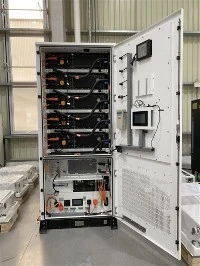
All-in-one integrated solutions: Consider integrated energy storage stations that combine PCS, transformers, ring main units and control systems. Although unit equipment costs may be slightly higher, such solutions greatly save land, civil engineering, installation and commissioning costs while shortening construction cycles, delivering superior overall cost-effectiveness.
3. Thermal Management & Fire Safety: Critical Investment for Long-Term Reliability
Thermal Management System: Liquid cooling is strongly recommended. Compared with air cooling, liquid cooling achieves superior temperature uniformity, significantly extends battery service life and improves usable capacity. Despite an initial cost premium of 5–10%, it mitigates capacity degradation over time and delivers better whole-life-cycle value.
Fire Protection System: Must comply with the latest national standard GB/T 42288 (Safety Code of Electrochemical Energy Storage Station). Deploy multi-layer protection covering early warning, detection and fire suppression. Clean fire extinguishing agents such as Novec 1230 are preferred. This investment cannot be compromised; it safeguards against systematic safety risks.
4. The System Brain - Energy Management System (EMS): Revenue Amplifier
A high-performance EMS is the core driver for energy storage profitability. It should feature:
Advanced algorithms: Automatically optimize charge-discharge strategies based on electricity prices, load forecasting and weather data to maximize revenue.
Demand control function: Accurately predict monthly peak demand and trigger intelligent discharge at critical thresholds to avoid excessive demand charges.
Multi-energy complementarity: Enable intelligent coordinated scheduling for PV, energy storage and EV chargers in PV-storage-charging integrated systems.
Investment Advice: Do not cut costs excessively on EMS. An efficient EMS can recoup its own investment within a short period via operational optimization.
III. System Integration and Business Model Selection
1. System Integration: All-in-one Cabinets vs Decentralized Design
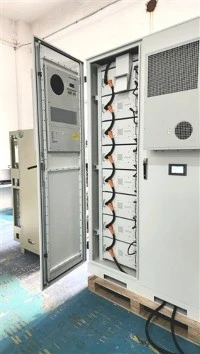
Prefabricated container/all-in-one cabinets: Suitable for small-to-medium projects requiring rapid deployment. All components are pre-assembled and tested in the factory. Only basic civil work and wiring are required on-site, drastically reducing on-site construction costs and lead time. Currently one of the most cost-effective delivery formats.
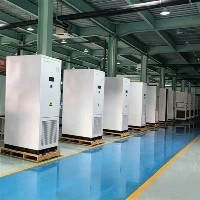
Decentralized design (separate battery cabinets, PCS cabinets): Ideal for ultra-large-capacity projects with highly customized requirements. Facilitates phased investment and maintenance, yet imposes higher standards for design, integration and on-site construction, potentially raising total costs.
2. Business Models: Trade-offs Between Investment and Returns
Direct Owner Investment: Suitable for enterprises with sufficient capital, stable power consumption and expectations to capture all long-term benefits. Owners bear investment, operation & maintenance and risks, yet enjoy higher long-term return rates.
Energy Management Contract (EMC): Energy storage investors undertake all construction, equipment and O&M work. Site owners provide land and share energy-saving gains under revenue-sharing mechanisms (e.g., 9:1 or 8:2 split). This zero-upfront-capital model enables fast implementation, making it ideal for users aiming to avoid capital pressure and technical risks.
Financial Leasing: Owners obtain equipment ownership via financial leasing and repay instalments using future revenue. Suitable for enterprises with moderate capital capacity who want full asset ownership.
IV. Whole-Life-Cycle Cost (LCOE) Calculation Checklist
When comparing different solutions, calculate the 20-year LCOE, covering:
Initial Capital Expenditure: Equipment procurement, system integration, civil engineering, installation, design and grid connection fees.
Operational Costs: Electricity charging expenses, O&M fees, insurance premiums, potential charges for participating in ancillary service markets.
Residual Value: Echelon utilization or recycling value of retired batteries.
Revenue Streams: Peak-valley arbitrage gains, demand charge savings, government subsidies, ancillary service revenues.

Summary of Cost-Effectiveness Improvement & Action Checklist
1.Data-driven planning: Analyze at least one year of time-of-use power consumption data - the foundation of all optimized design.
2.Clear objectives: Define whether the primary goal is profit generation, energy cost reduction, or both.
3.Optimal technology selection: The "cost-effectiveness iron triangle" consists of LFP batteries + liquid cooling + intelligent EMS. Prefabricated all-in-one containers are the preferred efficient delivery option.
4.Innovate business models: Actively consider EMC models to launch projects with zero initial investment, shared risks and shared profits.
5.Adopt a full-lifecycle perspective: Evaluate schemes based on LCOE instead of simple unit equipment price. Long service life and low degradation brought by high reliability represent genuine cost-effectiveness.
6.Leverage policy support: Closely track local energy storage subsidies and power market access rules, which can directly improve project economics.
Ultimately, the most cost-effective C&I energy storage system is a customized solution that precisely matches user requirements, adopts mature and reliable technologies, and maximizes revenue through intelligent operation. We recommend inviting 2–3 suppliers with core technologies and rich project experience to deliver detailed proposals based on your on-site data for comprehensive comparison.
Related Products
Liquid Cooling 125KW 261kWh Lithium Battery Energy Storage Cabinet
The IP55 Protected All-in-One Solar Energy Storage Cabinet is a high-performance, integrated energy solution engineered for outdoor commercial, industrial, and utility-scale solar applications. It integrates a 125kW Power Conversion System (PCS), a 261kWh lithium iron phosphate (LiFePO4) battery bank, an advanced liquid cooling system, and a intelligent Battery Management System (BMS) into a single cabinet with IP55 weatherproof protection. Designed to withstand harsh outdoor environments while delivering efficient energy conversion and storage, it supports solar energy absorption, peak shaving, load shifting, grid auxiliary services, and emergency backup power. Ideal for utility-scale solar farms, industrial parks, large commercial complexes, and remote microgrids, it provides a reliable, space-saving, and low-maintenance solution for large-scale renewable energy integration.
